
Functional Construction Equipment Model
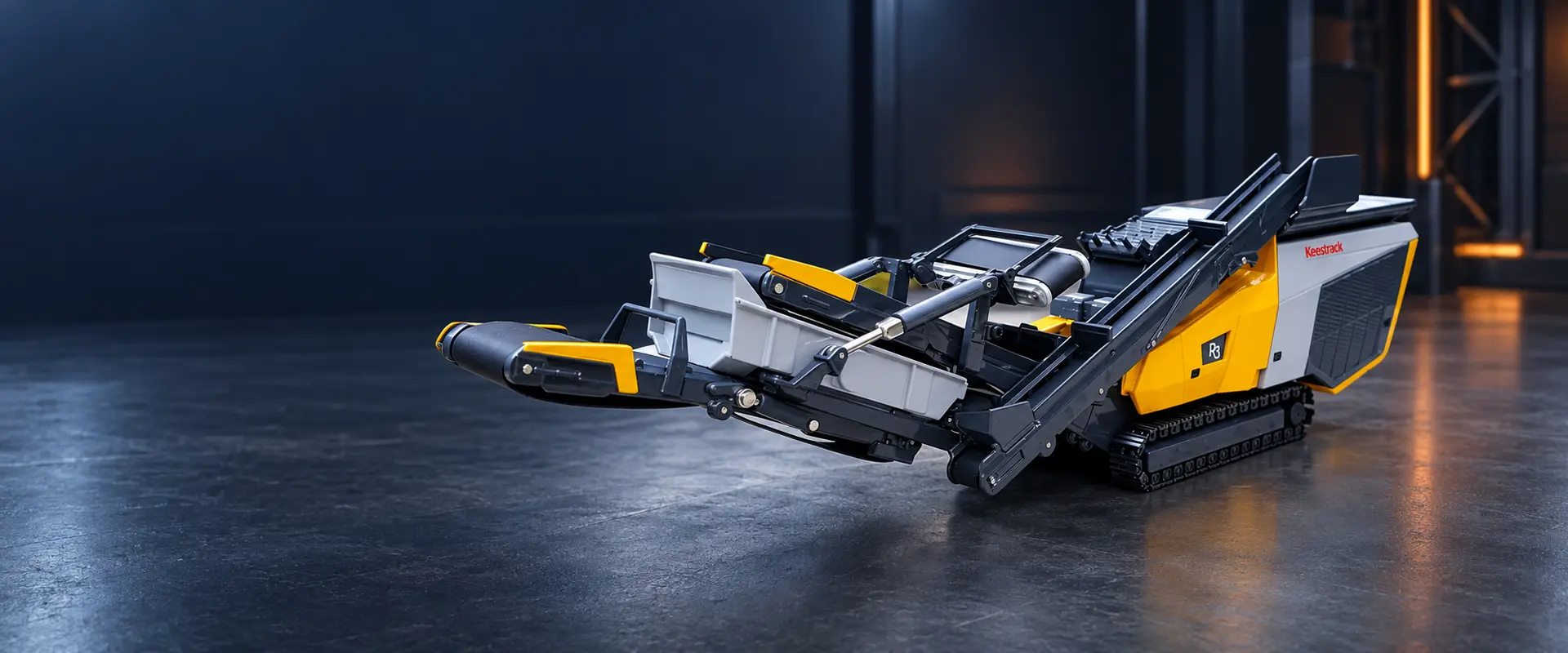
Keestrack R3 Crusher Scale Model
A compact tracked crusher recreated as a detailed physical model, with linked screening structures, movable conveyor sections and a finish suitable for close-range brand presentation.
Project Specifications
Confirmed Model Data
The specifications below are limited to information confirmed for this functional crusher model project.
Project Purpose & Overview
Turning a Complex Crusher into a Display Model
The central task was to keep the R3 recognisable while translating its layered screening and conveying structures into a compact, stable physical product.
This 1:50 Keestrack R3 scale model is designed for applications where the equipment must be understood at close range. The tracked base, main body, screening frames, conveyors, guards and linkage points create a clear visual explanation of the machine without turning the miniature into a simplified toy.
The engineering focus was not simply reducing the outside shape. Several long structures overlap and move through different paths, so their joints, clearances and resting positions had to work together without visually distorting the equipment. The result is a functional heavy equipment model that can be handled and demonstrated while retaining its presentation value.
For OEM teams, dealer showrooms and industrial exhibitions, this type of custom crusher scale model helps communicate equipment architecture more directly than a flat brochure. It is also suitable for controlled corporate presentation, display cabinets and collector-focused programmes when custom packaging is required.
Product Gallery
The Finished Model from Multiple Angles
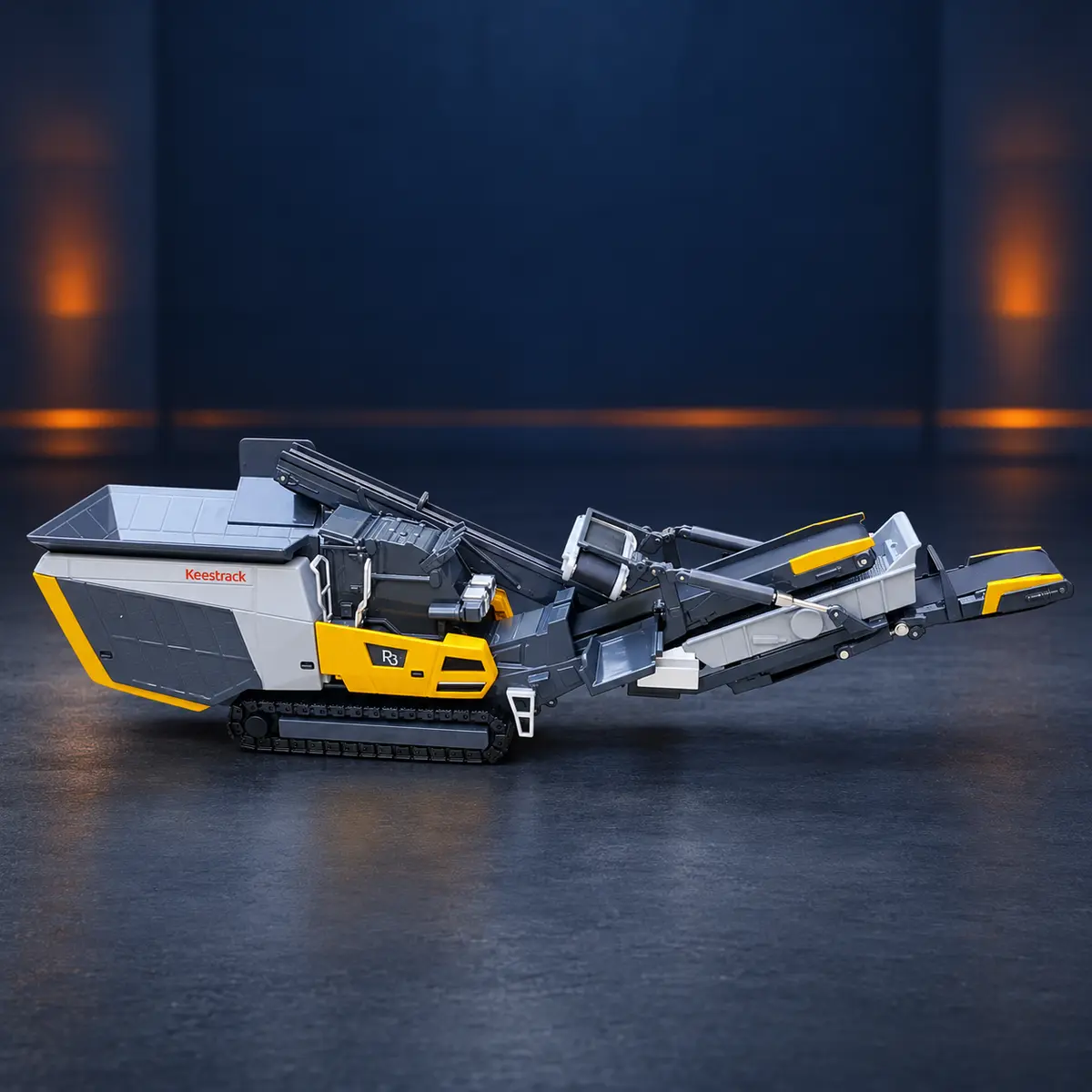
These views show how the Keestrack R3 crusher scale model keeps its main body, track system and extended conveying structures visually connected from every angle.
Complete Side Profile
The side view shows the relationship between the tracked base, crusher body and long front equipment assembly.

Upper Structure Layout
The elevated angle reveals the feed area, internal belt routes and the spacing between adjacent mechanisms.

Rear Body Treatment
This close view highlights the panel geometry, ventilation texture and controlled placement of the visible graphics.

Connected Machinery
The close-up shows how frames, cylinders and conveyors are integrated without hiding their connection points.
Functional Demonstration
Five Confirmed Movements
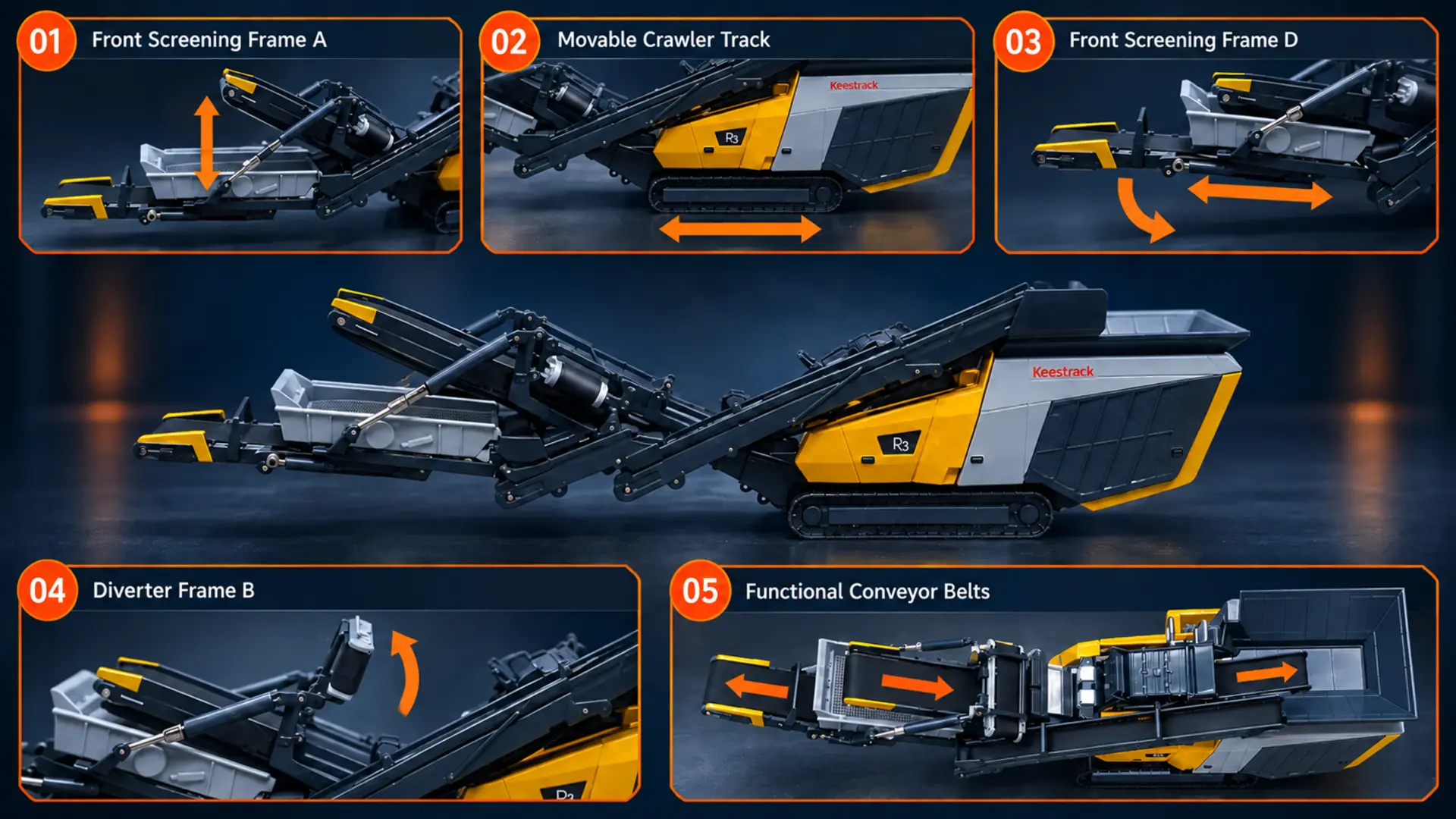
The working features concentrate on the model’s screening, conveying and track structures. Each movement reflects a visible part of the equipment rather than an invented feature.
Screening Frame A
The front screening frame moves up and down and can hold its selected position.
Track Chain Movement
The track chains can be pushed forward and backward for controlled repositioning.
Screening Frame D
The front frame slides forward and backward, then folds downward through its joint.
Splitter Frame B
The splitter frame lifts upward while remaining connected to the surrounding assembly.
Movable Conveyor Belts
The conveyor belts installed on the splitter frames can move freely by hand.
Engineering & Visible Details
Layered Structures without Visual Simplification
The project combines long moving sections with compact joints, narrow clearances and several exposed connection points. These visible details determine whether the miniature still reads as the real equipment.

Moving Joint Design
Pins, brackets and pivot points are visible around the screening and conveying assemblies, allowing movement without disguising the connection geometry.
Conveyor Structure
Long belt sections maintain a consistent profile while fitting around adjacent guards, frames and supports.
Cylinder & Linkage Detail
Exposed rods and linkage parts provide a convincing mechanical relationship between moving sections.
Fine Handrails
Slim access rails and small steps give the body a more realistic industrial scale without overpowering nearby panels.
Printed Graphics
Keestrack and R3 markings remain clean and legible across differently shaped body panels.
Textured Panels & Tracks
Ventilation surfaces, equipment covers and individual track forms add depth to the lower and rear body areas.
Size Comparison
Compact Enough for Close-range Display
The comparison provides a familiar visual reference for the model’s display presence. Its elongated form remains easy to examine on a showroom desk, exhibition counter or inside a purpose-built display cabinet.

OEM Development Process
From Equipment Data to Repeatable Production
A custom industrial model moves through engineering conversion, tooling validation and controlled manufacturing before it is ready for consistent batch delivery.
3D Data & Prototype
We convert the client’s equipment data into model production data, adjusting scale, wall thickness, assembly gaps, moving parts and visible details before producing a prototype for review.
Tooling & Metal Sample
CNC machining, precision engraving and mould manufacture support a metal sample close to the intended production quality, allowing structure, appearance, fit and function to be checked.
Production, QC & Delivery
Production brings together die casting, injection moulding, painting, printing, assembly, function testing, quality inspection, packaging and shipment under one coordinated workflow.
Mass Production & Quality Control
Controlling Alignment across Moving Assemblies
For a model with multiple linked structures, quality control must cover more than surface appearance. Parts, joints and graphics need to remain consistent from preparation through final packing.
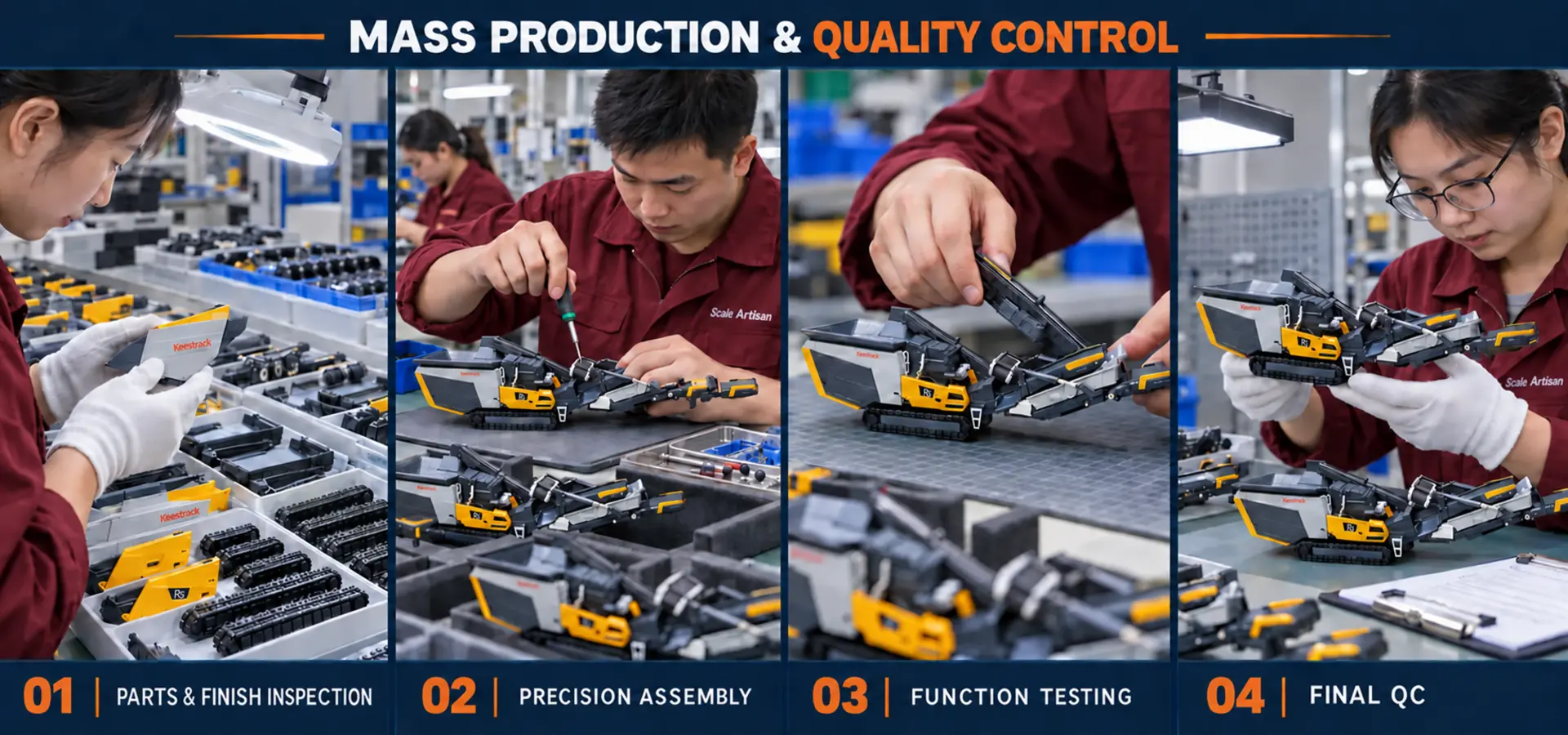
Production Control for a Multi-joint Model
Inspection follows the visible risks of this project: clean painted panels, accurately placed graphics, correctly aligned frames, suitable joint tension, smooth confirmed movements and complete assembly before packaging.
Component Inspection
Body panels, track parts, conveyor frames and small fittings are checked for visible deformation, burrs, surface marks and incorrect hole positions before assembly begins.
Paint & Printing Control
Grey, yellow and dark components are reviewed for colour consistency and clean coverage. Printed logos and model markings are checked for clarity, position and alignment.
Function & Appearance Test
Confirmed moving frames, tracks and conveyor belts are operated during inspection. The team also checks assembly gaps, joint tightness, missing parts and visible adhesive residue.
Final Packaging Check
The completed model is reviewed for cleanliness and completeness before entering the selected custom packaging, with vulnerable extended structures supported for handling and transport.
Business Applications
Where a Functional Crusher Model Adds Value
A detailed industrial equipment display model is most useful when viewers need to understand both the machine’s identity and its visible working architecture.
Dealer Showrooms
Sales teams can use the physical model to explain the layout of the screening and conveying sections when the full-size machine is not present.
Trade Shows
Its compact footprint and movable structures support hands-on discussion at exhibition counters without requiring a large display area.
Product Presentations
The miniature gives product and marketing teams a consistent visual reference for meetings, launches and equipment briefings.
Corporate Gifts
With project-specific packaging, the model can become a technical corporate gift connected directly to the brand’s real equipment.
Museum & Company Displays
The recognisable shape and visible machinery make the model suitable for organised industrial history or product-range displays.
Collector Programmes
Detailed equipment panels, authentic graphics and functional structures give collectors more to inspect than a static simplified miniature.
Frequently Asked Questions
Planning a Custom Equipment Model
What information is needed to develop a custom crusher model?
The Keestrack R3 crusher scale model illustrates why editable 3D equipment data is normally required for development, together with reference photos, colour and logo files, the target scale, required functions and packaging direction. For an initial quotation, clear images, real machine dimensions, scale, quantity, functions and packaging requirements are usually sufficient.
Can moving conveyors and screening structures be customised?
Yes, when the movement is confirmed from the real equipment and can be engineered reliably at the selected scale. The travel path, joint size, clearances and holding method should be reviewed before tooling so the function does not compromise appearance or assembly.
Can you develop other crushing and screening equipment models?
Yes. The same OEM process can be applied to other crushers, screeners and tracked construction equipment. Each project is reviewed individually because machine architecture, target scale and required movements directly affect the engineering approach.
Can colours, logos and packaging be customised?
Yes. Colours and visible graphics can be developed from approved brand references, and packaging can be designed around the intended use, such as dealer presentation, corporate gifting, exhibition display or collector distribution.
Start Your Custom Model Project
Need an OEM Model for Your Equipment Brand?
Share the available product information with our team. We will review the visual structure, target scale, required movements and presentation needs before recommending a suitable development direction.
