

Production Process
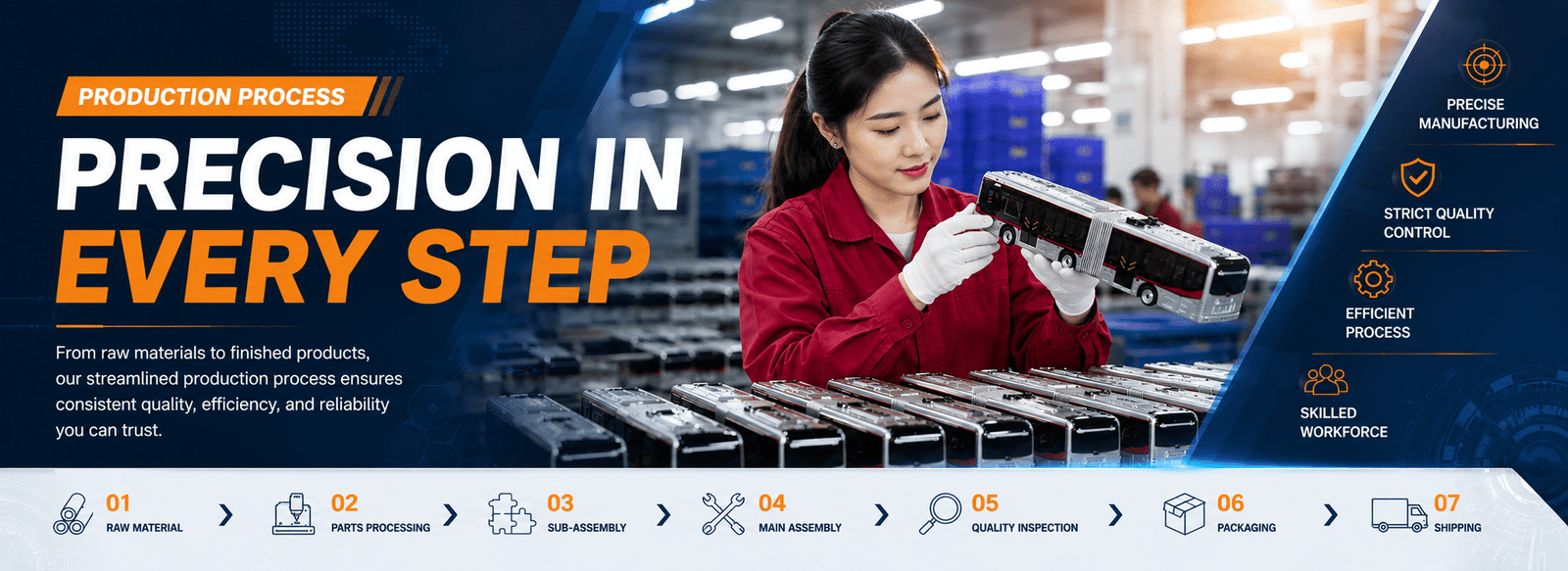
From Concept to Mass Production
Our production process is divided into three major stages, helping clients clearly understand how a custom scale model moves from 3D engineering to prototype confirmation, tooling, sample approval, and mass production.
3D Data & Prototype
Confirm scale accuracy, structure, dimensions, part distribution, and functional feasibility before mold development.
Mold & Sample Creation
Develop production tooling, trial parts, painted components, printed details, and customer-approved samples.
Mass Production
Complete parts production, finishing, assembly, quality control, packaging, and delivery preparation.
3D Data
Processing
Prototype
Development
Prototype
Layout
CNC
Programming
Mold
Making
Parts
Production
Painting &
Pad Printing
Assembly &
Quality Control
3D Data Processing & Prototype Development
Confirm scale accuracy, structure, dimensions, part distribution, and functional feasibility before mold development.
This stage converts original vehicle information into scale model engineering data and verifies the structure through prototype development.
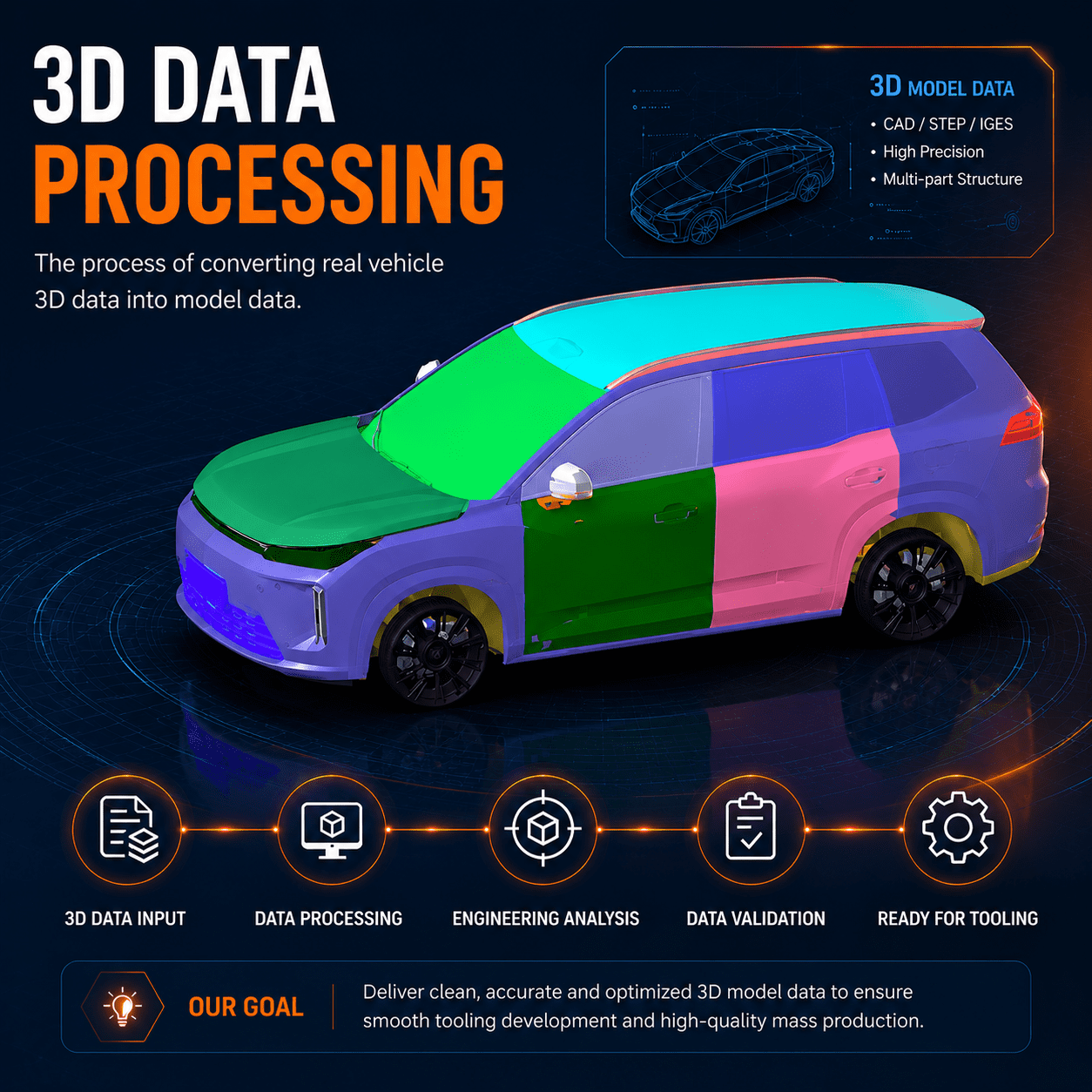
3D Data Processing
Convert real vehicle data into scale model engineering data for structure, size, function, and feasibility review.
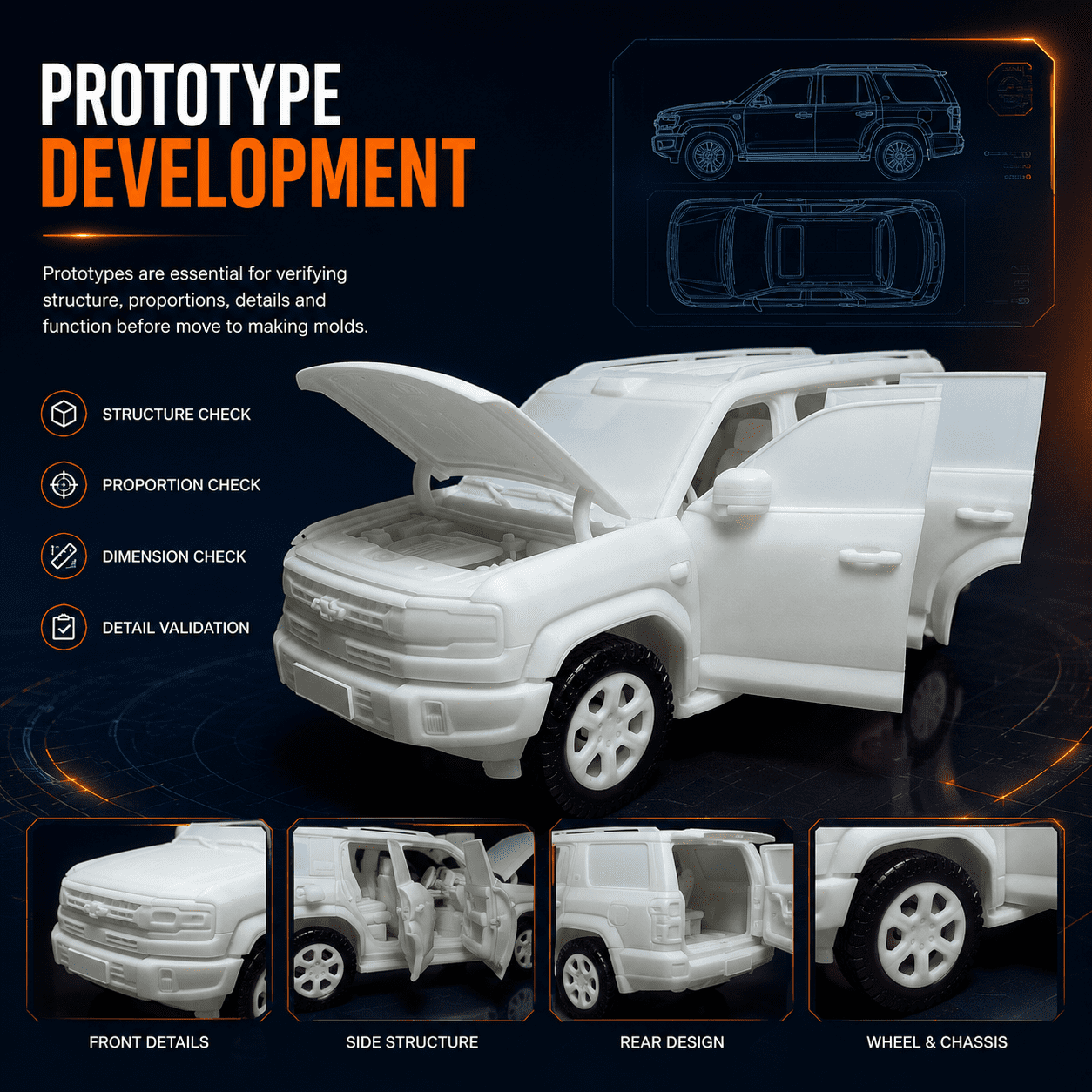
Prototype Development
Create an ABS hand prototype to verify shape, function, part distribution, and structure before tooling.
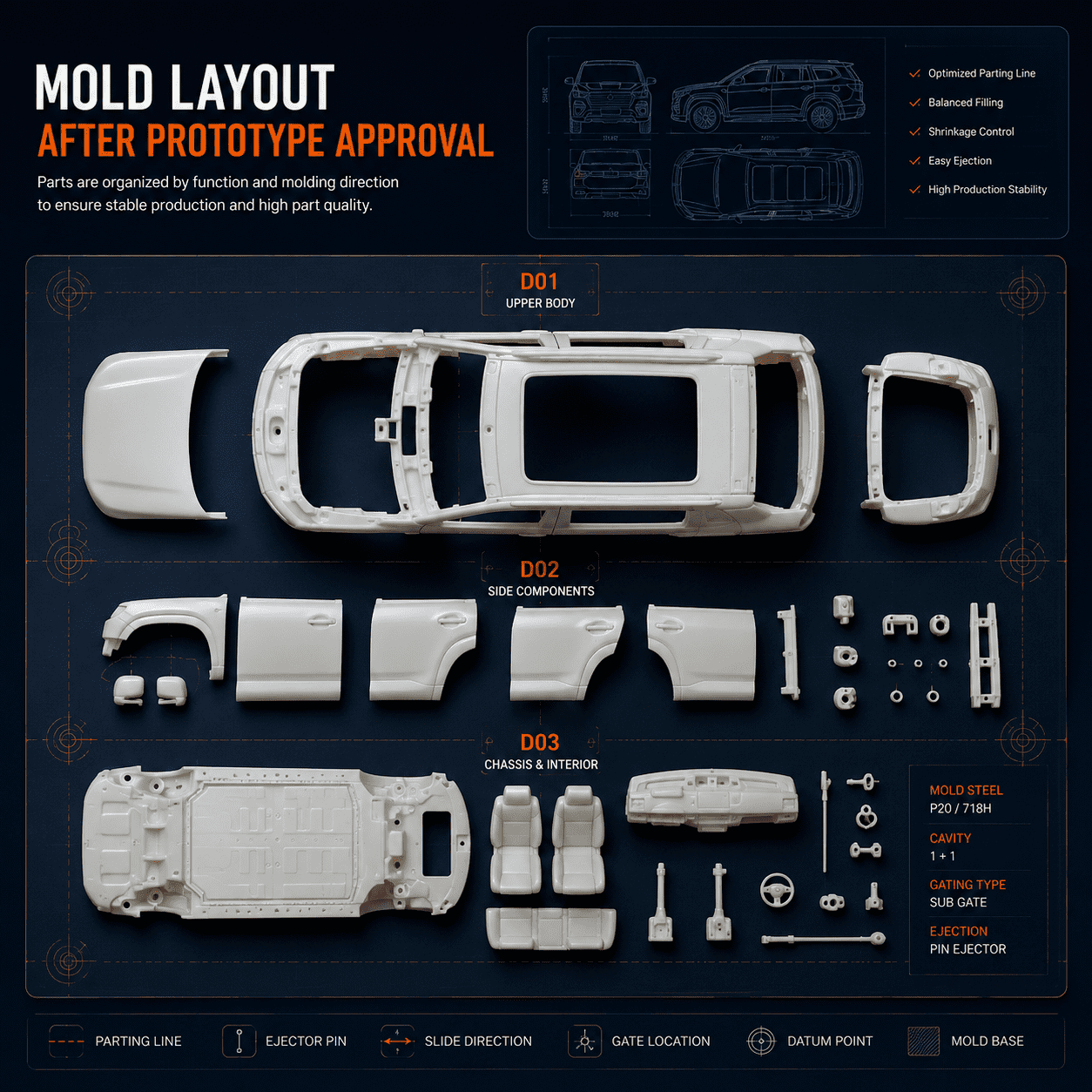
Prototype Layout
After approval, plan part separation, mold layout, materials, and assembly logic.
Mold & Sample Creation
Develop production tooling, trial parts, finishing, printing, and customer-approved samples.
This stage transforms the approved prototype into production tooling and a customer-confirmed sample.
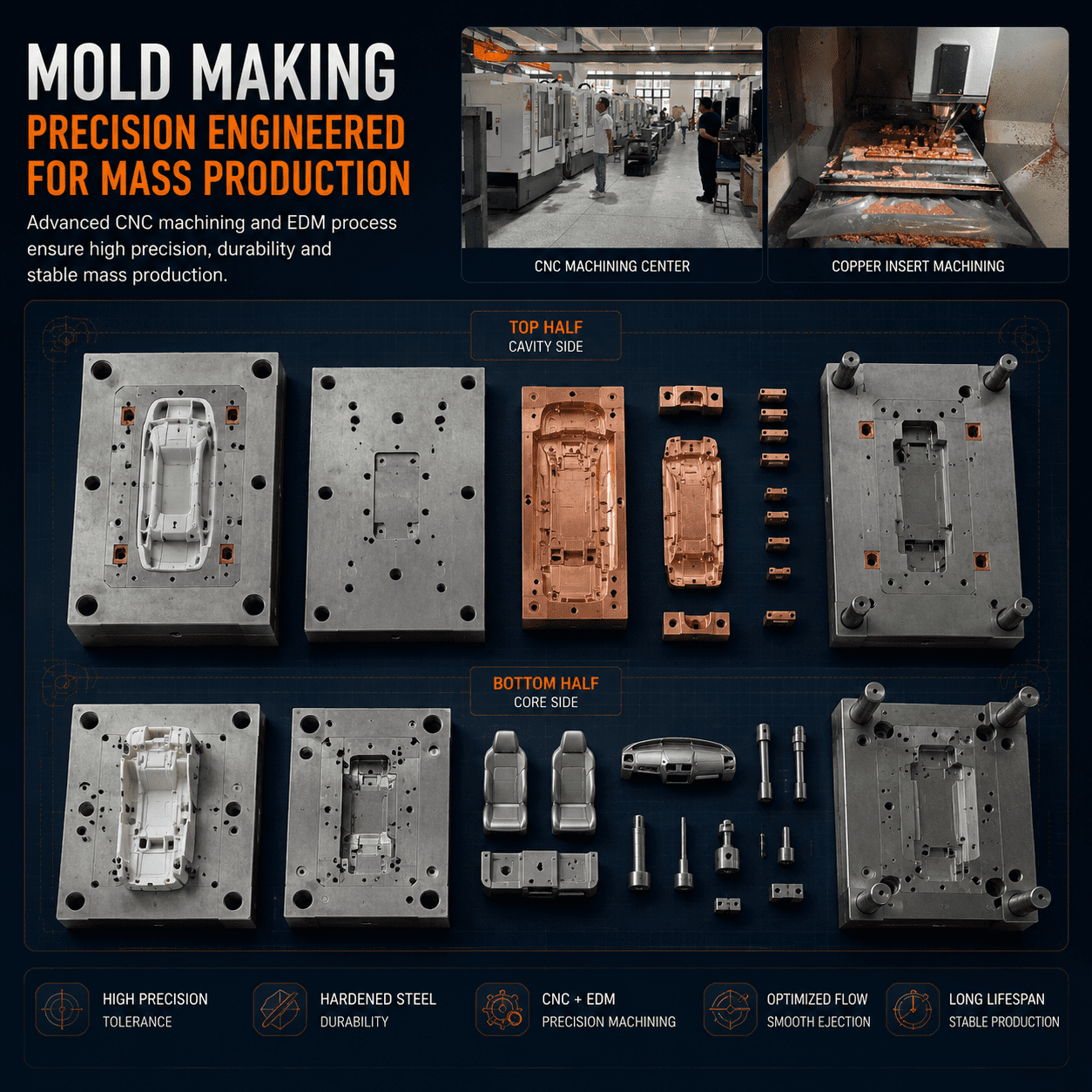
CNC Programming
Convert 3D model and mold drawings into CNC machining programs.
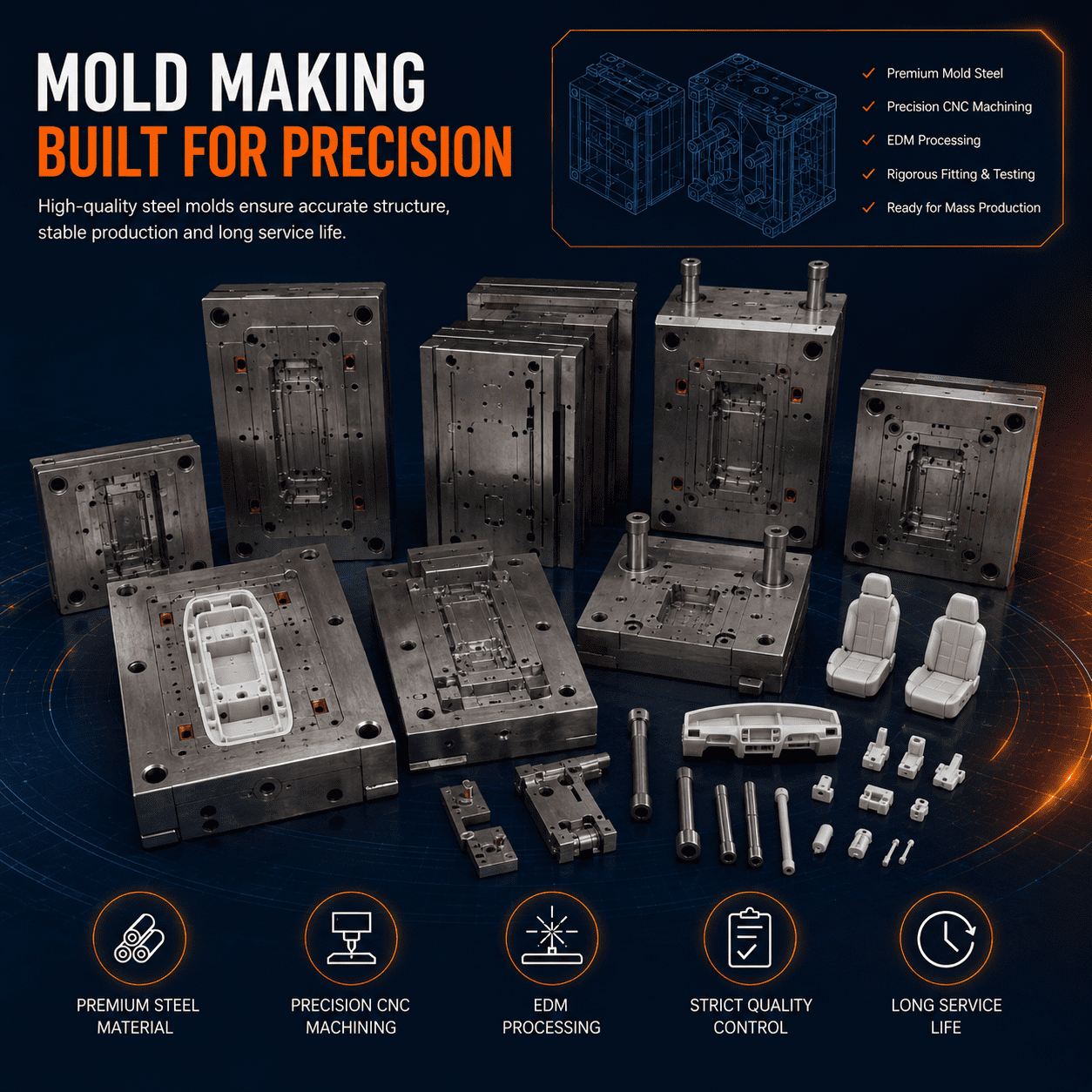
Mold Making
Complete mold assembly, fitting, polishing, testing, and adjustment.
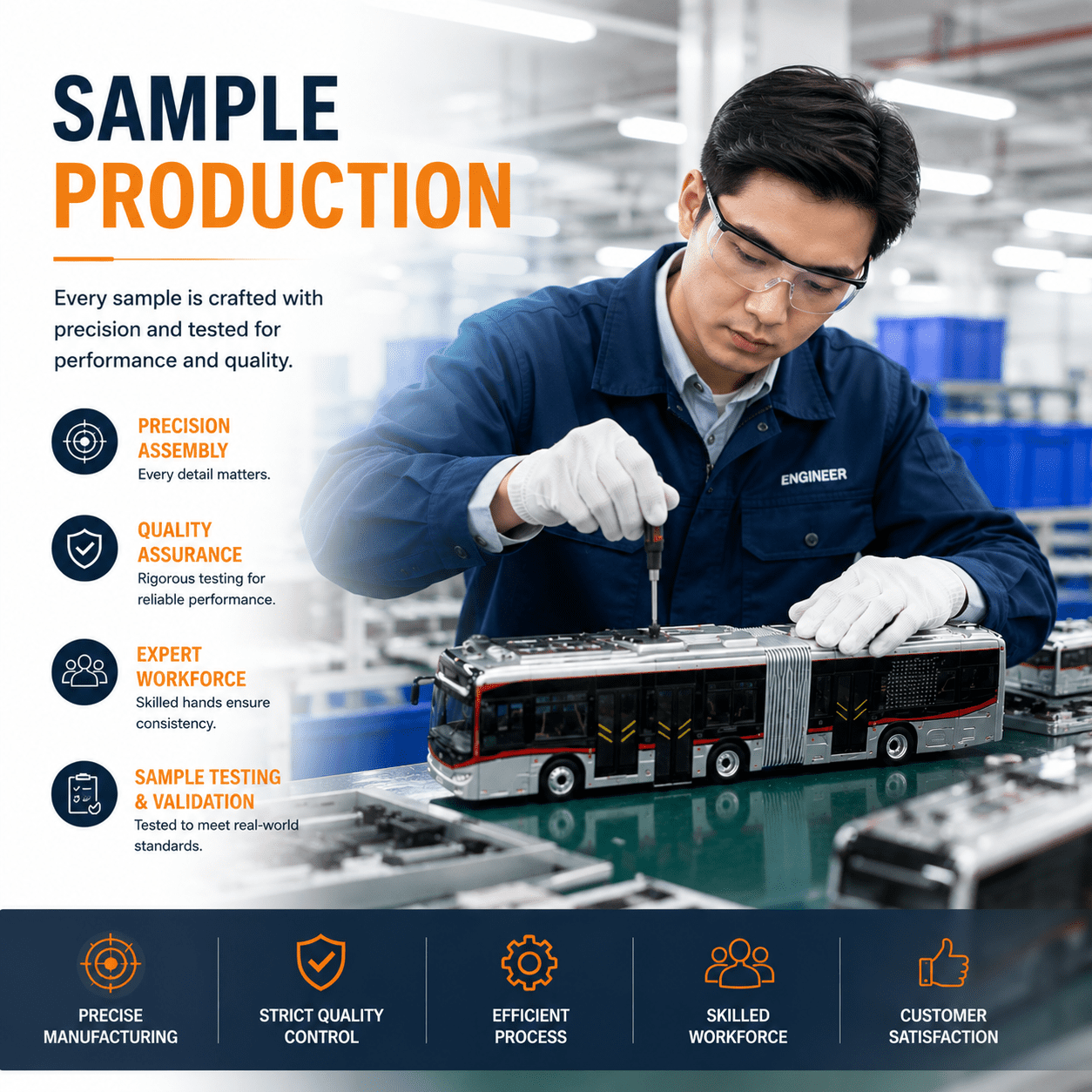
Sample Production
Produce trial parts, then finish, paint, print, and assemble them into customer samples.
Mass Production
Produce, finish, assemble, inspect, package, and prepare for delivery.
After sample approval, the project enters full production, including raw material preparation, parts production, painting, printing, assembly, quality control, packaging, and global delivery.
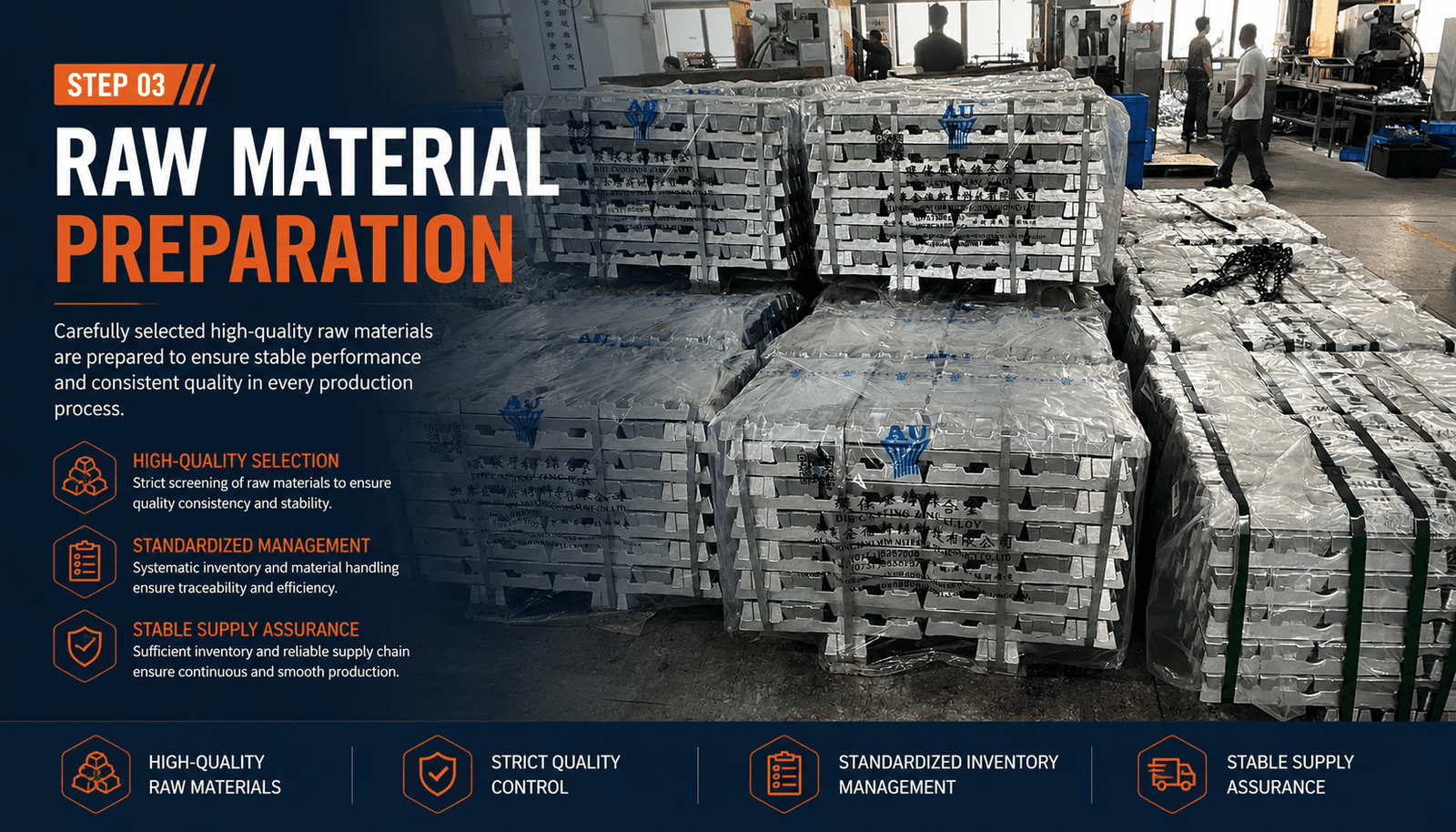
Raw Material Preparation
Prepare alloy, plastic, paint, printing materials, accessories, and packaging components to support stable production and delivery schedules.
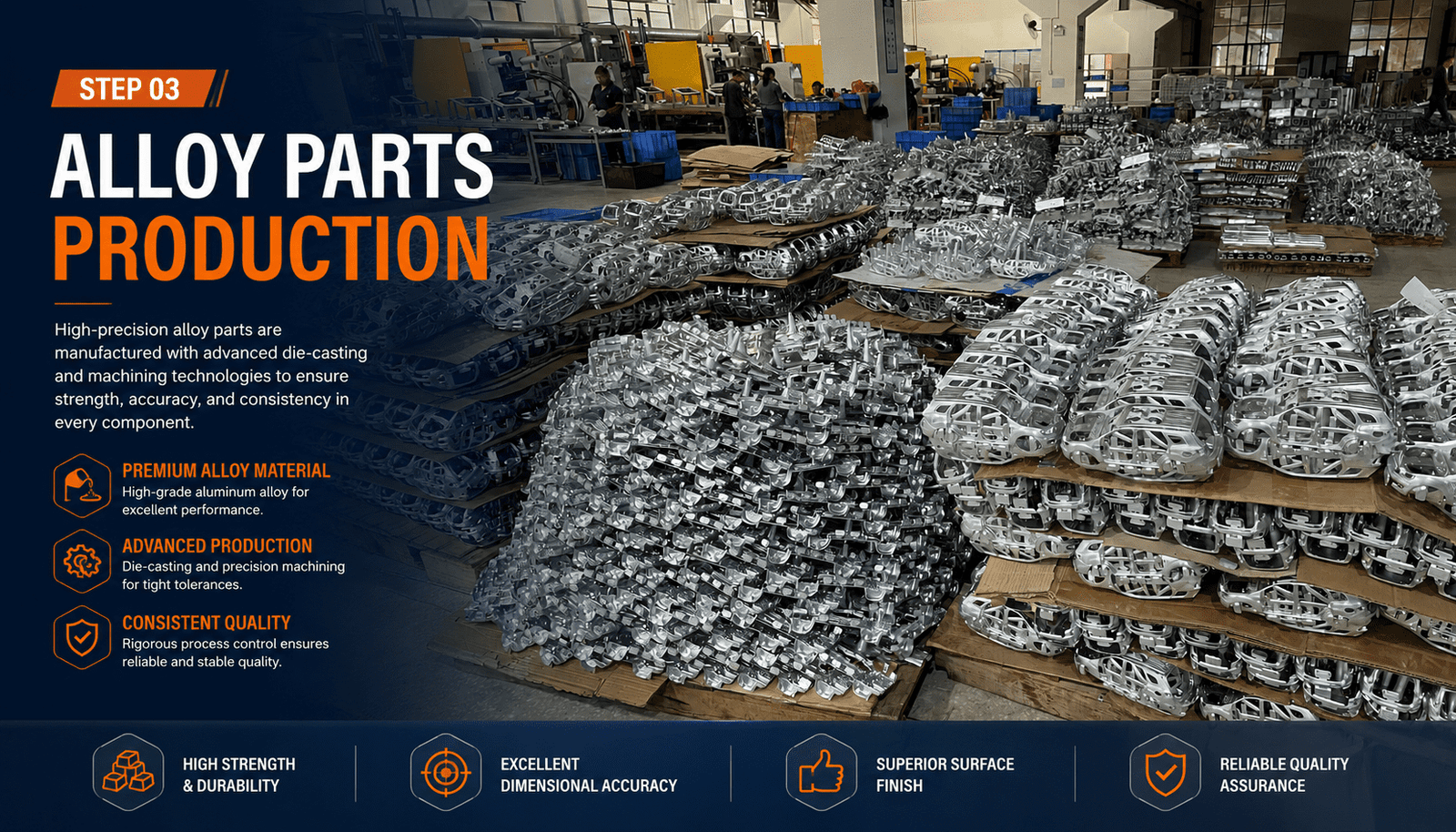
Alloy Parts Production
Alloy components are produced according to approved tooling and engineering standards, ensuring stable structure and production consistency.
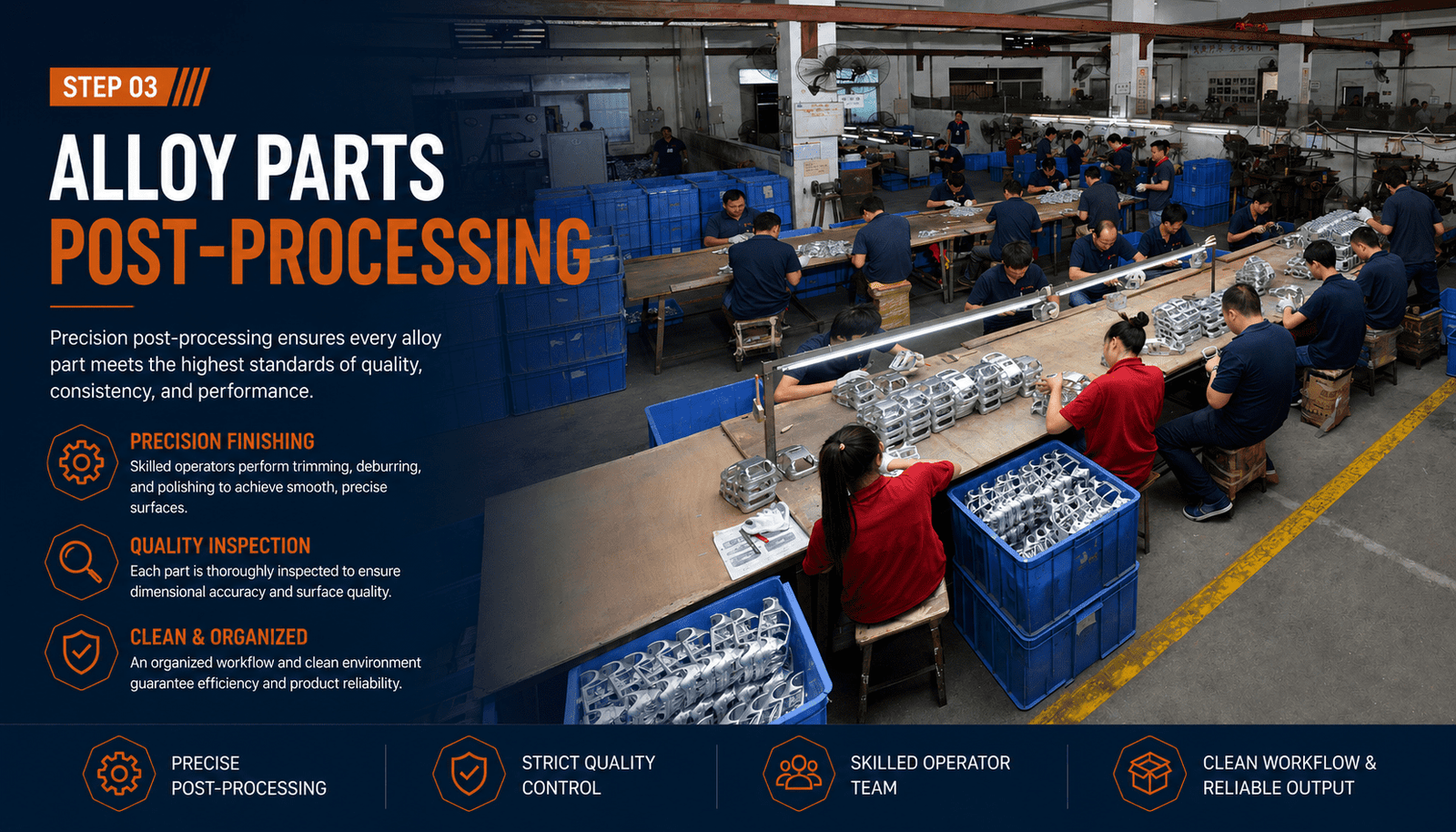
Alloy Parts Post Processing
Alloy parts go through trimming, polishing, cleaning, and surface preparation before entering painting and assembly stages.
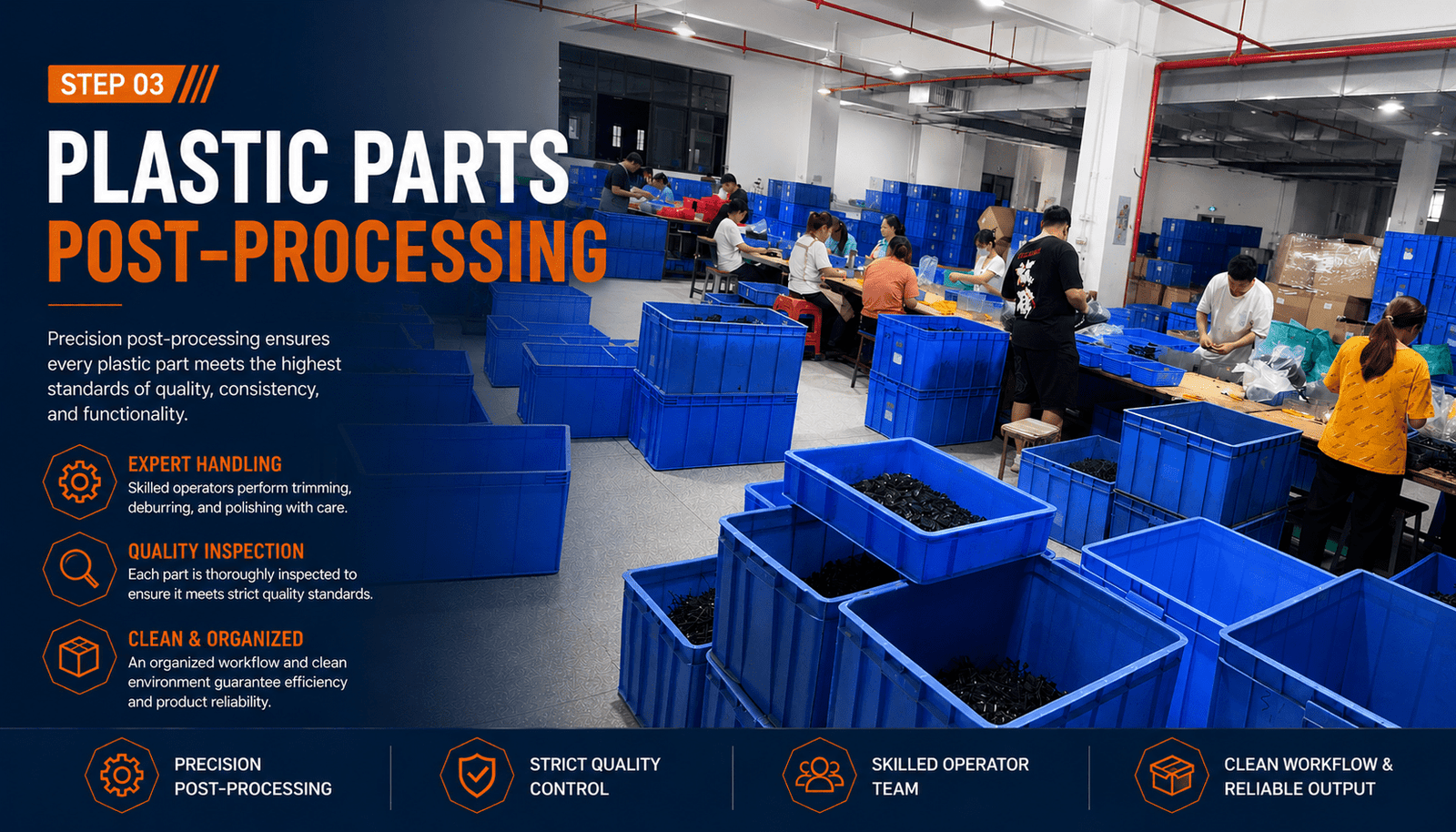
Plastic Parts Post Processing
Plastic components are processed and refined to ensure accurate fitting, surface quality, and compatibility with final assembly.
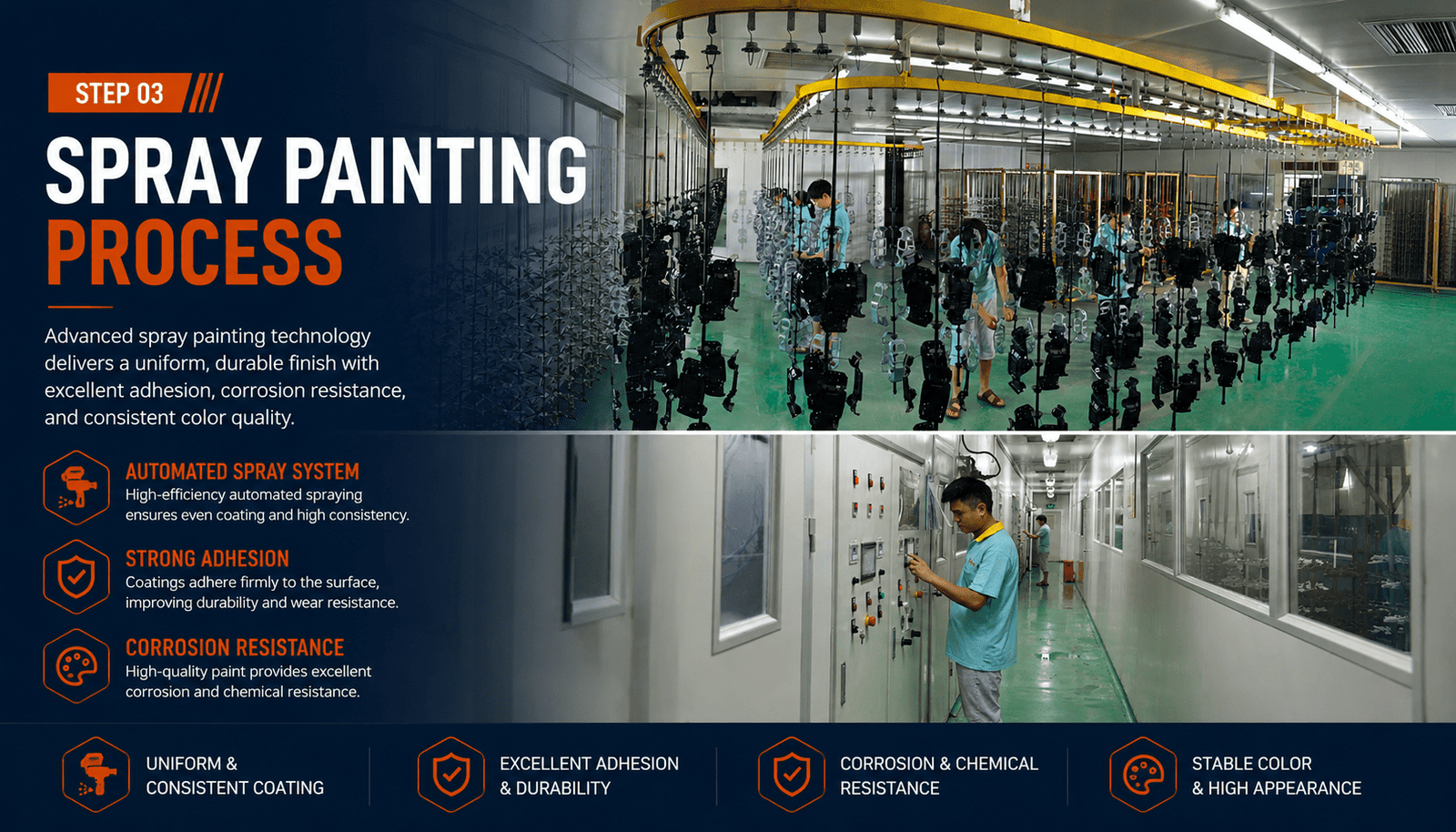
Spray Painting Process
Components are painted under controlled finishing standards to achieve consistent color, surface texture, and premium appearance.
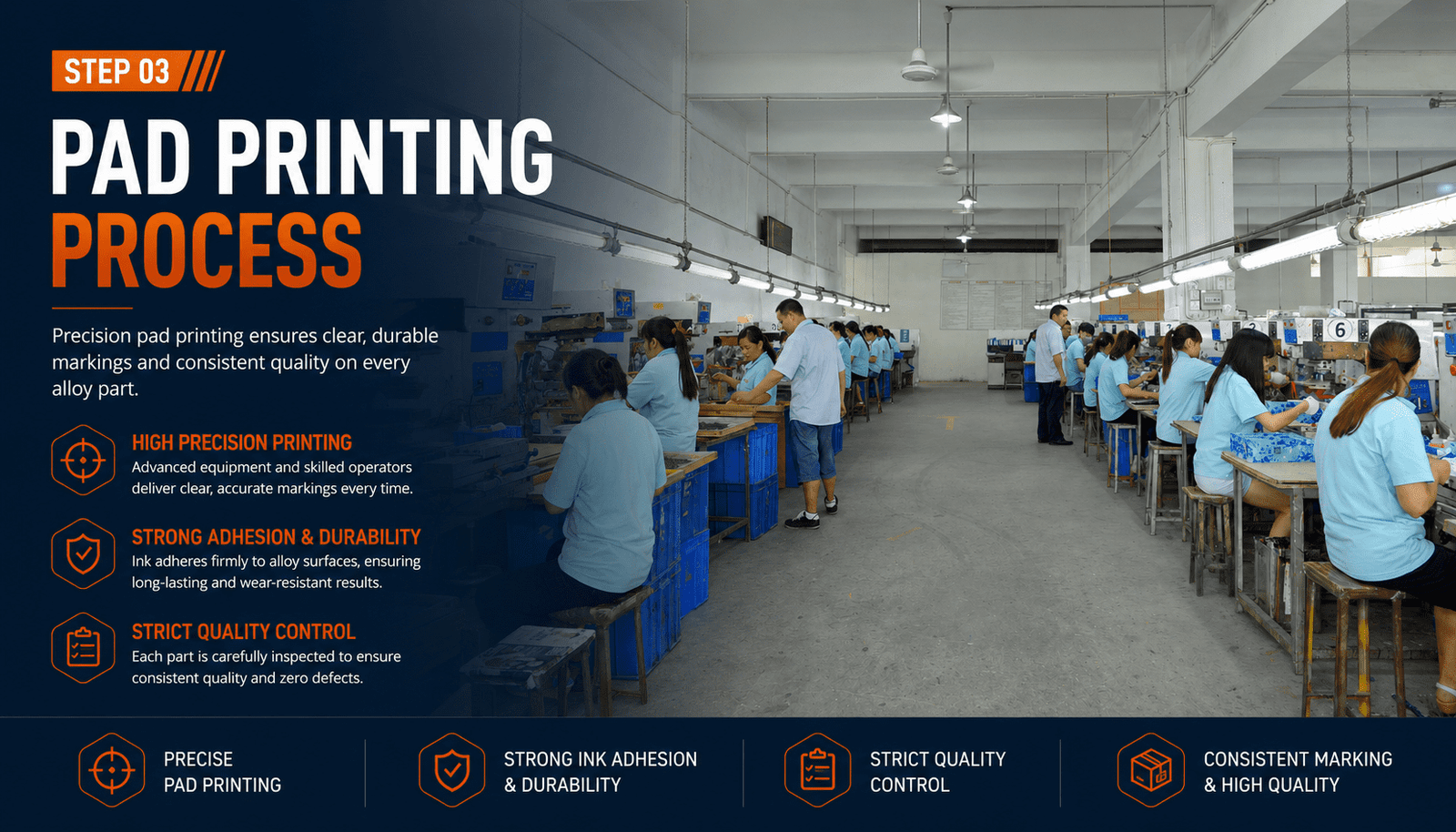
Pad Printing Process
Logos, markings, warning labels, and fine decorative details are applied to reproduce the real vehicle identity and branding.
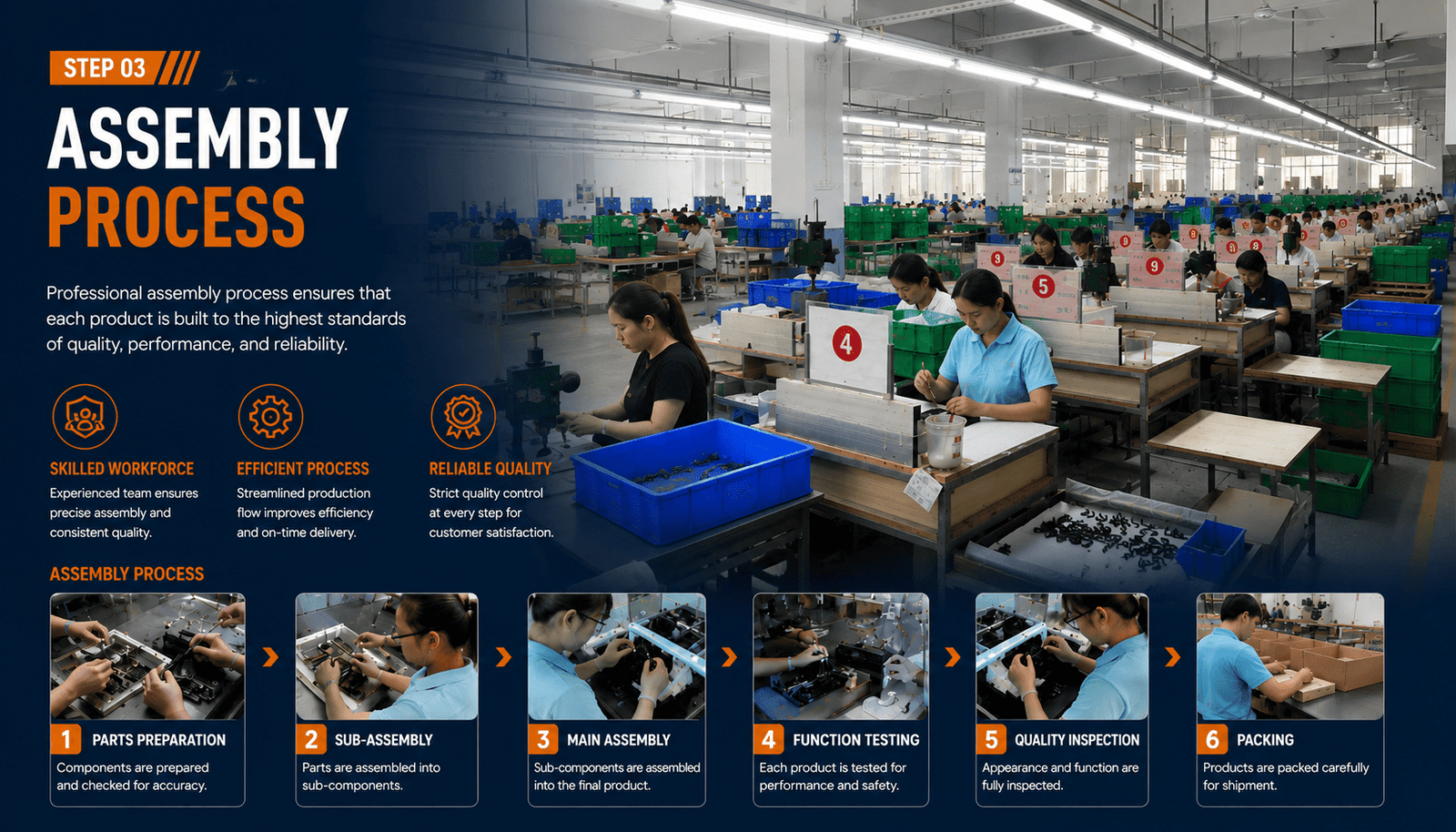
Assembly Line
Components are assembled according to approved samples to ensure correct fit, function, structure, and appearance.
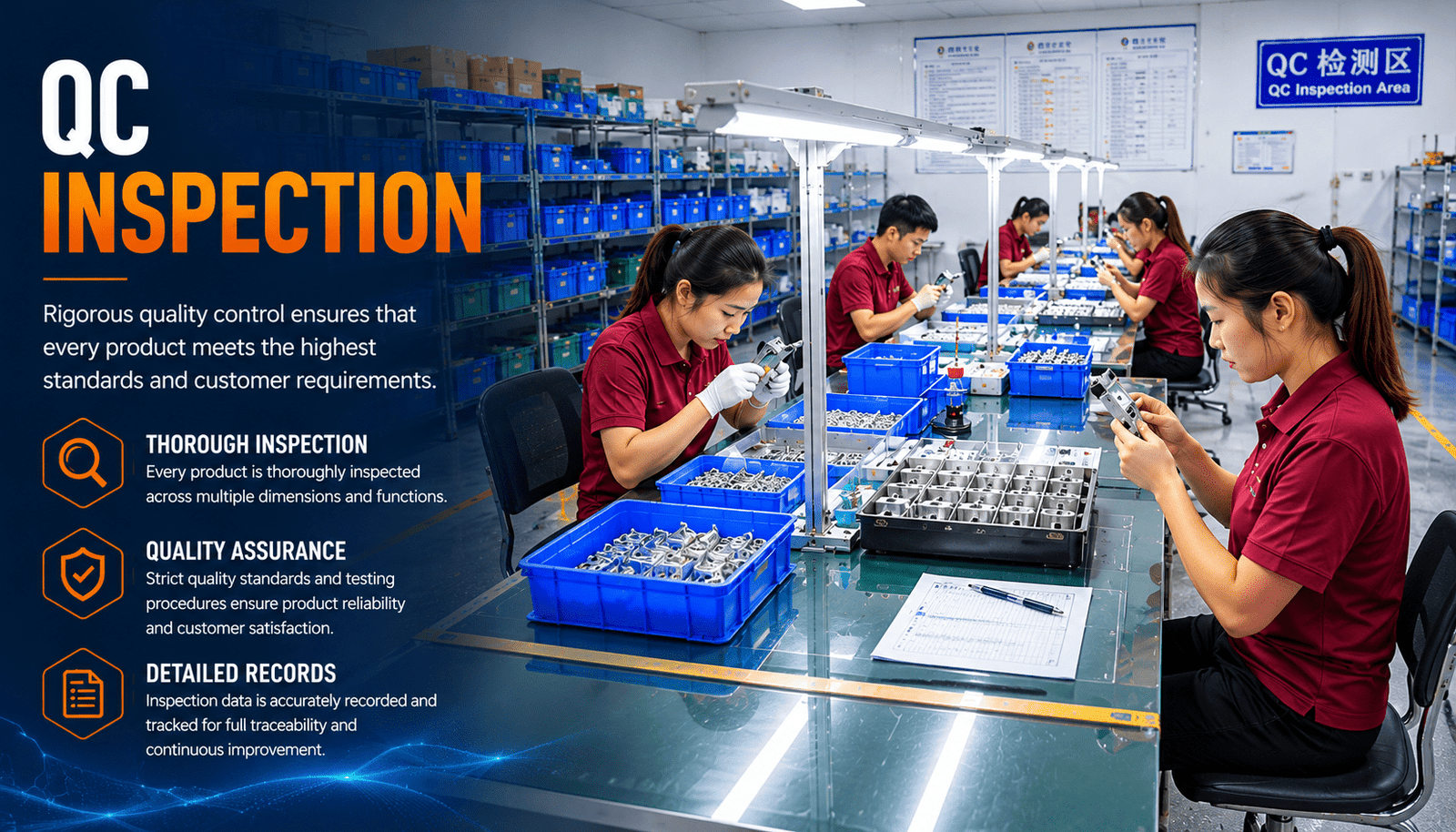
QC Inspection
Dedicated QC inspections cover appearance, printing, assembly, structure, functionality, and packaging quality throughout production.
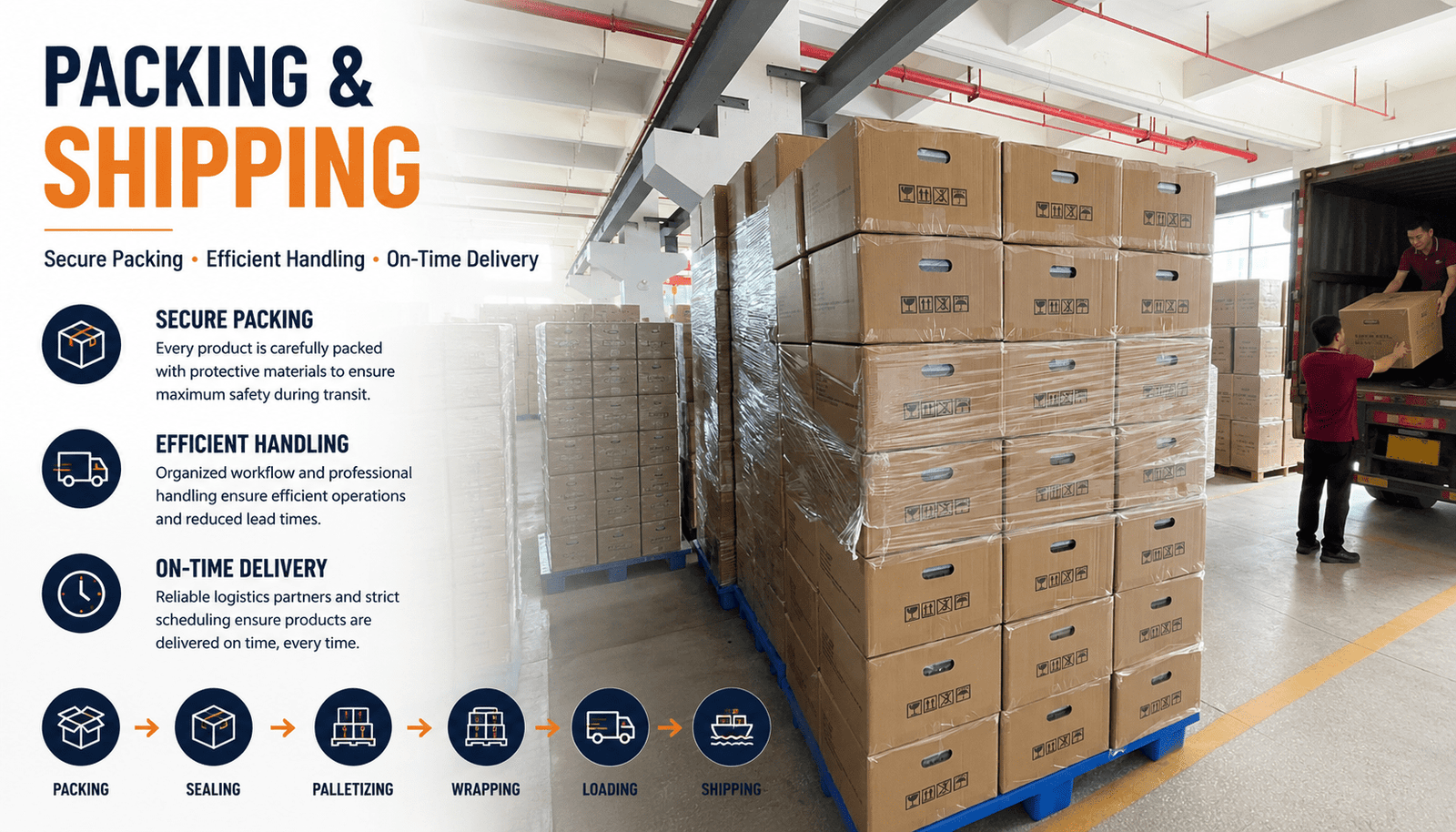
Packaging & Delivery
Products are carefully packaged and prepared for shipment to support safe handling, global transportation, and customer delivery requirements.
Have a Custom Scale Model Project?
Send us your vehicle data, reference photos, dimensions, functional requirements, packaging requirements, and estimated quantity. Our team will review your project and provide a practical manufacturing proposal.
Request a Quote