

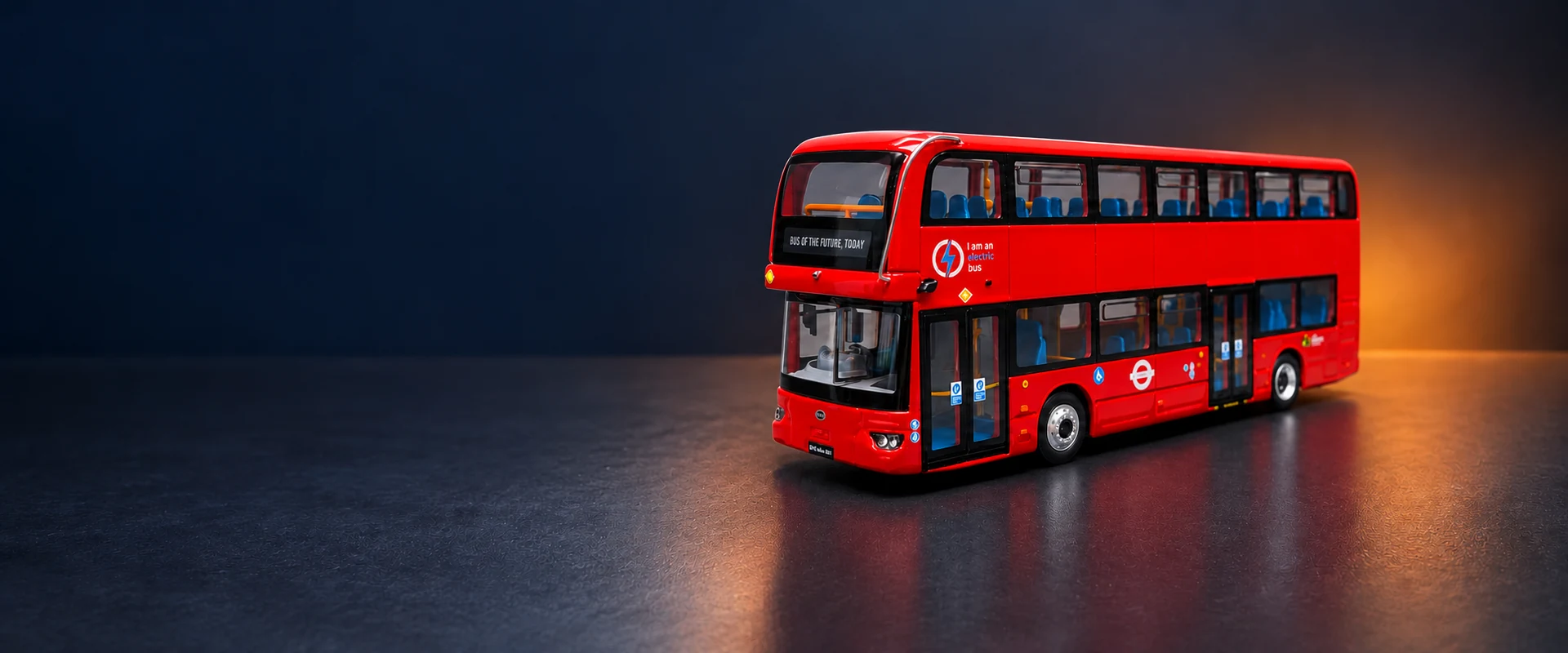
BYD Double-Decker Bus
Scale Model
A BYD double-decker bus model focused on vehicle recognition: the tall body profile, two levels of glazing, visible seating and distinctive red livery.
Project Specifications
Confirmed specifications for the completed model.
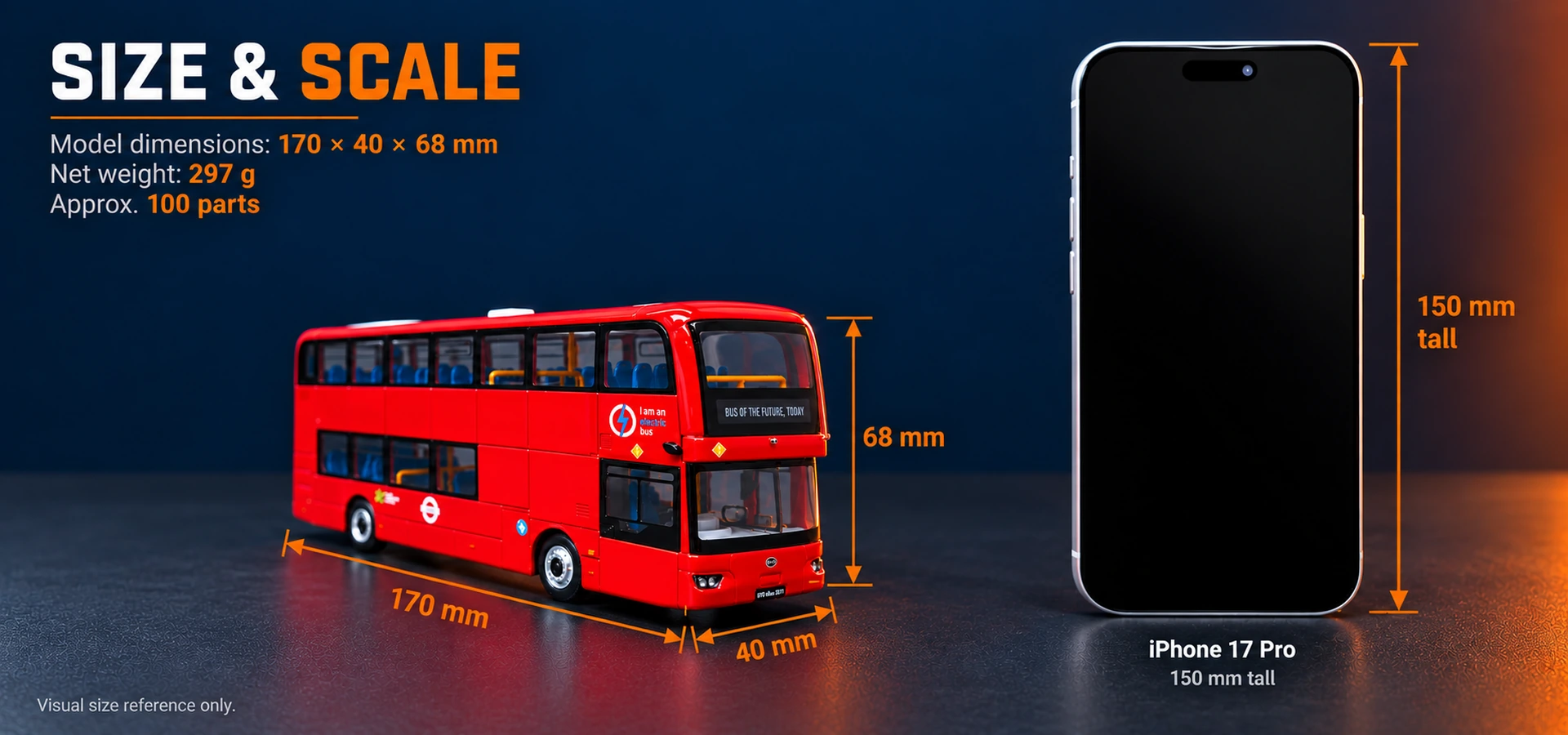
- Scale
- 1:64
- Model Dimensions
- 170 × 40 × 68 mm
- Net Weight
- 297 g
- Total Parts
- About 100 pieces
Built Around the Bus’s Identity
For a display-led bus model, the exterior and passenger space carry the story.
This double-decker bus scale model brings the vehicle’s recognisable shape into a format suited to desktop display, corporate gifting and collector programs. These are potential applications, rather than a claim about the original customer’s intended use.
The emphasis is on the relationship between the tall body, window bands, front profile and livery. Rolling wheels provide a simple handling function; the main interest comes from looking closely at the finished vehicle.
Recognisable Body Shape
The double-deck silhouette gives the model its immediate visual identity.
Passenger Space
Transparent windows allow the seating to remain part of the display.
Vehicle-Specific Livery
Red bodywork, logos and printed markings distinguish the featured bus.
Display-Focused Handling
The presentation favours exterior detail over a complex set of moving features.
Product Gallery
View the BYD double-decker bus model from the side, front and rear. Select any image to enlarge it.
Side Profile
See how the window bands and printed graphics sit across the long body.
Three-Quarter View
This angle brings the front shape and side proportions into one view.
Front Detail
The windscreen outline, mirrors and front markings define the face of the vehicle.
Rear Detail
Rear glazing, lamps and markings complete the all-round presentation.
Engineering & Visible Details
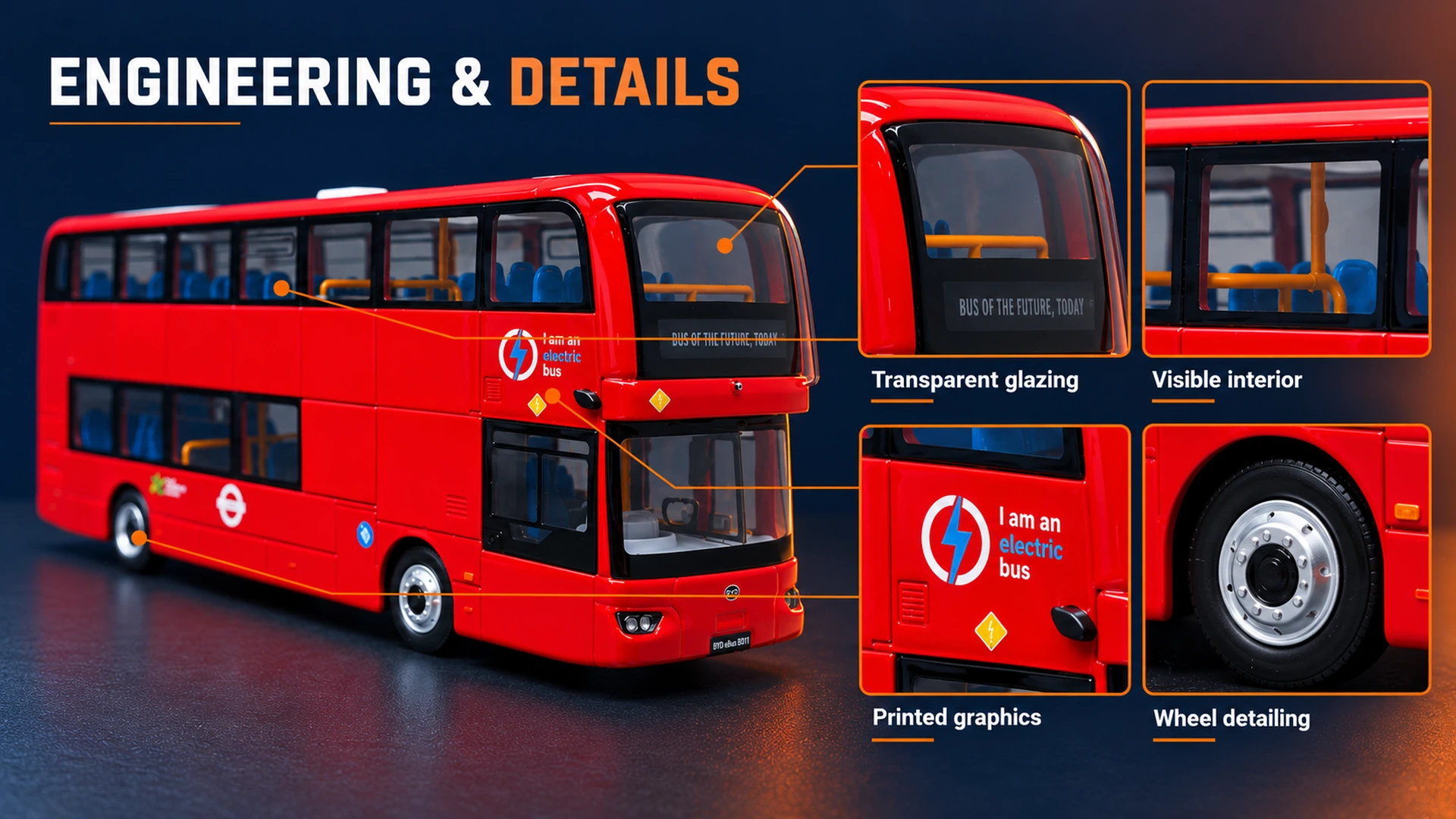
On a compact bus body, glazing, interior placement and exterior decoration need to work together. The enlarged views show details visible on the finished model.
Glazing & Interior
Window transparency and the placement of seats affect what can be seen through the upper and lower decks.
Printed Graphics
Logos and livery elements follow the body surfaces. Their placement matters around windows, door outlines and panel edges.
Wheel Detailing
Wheel and tyre profiles contribute to the stance, especially when viewed against the tall double-deck body.
A Practical Display Footprint
A phone provides a familiar visual reference for planning a desk, display cabinet or exhibition shelf. The comparison illustrates relative size; it is not a precision measurement.
OEM Development Process
For a custom bus scale model, the key decisions should be reviewed before tooling begins. This is our standard development route for new OEM projects.
3D Data & Prototype
Convert editable vehicle data into model engineering, with suitable part thicknesses and assembly clearances. Review the prototype’s proportions, visible details and agreed functions before releasing it for tooling.
Tooling & Metal Sample
Produce moulds through CNC machining and tooling work. Use the metal sample to review fit, finish, colours and decoration against the approved project requirements.
Production & Delivery
Complete casting, moulding, painting, printing and assembly as specified. Check appearance and agreed functions, then pack the models for shipment.
Production & Quality Control
For OEM bus model production, approval criteria should cover the visible surfaces as well as safe handling and packaging.
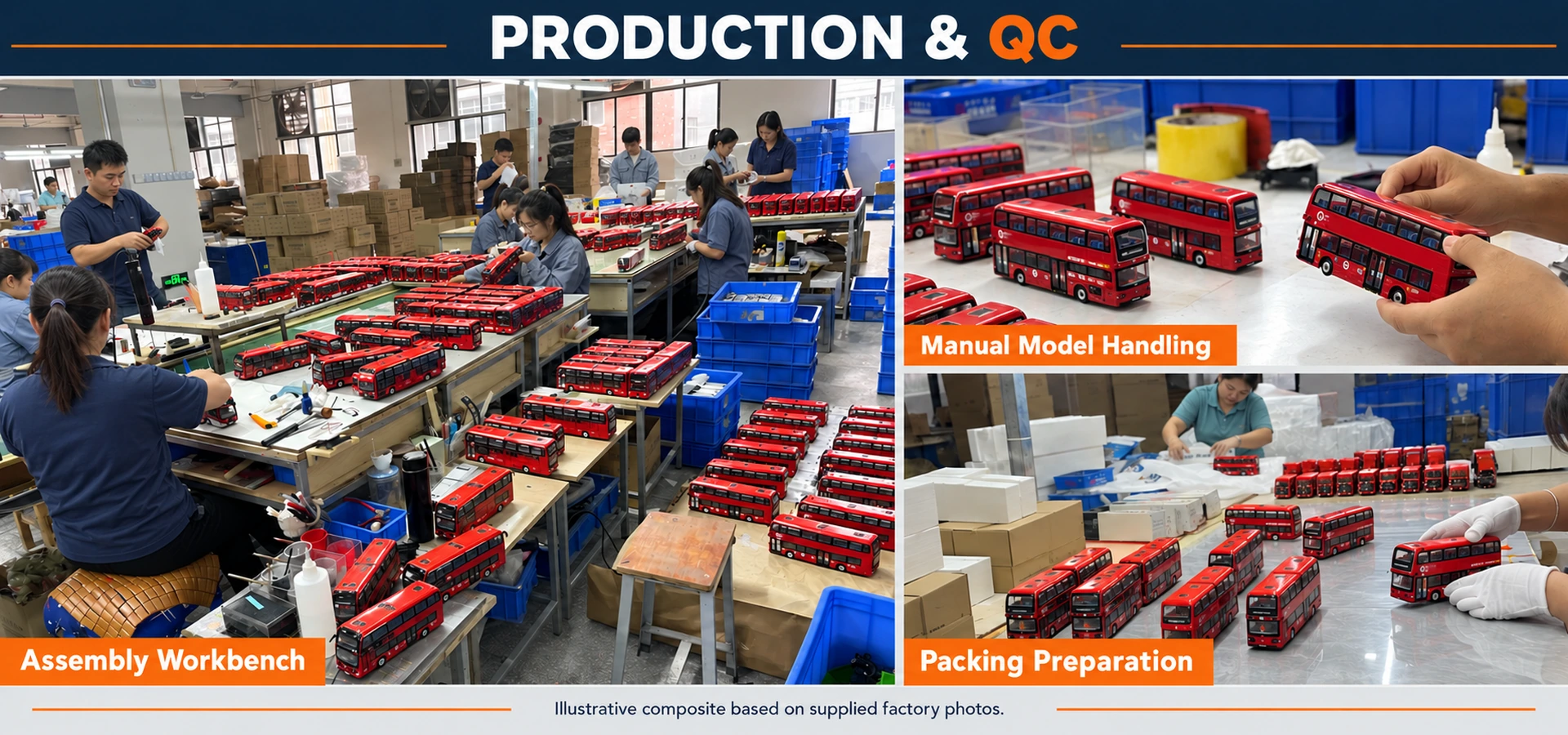
Illustrative composite based on supplied factory photographs; people and bus placement have been edited. It is not a record of this model’s production run.
Body & Surface
Review the long body for distortion and visible surface marks. Compare the red finish with the approved colour reference.
Windows & Seating
Check transparent parts for clouding and scratches, and look for visible glue residue or displaced seats behind the windows.
Printing & Assembly
Check decoration alignment around body features, component presence and wheel movement against the approved sample.
Packaging Protection
Choose an insert that supports the model and protects exposed details, including mirrors, during handling and transport.
Where This Format Fits
The BYD double-decker bus model shows how a recognisable fleet vehicle can become a tangible display piece.
Fleet & Showroom Displays
A custom bus model for dealer showrooms lets visitors examine the vehicle’s profile and livery at close range.
Corporate Gifts
A bus scale model for corporate gifts can pair a familiar vehicle design with a presentation box developed for the program.
Collector Programs
A double-decker bus model for collectors offers an all-round view of a vehicle that may be familiar from daily service.
Frequently Asked Questions
The information that helps define a new bus model project.
What do you need for a quotation?
Send vehicle photos, real vehicle dimensions, the target scale, quantity, required functions and packaging preferences. Editable 3D data is needed for development, but is not required for an initial quotation.
Can you develop a different bus or fleet livery?
Yes. As an OEM bus model manufacturer, we can assess other bus designs and customer-supplied colours and artwork. The vehicle reference and authorised branding define the project; this case study does not imply that existing branded models or tooling are available for unrestricted reuse.
Can opening doors or other functions be added?
Additional functions can be assessed for a new design. Feasibility depends on the chosen scale, available space and part structure. Agree the function list before prototype approval and tooling.
Can the packaging be customised?
Yes. Custom packaging for bus scale models can be developed around the intended use, artwork and protection needs. Share your preferred box style and any presentation or shipping requirements when requesting a quotation.
Develop a Bus Model for Your Brand
Share your vehicle references and intended use. Scale Artisan can review the design, display priorities and packaging for your OEM project.
