

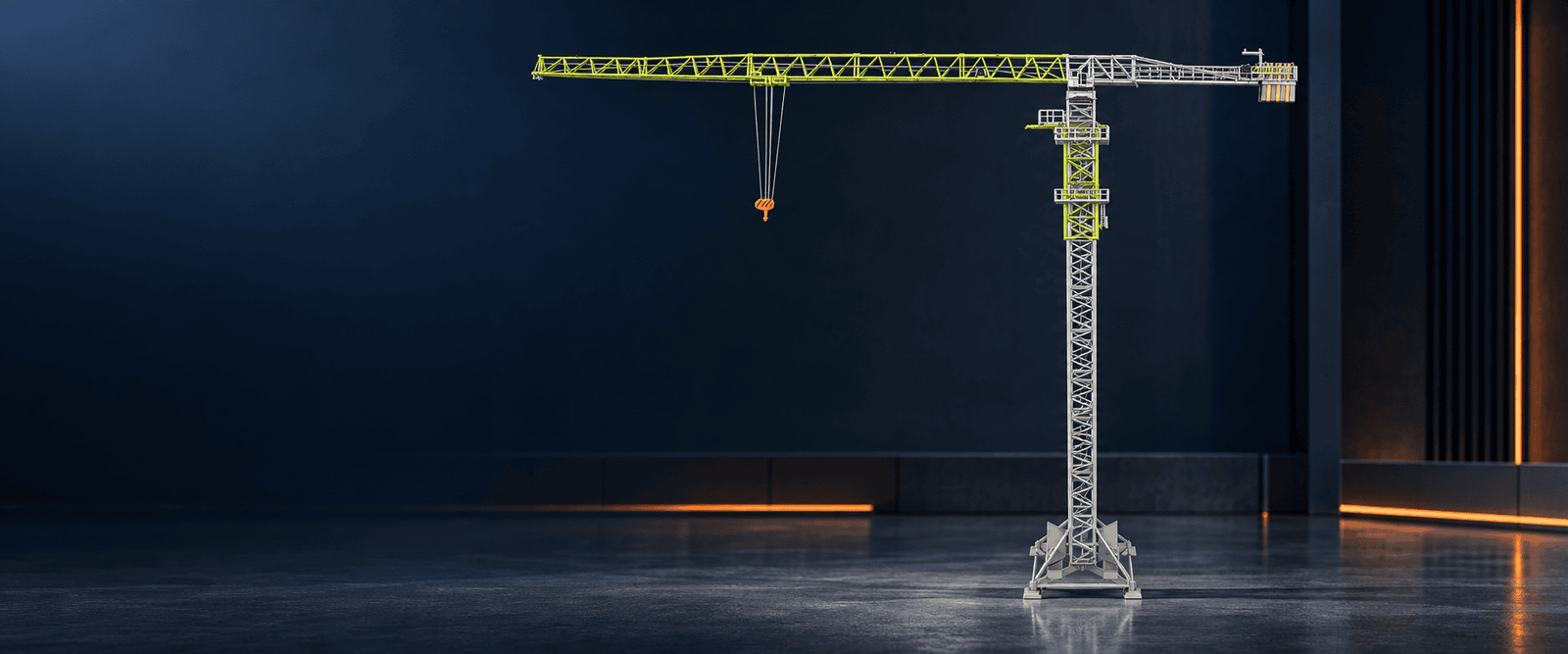
Custom Construction Equipment Model
ZOOMLION R370-20RB Tower Crane Model
A functional display model that preserves the crane’s open lattice structure, rigging layout, removable counterweights and manually controlled hook movements.
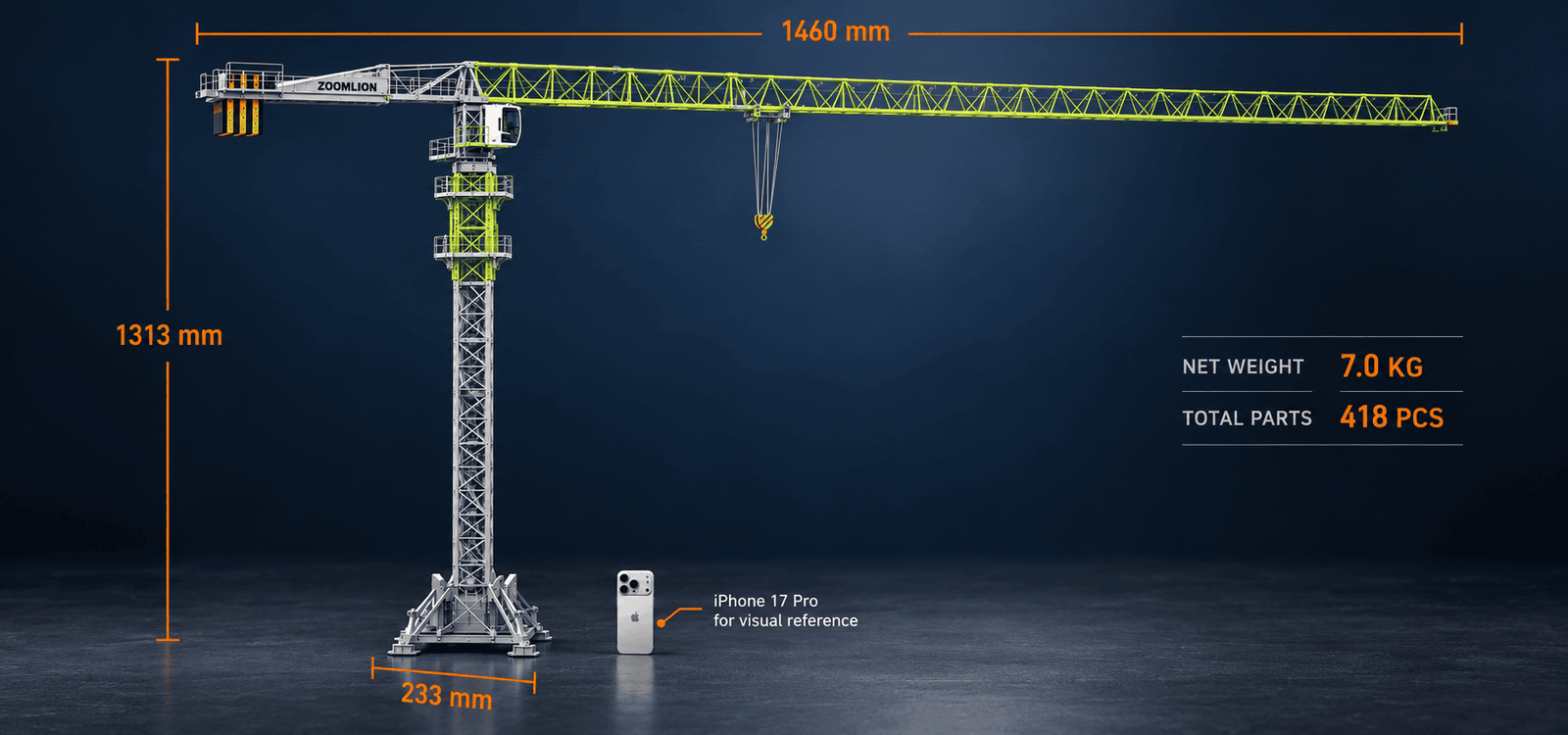
Confirmed Project Data
Project Specifications
The specification panel contains only the project data confirmed for this finished tower crane scale model.
Project Purpose
Turning Crane Geometry into a Display Model
This project centres on the visual identity of a flat-top tower crane: long open trusses, exposed access platforms, suspended rigging and a compact operator cab.
A tower crane model is read from its overall geometry before any small detail is noticed. The challenge was therefore to keep the long jib, counter-jib, mast and base visually balanced while retaining the open structure that makes the R370-20RB immediately recognisable.
The model is suited to brand presentations, dealer showrooms, trade shows and collector display. Its value is not based on decoration alone: the working reels, trolley travel, hook movement and removable counterweights allow the product story to be demonstrated rather than described only through static graphics.
As a custom tower crane model, it also shows how a large industrial machine can be translated into a manageable presentation piece without hiding the access systems, platforms, railings and structural connections that define the original equipment.
Product Gallery
The Model from Four Viewing Positions
These views show the complete crane, tower-head arrangement, platform system and braced base without changing the original product angles.
Functional Demonstration
Six Confirmed Mechanical Functions
The functional layout uses manual rotation and line-reel control to demonstrate the model’s confirmed moving parts.
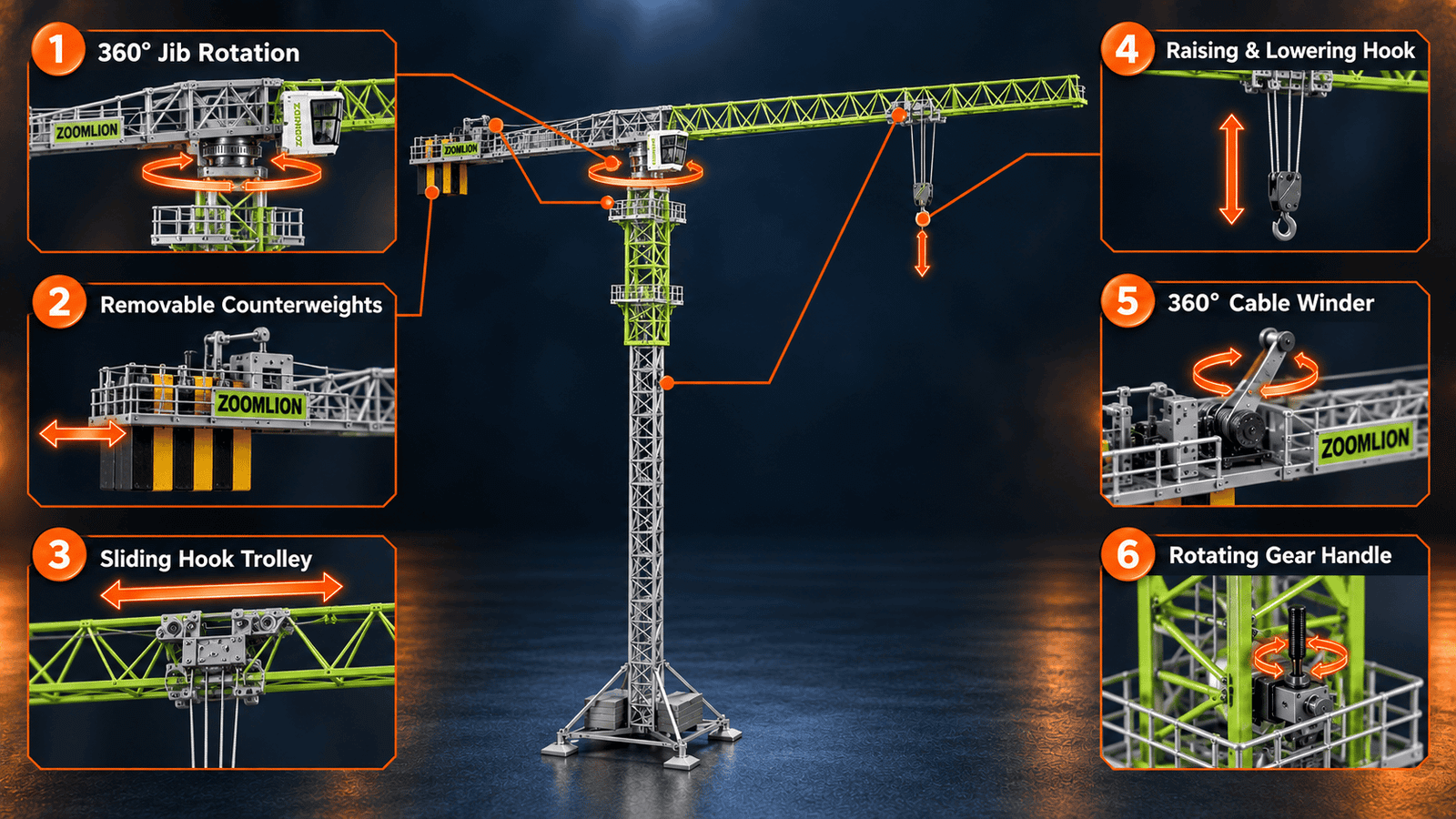
360° Upper Rotation
The jib and counter-jib assembly rotates smoothly through 360 degrees without interference.
Removable Counterweights
The counter-jib ballast blocks can be removed and installed for closer structural presentation.
Travelling Hook Trolley
The hook trolley moves forward and backward under the control of jib line reels 1 and 2.
Raising and Lowering Hook
The main jib line reel controls the vertical movement of the suspended hook.
Rotating Rigging Arm
The counter-jib rigging arm rotates through 360 degrees without obstructing adjacent parts.
Platform Gear Handle
The gear handle on the No. 4 platform rigging arm rotates freely through 360 degrees.
Engineering and Details
Visible Structure without Simplification
The engineering focus is the integration of slender lattice members, platform connections, access details and moving rigging into one coherent physical model.
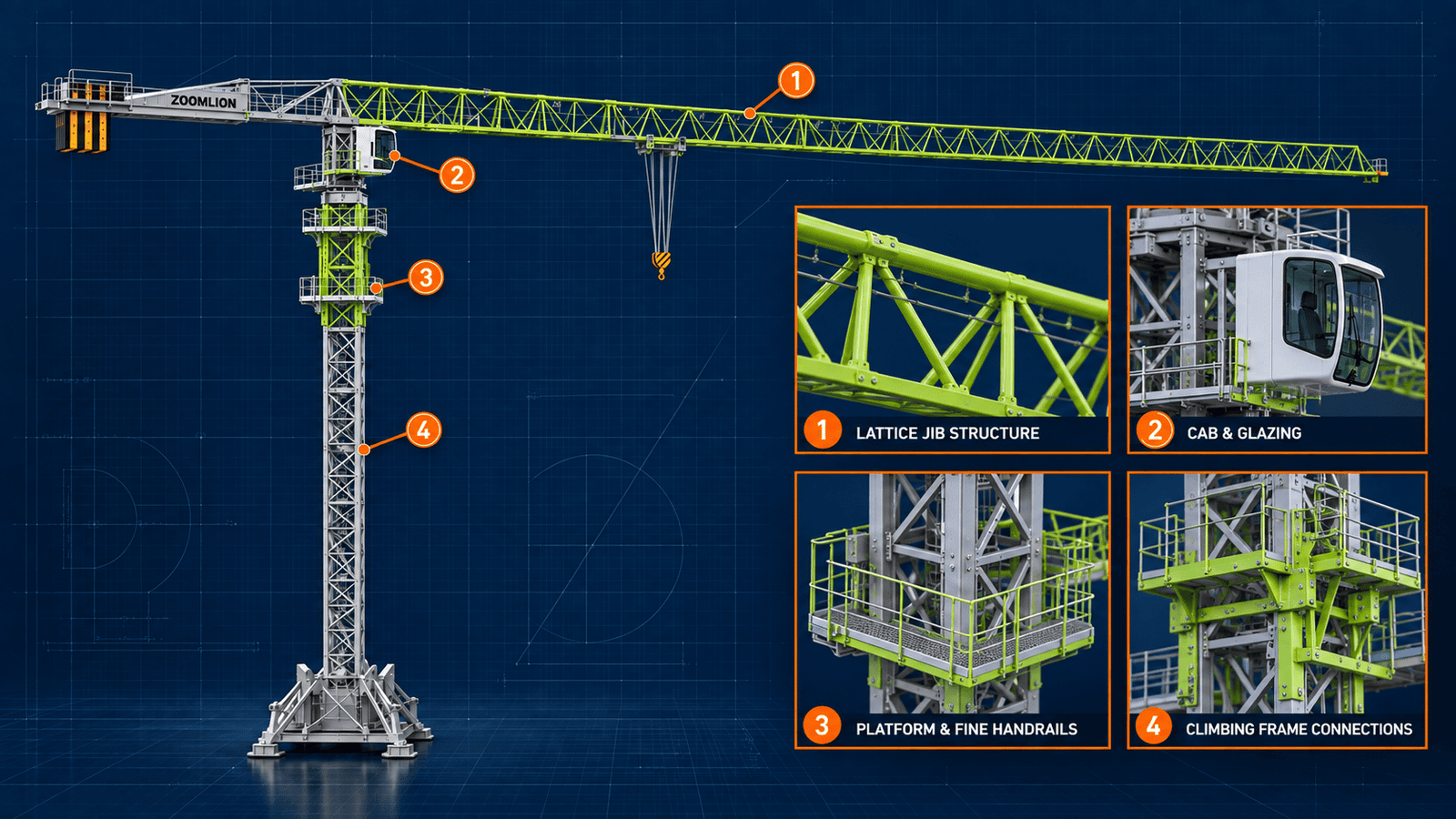
Open Lattice Jib
The truss pattern remains exposed along the long boom, preserving the light visual structure of the crane.
Cab and Glazing
The small white cab retains its angular housing, dark transparent windows and visible ZOOMLION identification.
Platforms and Handrails
Fine guardrails, ladders and perforated walkways define the service access around the upper mast.
Climbing-Frame Connections
Green structural members connect around the grey lattice mast without covering the visible joint arrangement.
Visual Scale Reference
A Display Piece with Real Presence
The phone comparison communicates the model’s visual volume without presenting the image as laboratory measurement. Its tall profile works best in a showroom, exhibition or dedicated display area.
OEM Development
From Equipment Data to Finished Model
A custom construction equipment model moves through three controlled stages before production and delivery.
3D Data and Prototype
Customer equipment data is converted into production-ready model geometry. Scale, wall thickness, assembly gaps, moving parts and visible details are reviewed before a physical prototype is made for confirmation.
Tooling and Metal Sample
CNC machining, precision engraving and mould manufacturing prepare the production tooling. A metal sample is then used to confirm appearance, fit, structure and the required movements before mass production.
Production, QC and Delivery
Production covers die casting, injection moulding, painting, printing, assembly and function testing. Final inspection, customised packaging and shipment follow after the approved quality standard is confirmed.
Quality Control
Inspection Priorities for a Tall Lattice Model
The QC presentation identifies the visible areas that require attention on this project: alignment, paint and printing, delicate access parts and packaging completeness.

Overall Alignment
The long jib, mast sections and base are reviewed as a complete assembly so visible lean, twist or poor seating can be identified before packing.
Paint and Printing
Colour boundaries, surface cleanliness and printed brand markings are checked for visible dust, overspray, uneven coverage or misalignment.
Joints and Handrails
Fine railings, ladders, platforms and lattice connections are inspected for secure fit, correct positioning and damage from handling or assembly.
Function and Packaging
The confirmed movements are checked for suitable operation. Major sections and accessories are then reviewed against the packaging arrangement before shipment.
Business Applications
Where This Industrial Display Model Works
The scale, movement and exposed engineering make the model useful wherever a crane brand needs to explain equipment visually.
Dealer Showrooms
A floor or plinth display gives sales teams a physical reference for discussing the crane’s overall arrangement and visible access systems.
Trade Shows
The tall silhouette attracts attention while the moving trolley, hook and upper assembly support practical product demonstrations.
Product Presentations
Brand teams can use the model to introduce structural and functional features when full-size equipment cannot be brought into the venue.
Corporate Displays
The model can serve as a long-term industrial centrepiece in reception areas, meeting rooms and customer experience centres.
Museum Exhibits
The visible lattice construction and access details make it suitable for exhibits explaining construction equipment and crane engineering.
Collector Programs
A functional heavy equipment model offers collectors more interaction than a static miniature while retaining clear brand identity.
Project Planning
Custom Tower Crane Model FAQs
Four practical questions to clarify before engineering and quotation begin.
What information is needed to develop a custom tower crane model?
Editable 3D equipment data is preferred for development, supported by colour references, logo artwork, photographs and drawings of important visible areas. The target scale, required functions, packaging concept and intended order quantity should also be defined.
Can the moving functions be customised?
Yes, but each requested movement must be reviewed against the selected scale, available space, structural strength and user operation. We confirm the feasible function list before prototype and tooling work begins.
Can you develop other construction equipment models?
Yes. The same OEM process can be applied to cranes and other construction machinery when sufficient reference data is available. The engineering approach is adjusted to the equipment structure and the features the customer wants to demonstrate.
Can the colours, logos and packaging be customised?
Yes. Brand colours, printed graphics and packaging can be developed from customer-approved references. Packaging design is reviewed around the assembled size, protected components, presentation purpose and shipping requirements.
Start Your Custom Model Project
Need an OEM Model for Your Crane Brand?
Share the basic project information and we can review the product structure, suitable scale, visible details, possible functions and packaging direction.
