
Construction Equipment Model Case Study
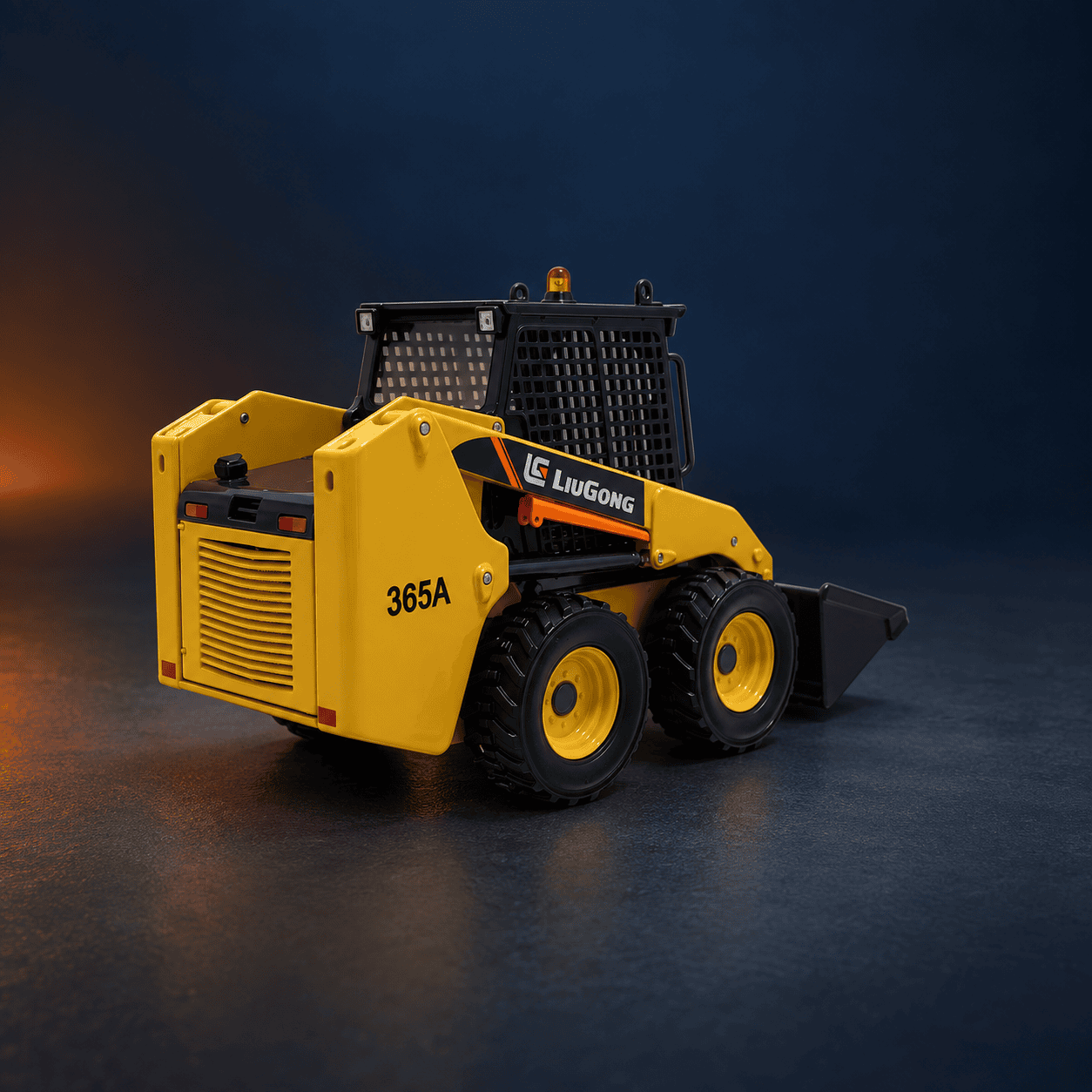
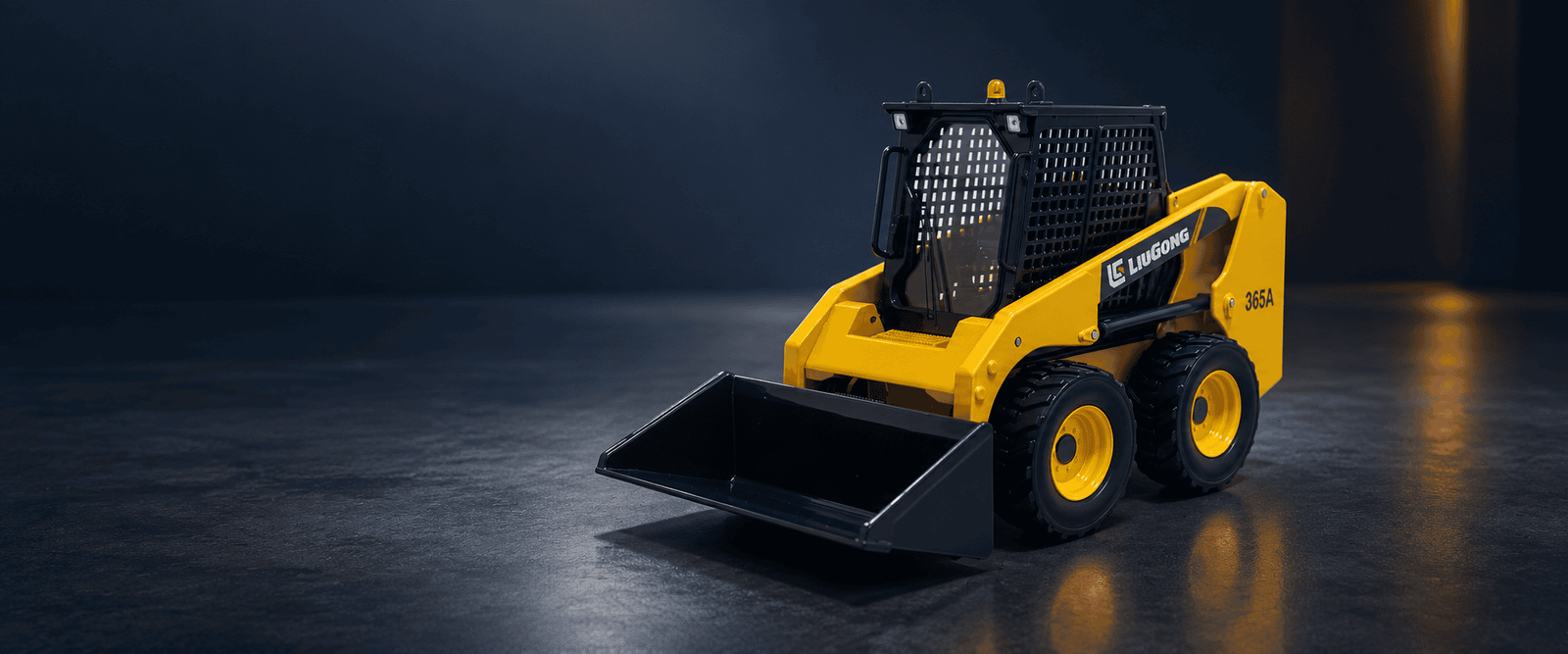
LiuGong 365A Skid Steer Loader Model
A functional OEM miniature that translates the compact body, lifting system and brand graphics of the original machine into a display-ready physical model.
Confirmed Project Data
Project Specifications
The specification cards below show only confirmed information for this LiuGong construction equipment model.
Purpose and Engineering Focus
A Compact Machine with Real Movement
This high-fidelity skid steer loader model is suited to brand presentation, dealer display, corporate gifting and collector programmes. Instead of treating the machine as a static shell, the project preserves the recognisable relationship between the cab, loader arms, bucket, wheels and rear engine cover.
The engineering task was to retain the dense proportions of a skid steer loader while allowing the main moving areas to operate cleanly. The front door, lifting assembly, bucket and engine cover all need practical clearances, yet the closed model must still read as one controlled, compact structure.
Visible LiuGong graphics, tyre tread, cab glazing and equipment panels give the model value at close viewing distance. These features make the custom skid steer scale model useful as an industrial equipment display model rather than a generic miniature vehicle.
Compact Proportion Control
Cab, body, wheels and bucket remain visually balanced without enlarging individual features.
Clear Moving Interfaces
Door, arms, bucket and engine cover require enough clearance for movement and positioning.
Brand Recognition
Colour separation, model markings and printed graphics keep the miniature identifiable.
Display-ready Finish
Visible surfaces and panel relationships are controlled for close inspection in professional settings.
Product Views
Model Gallery
Multiple views show how the black cab, yellow bodywork, loader geometry and wheel stance work together across the finished model.
Confirmed Functions
Functional Demonstration
The operating points are limited to functions confirmed for the finished model and are designed for controlled product demonstration.
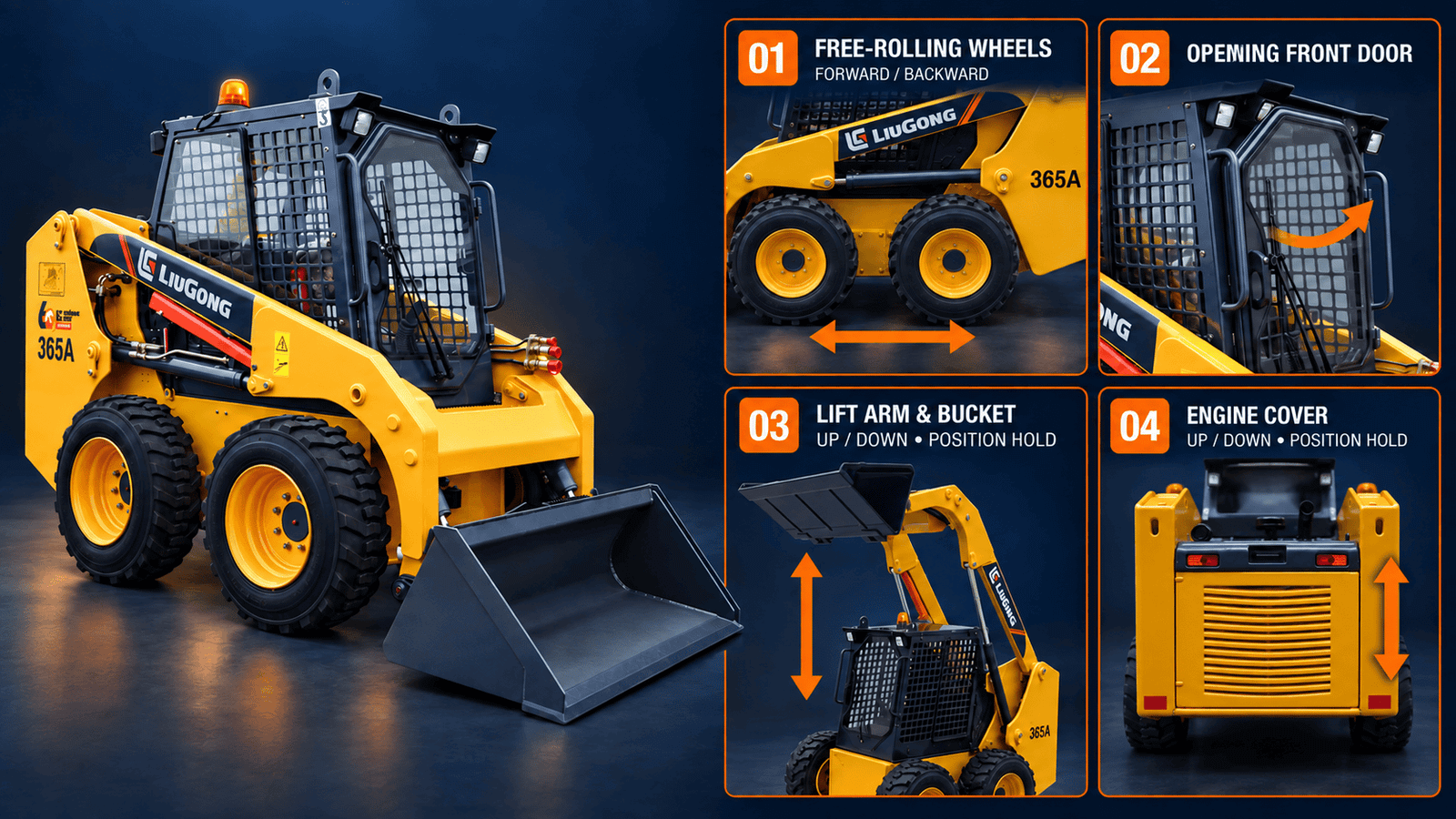
Rolling Wheels
The wheels move freely forward and backward for simple tabletop demonstration.
Opening Front Door
The front cab door opens to reveal the access area while preserving the cab outline when closed.
Movable Arms and Bucket
The main arms and bucket move vertically and can hold selected display positions.
Positionable Engine Cover
The rear engine cover moves up and down and can remain in position for display.
Visible Construction
Engineering and Visible Details
The model combines moving joints with small exterior features that remain legible when the product is viewed at close range.
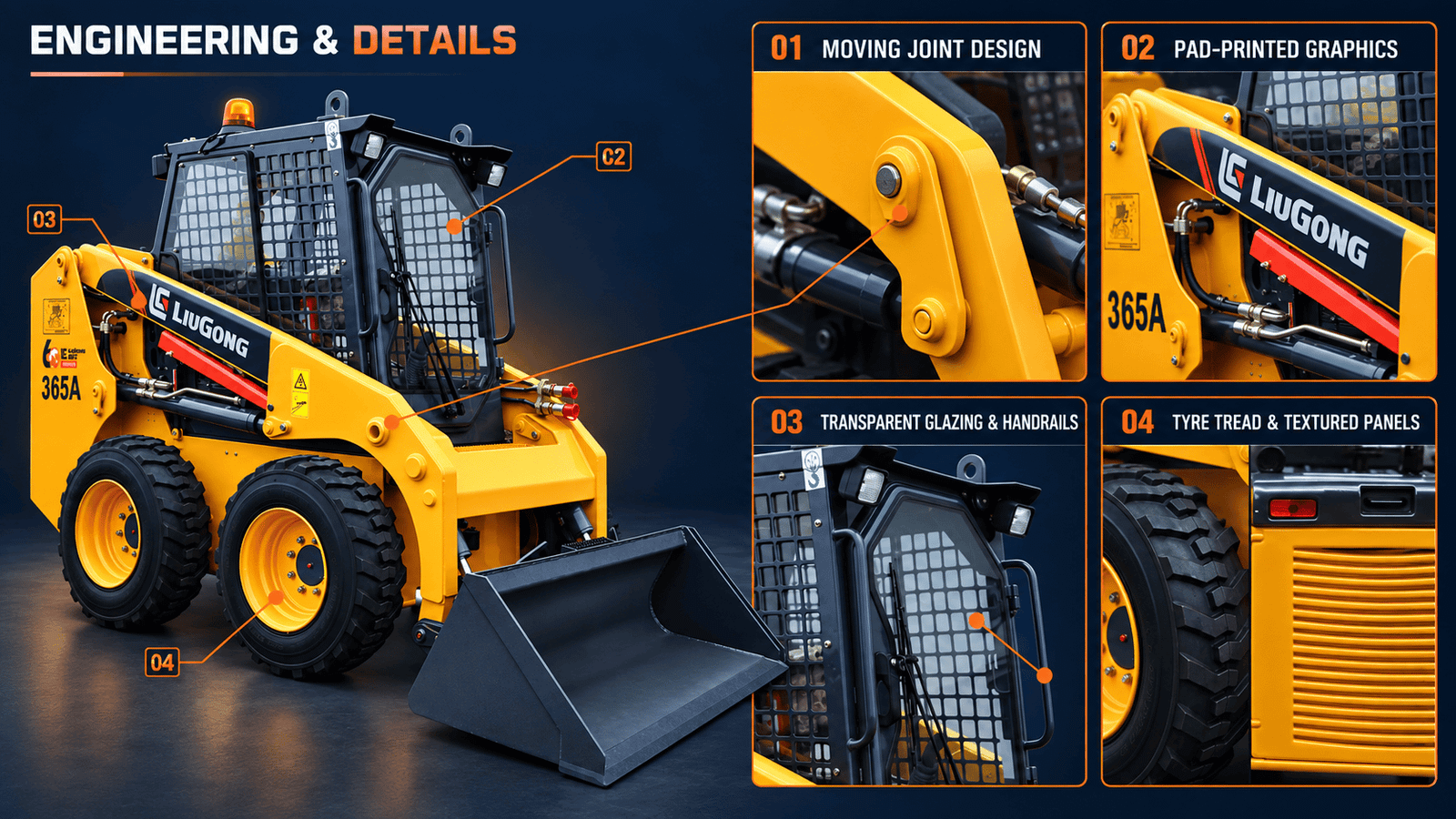
Moving Joint Design
Pivot areas are integrated into the loader-arm and bucket geometry without introducing unrelated structures.
Cab and Glazing
Transparent window areas and the dark cab frame retain the enclosed appearance of the operator compartment.
Printed Graphics
Visible LiuGong branding and model markings support immediate recognition of the machine.
Tyre Tread and Rims
Directional tread blocks, wheel hubs and rim colour separation give the undercarriage stronger visual depth.
Equipment Panels
Rear grille texture, light elements and body divisions add readable surface information without fictional mechanisms.
Controlled Panel Gaps
Door and engine-cover boundaries must remain consistent enough to read as separate moving parts when closed.
Display Presence
A Practical Scale for Close Viewing
The model has enough visual presence for a showroom desk, exhibition counter or display cabinet while remaining easy to handle and present alongside brand materials.
OEM Development Workflow
From Equipment Data to Production
A structured development route connects the original machine information with tooling, sample approval and repeatable production.
3D Data and Prototype
Customer equipment data is converted into model production data. Scale, wall thickness, assembly gaps, moving parts and visible details are adjusted before a physical prototype is made for review.
Tooling and Metal Sample
CNC machining, precision engraving and mould production establish the manufacturing system. A metal sample close to production quality is then used to confirm structure, appearance, fit and function.
Production, QC and Delivery
Die casting, injection moulding, painting, pad printing, assembly, function testing, final inspection, packaging and shipment are coordinated as one controlled production sequence.
Production Control
Mass Production and Quality Control
The production focus is consistent appearance, complete assembly and reliable operation across the moving parts confirmed for the project.
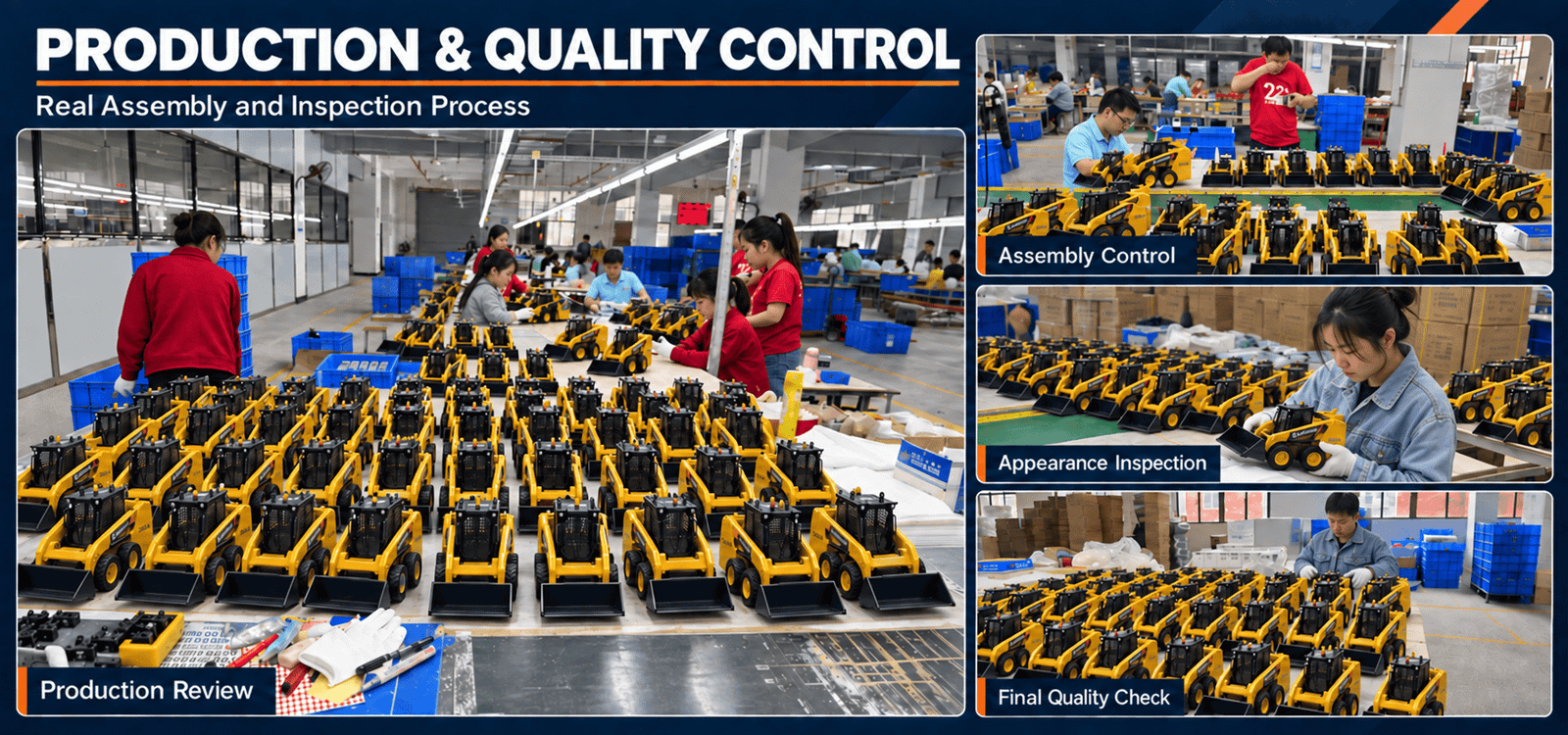
Production Controls for a Compact Functional Model
Inspection follows the parts from finished surfaces to final movement checks. Particular attention is given to cab alignment, printed markings, wheel direction, panel fit and the clearances around the loader and engine-cover assemblies.
Component Inspection
Visible body and structural parts are reviewed for deformation, damaged edges, surface marks and incomplete features before assembly.
Paint and Printing Control
Yellow and black finishes are checked for clean colour separation, dust, uneven coating and visibly displaced logos or model markings.
Function and Appearance Testing
Confirmed moving areas are checked for appropriate tightness and positioning, while the assembled model is reviewed for gaps, missing parts and glue residue.
Final Packaging
The completed model receives a final visual check before it is secured in the selected custom packaging configuration for transport and presentation.
Commercial Use
Business Applications
A functional construction equipment model can communicate product identity in places where a full-size machine cannot be displayed.
Dealer Showrooms
Sales teams can use the model to discuss the machine’s form and working layout at a desk or customer meeting area.
Trade Shows
The compact physical model supports product conversations when transport space and exhibition footprint are limited.
Product Presentations
Movable elements make the miniature useful for demonstrating key exterior functions during launches and distributor meetings.
Corporate Gifts
A branded equipment miniature gives customers and project partners a lasting reference to the original machine.
Marketing Displays
The model can support photography, exhibition displays and campaign content without replacing the technical role of the full-size product.
Collector Programmes
Recognisable markings, moving features and close-view details give the model relevance for construction-equipment collectors.
Project Questions
Frequently Asked Questions
What information is needed to develop a custom equipment model?
Editable 3D data of the original equipment is normally required for development. Reference photos, dimensions, colour and graphic files, target scale, required functions, packaging expectations and order quantity help define the project before engineering begins.
Can opening and moving functions be customised?
Yes. Functions can be evaluated around the original equipment structure and the available space at the selected scale. Each movement should be confirmed during project definition because it affects data conversion, part separation, tooling, assembly and testing.
Can you develop other construction equipment models?
Yes. We develop custom models across construction machinery and related industrial equipment. Feasibility depends on the supplied data, scale, visible structure, requested functions, materials, packaging and intended production quantity.
Can logos, colours and packaging be customised?
Yes. Brand colours, printed graphics and packaging can be developed to approved project files. Packaging options are evaluated according to model size, protection needs, presentation requirements and transport conditions.
Start Your Custom Model Project
Need an OEM Equipment Model for Your Brand?
Share the available product information with our team. We can review the design direction, functional priorities and presentation needs for your next custom scale model project.