


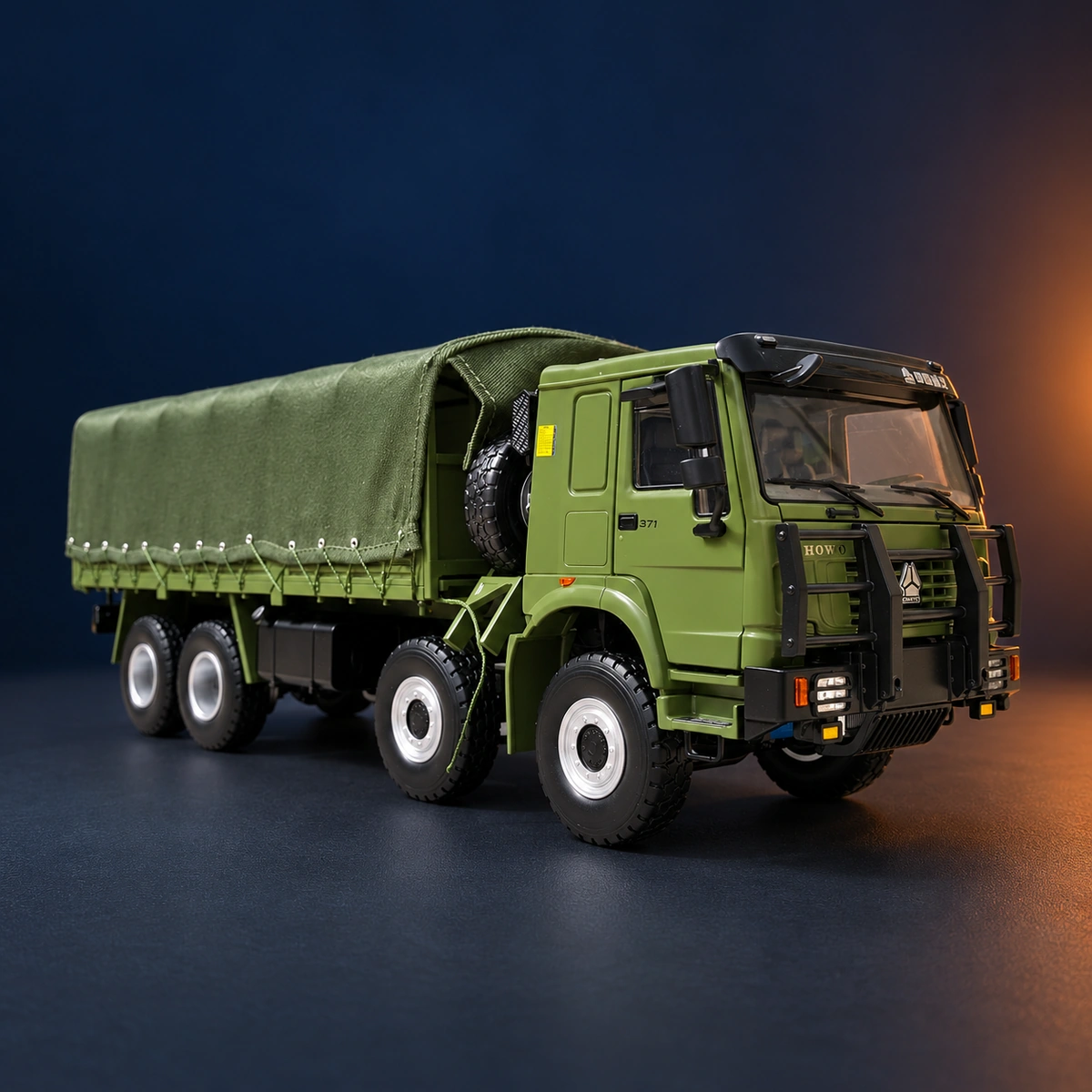
1:24 SINOTRUK HOWO 8x8 Military Truck Scale Model
A four-axle military transport vehicle model with a fabric-covered cargo body, presented as a reference for custom OEM truck model development.
Discuss Your Model ProjectHOWO 8x8 from Bodywork to Chassis
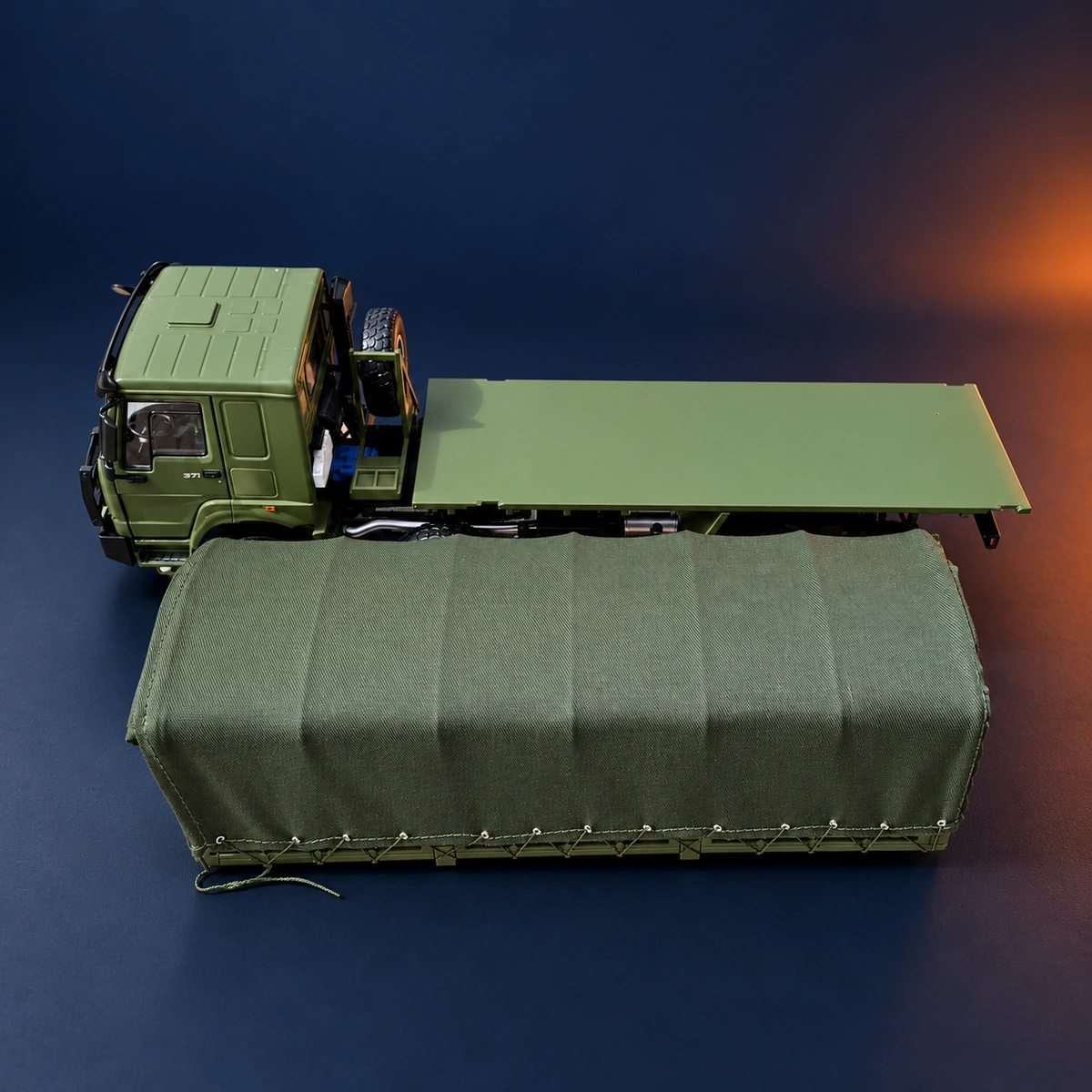
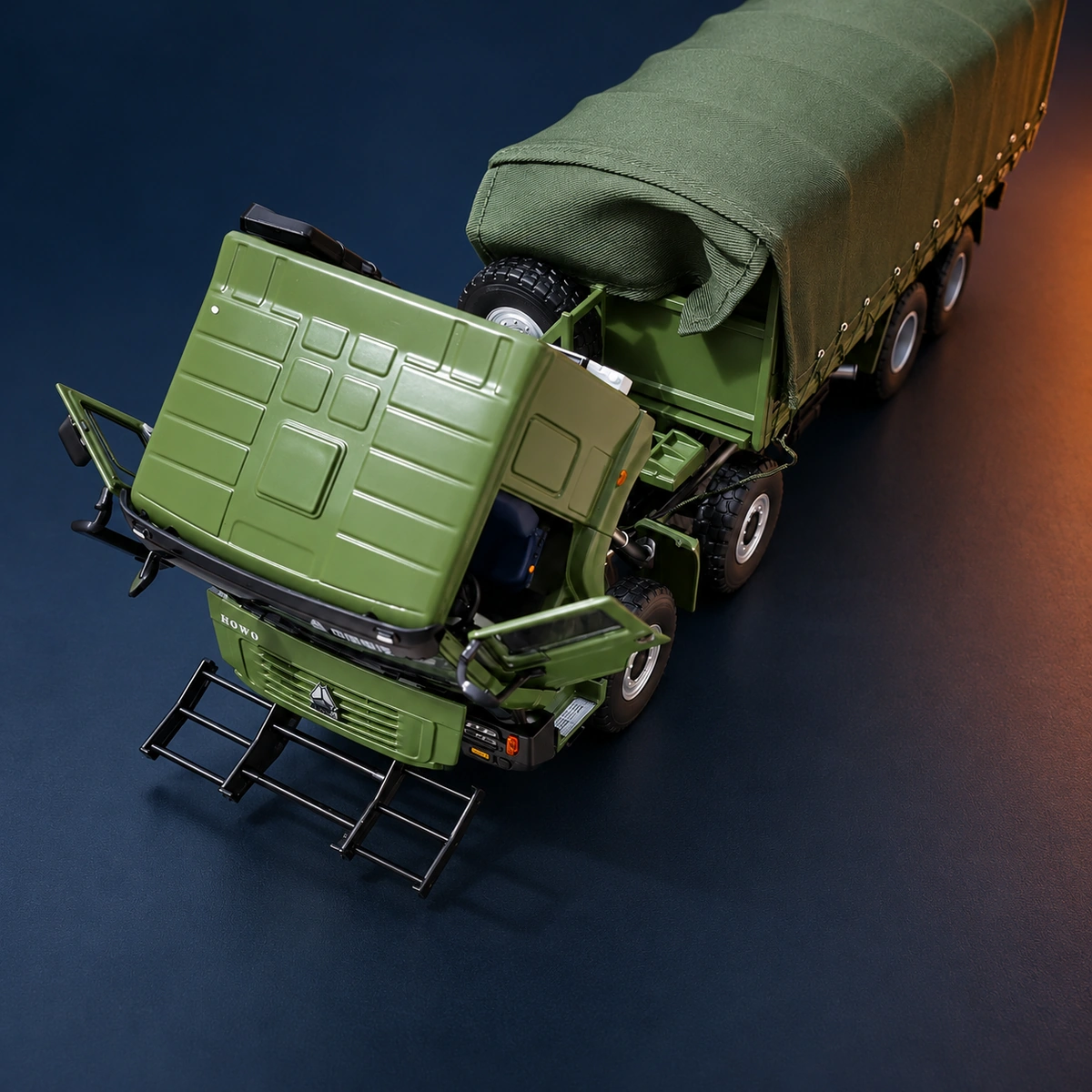
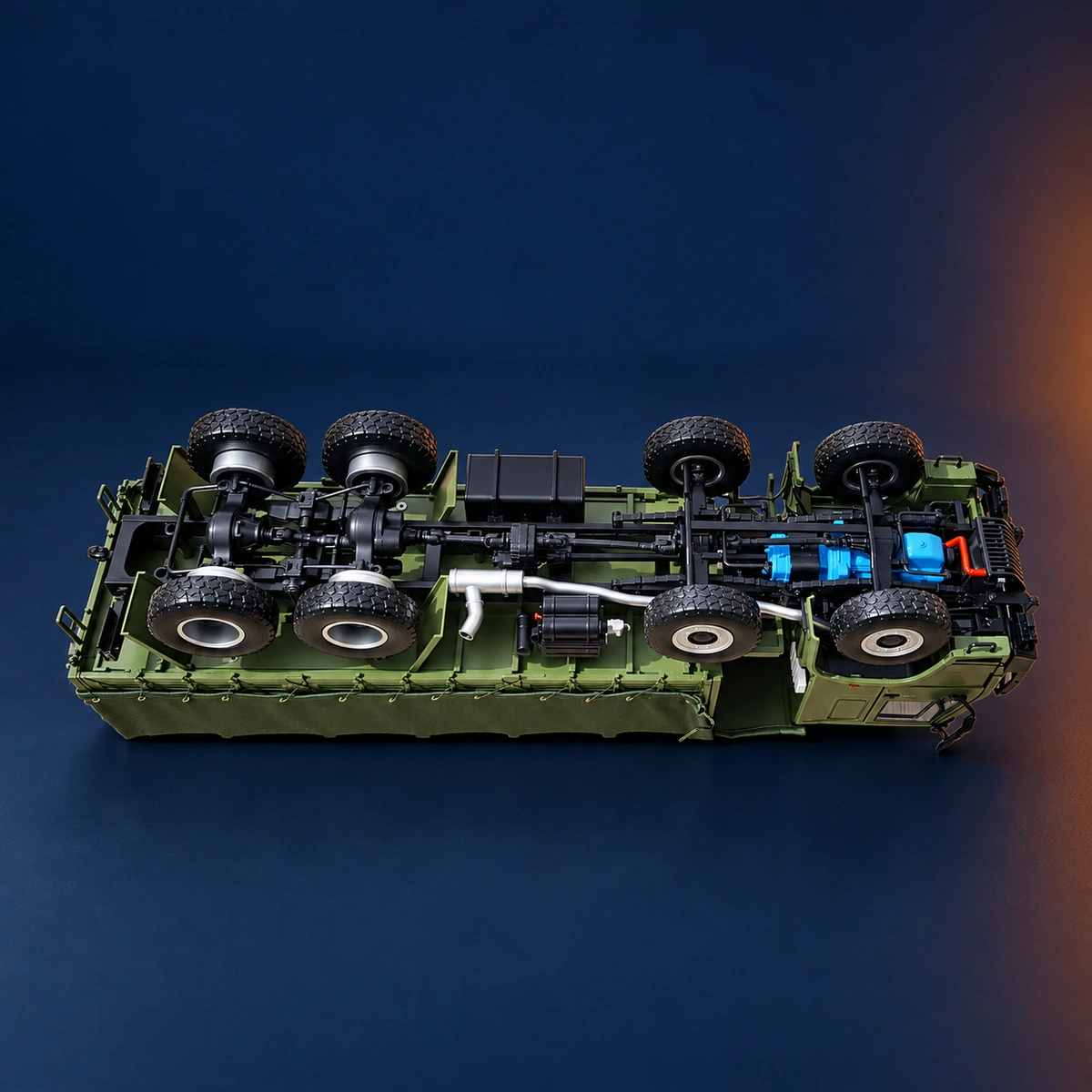
Explore the SINOTRUK HOWO 8x8 military truck scale model through its cab profile, uncovered cargo deck, opening configuration and underside view.
Six Functions to Demonstrate
This functional truck scale model combines free rolling, opening body components and a mechanical connection between the rear wheels and driveshaft.
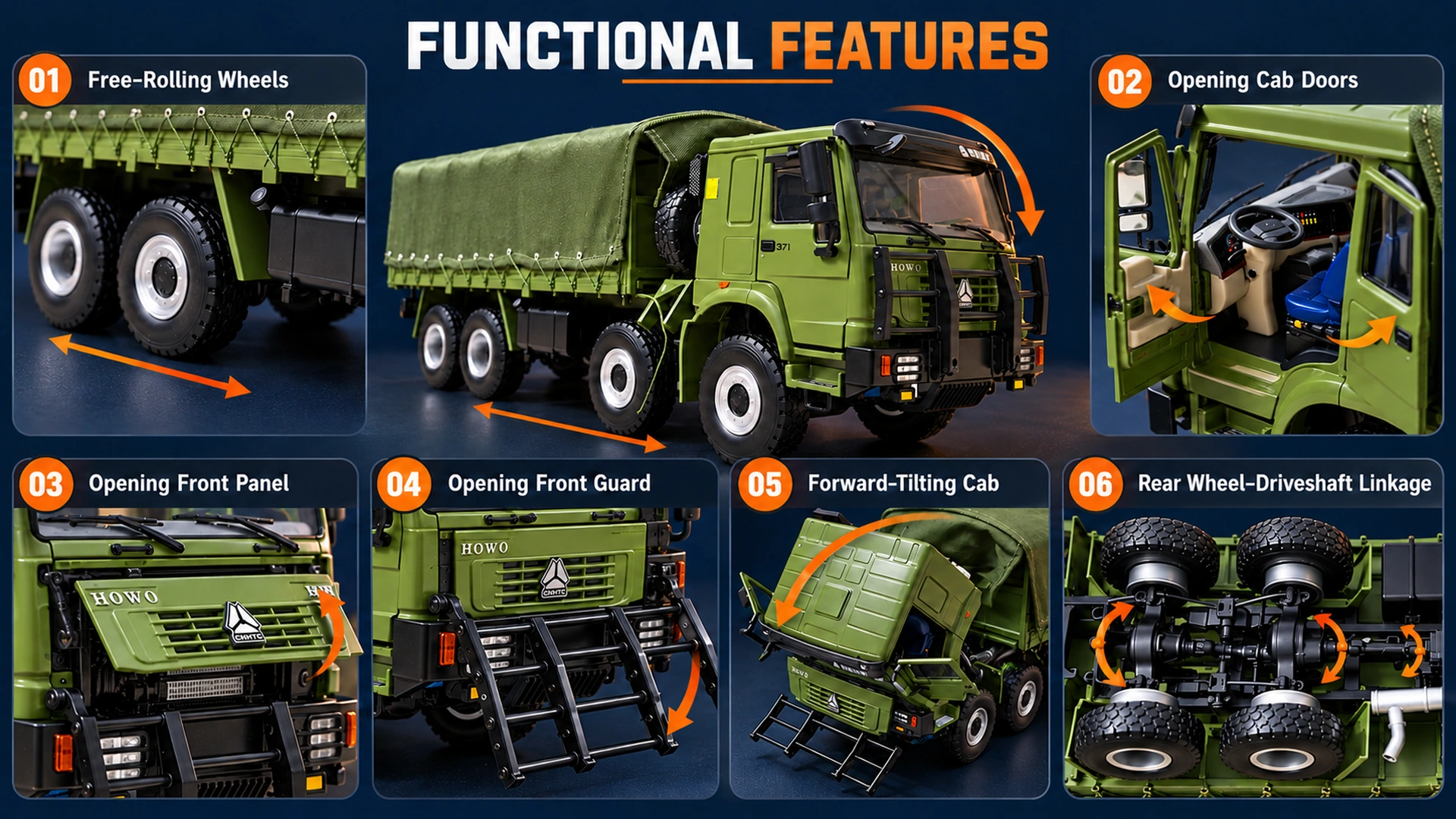
Free-Rolling Wheels
The wheels allow the model to roll freely forwards and backwards.
Opening Cab Doors
A truck scale model with opening cab doors provides access to both sides of the interior.
Opening Front Panel
The front panel opens separately from the cab and protective guard.
Opening Front Guard
The black front protective guard opens away from the front of the cab.
Forward-Tilting Cab
A military truck model with a forward-tilting cab demonstrates the cab’s movement towards the front.
Rear Wheel–Driveshaft Linkage
Rear wheels linked to the driveshaft allow their connected rotation to be demonstrated.
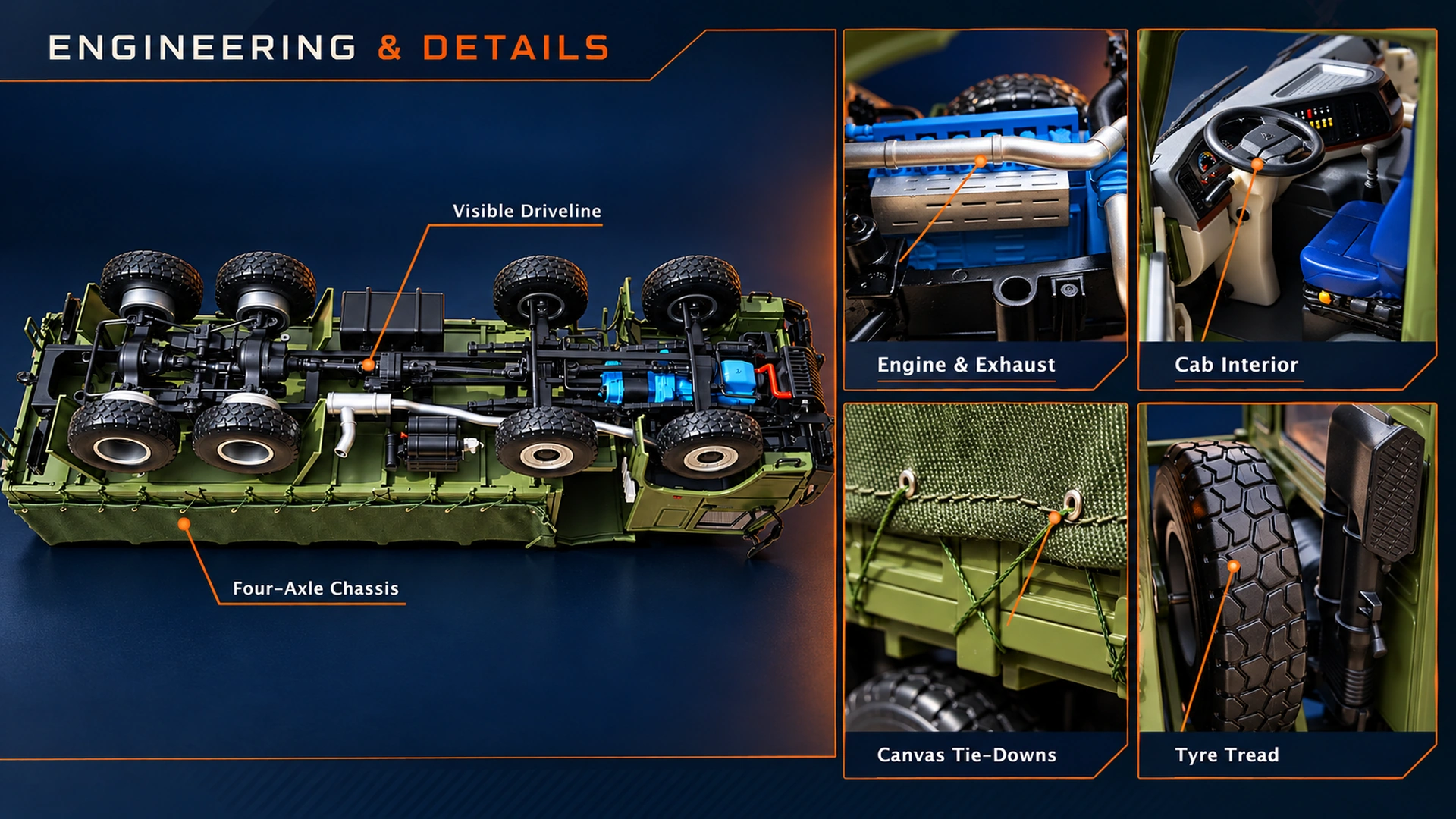
Visible Structure and Surface Detail
The 1:24 military truck model brings together fabric texture, tied canopy cords, moulded tyre tread and visible engine pipework. These close views show how different surfaces and components contribute to the finished appearance.
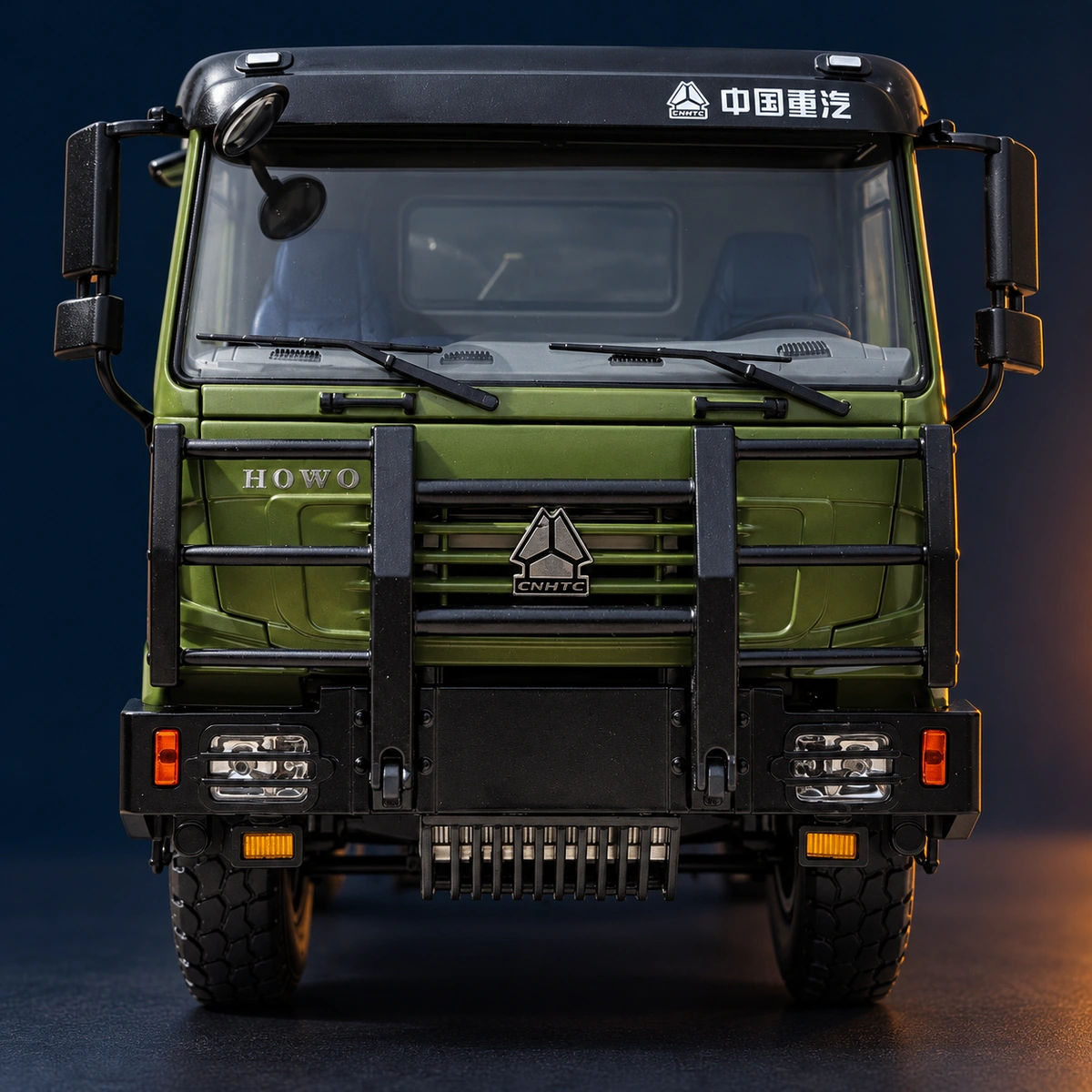
Front Grille and Brand Markings
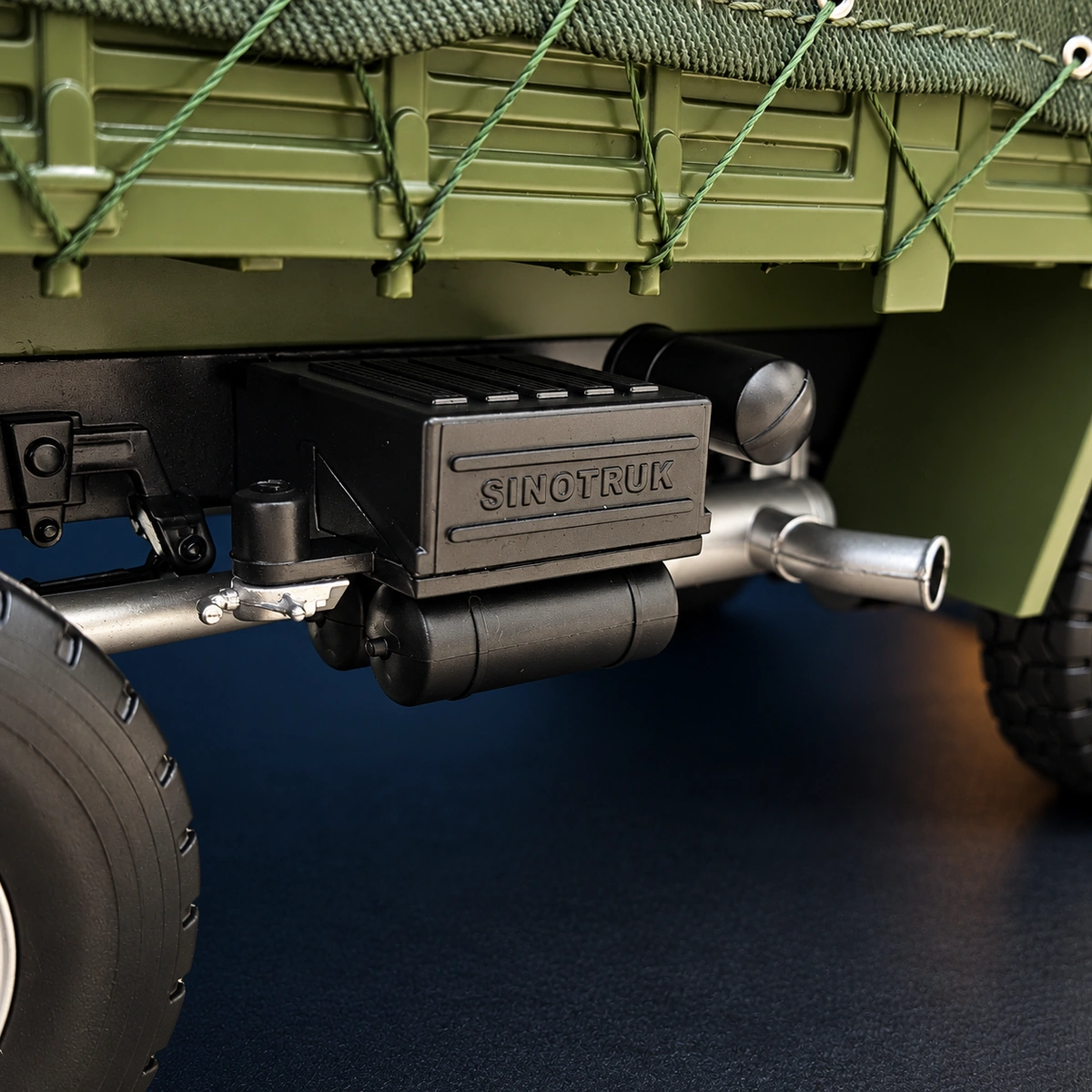
Side Box and Tank Assembly
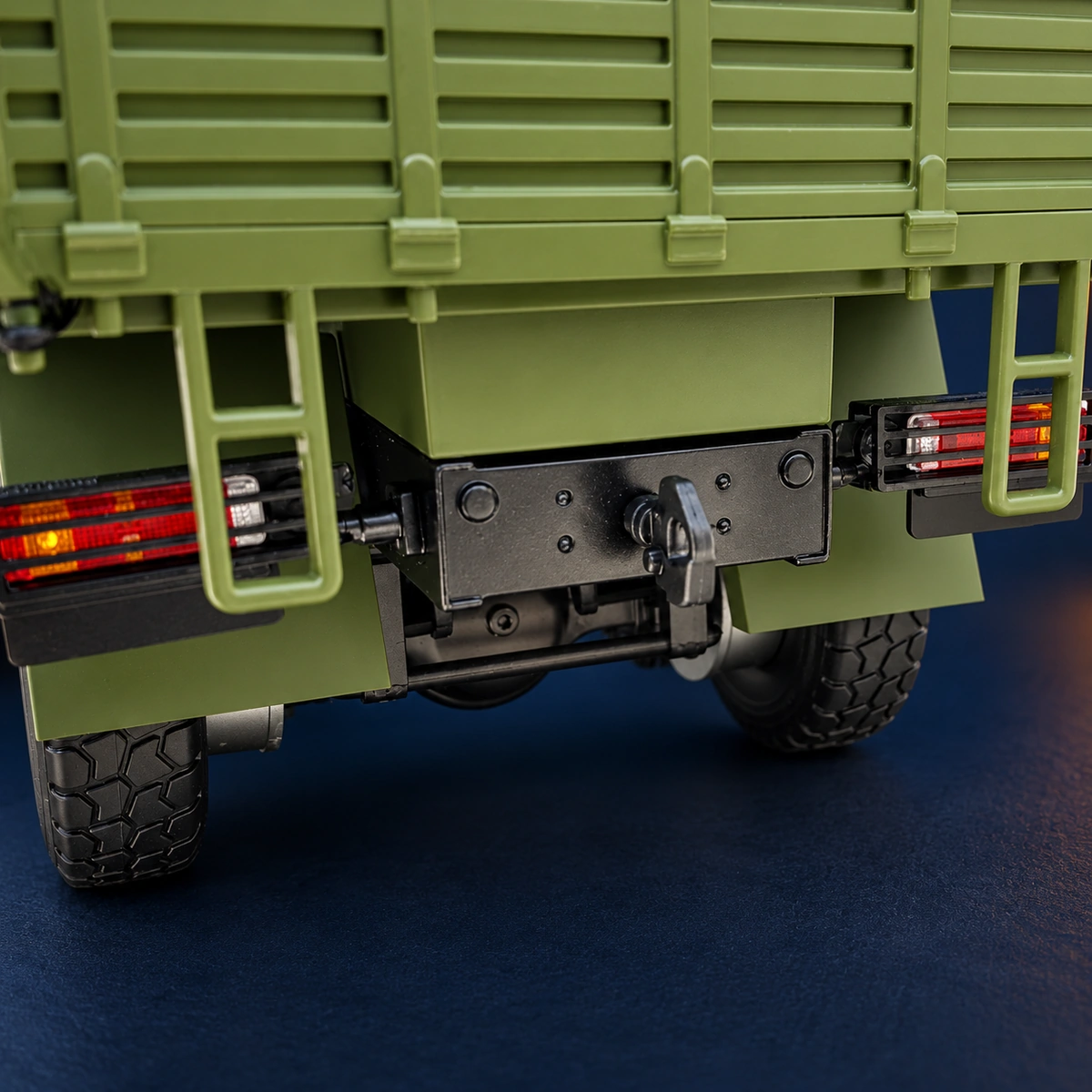
Rear Lighting and Tow Hitch
From Vehicle Data to an Approved Model
For custom military vehicle scale models, agree the appearance and required movements before committing to tooling and production.
Prototype Approval
Adapt editable vehicle 3D data for model production, then build a prototype to review proportions, appearance, structure and functions. Resolve structural changes before prototype approval and tooling.
Approve the Sample
Develop tooling to suit the agreed materials and manufacturing route, then review the sample for component fit, appearance, decoration and functions. Use the approved sample as the production reference.
Control the Finished Result
Follow the agreed manufacturing, finishing and assembly processes, then check completed models against the reference sample. Review appearance, operation and packaging protection before preparing the models for delivery.
Check Fit, Finish and Operation
A practical inspection plan compares the finished model with the approved sample and checks the areas most affected by handling and assembly.

Component Fit
Check the cab, cargo body, canopy attachment points and front guard for visible damage, deformation and inconsistent fit.
Finish and Graphics
Compare colour, surface appearance and marking positions with the approved sample. Check windows for cleanliness and clear visibility.
Function and Assembly
Check rolling, doors, front openings, cab tilt and rear linkage, together with loose parts, missing components and visible adhesive residue.
Packaging Protection
Review model restraint and protection around mirrors, the front guard and other exposed parts. Check packing consistency against the agreed specification.
A Physical Reference for Vehicle Presentation
Depending on the project brief, this format can support the following display and collection settings.
Vehicle Showroom Displays
Scale models for vehicle showroom displays let visitors examine a vehicle’s overall configuration on a table or shelf when the full-size truck is elsewhere.
Museum Interpretation
A compact vehicle representation can accompany photographs and technical information to help explain the layout of a military transport truck.
Brand Collections
A consistent model format can form part of a vehicle range collection, making different body types and configurations easier to compare.
Need a Model of Your Own Vehicle?
Use this HOWO example as a reference for your brief. Share photos, your target scale, required functions, packaging preferences and order quantity. Editable 3D data is required when development begins; an initial project discussion can start with reference information.
