

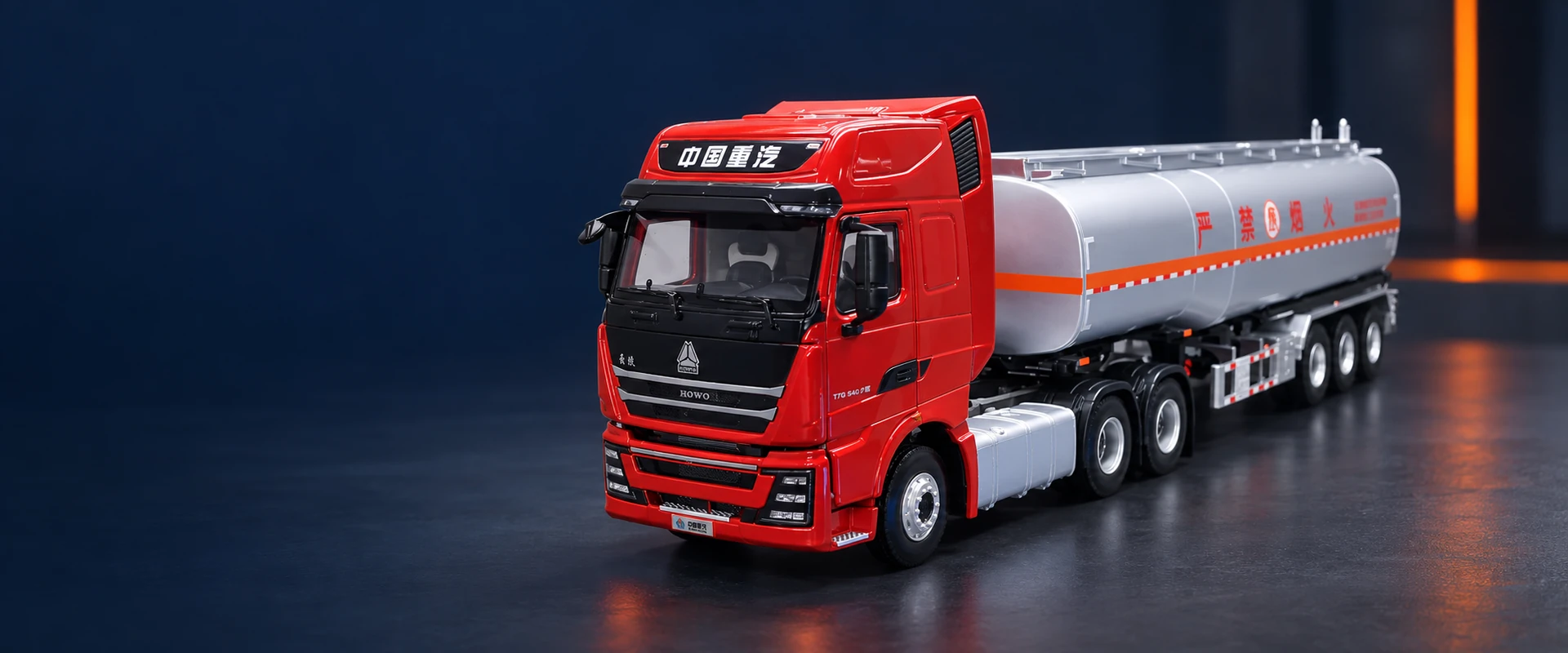
HOWO Tanker Truck Scale Model
A tractor and tanker combination with opening cab features and a detachable trailer. This case study explores the visible structure, functional connections and inspection priorities relevant to an OEM model project.
Project Specifications
Confirmed specifications for the tanker model presented in this case study.
A Tanker Combination Worth Examining
The engineering focus is the relationship between the cab, chassis and detachable tanker.
The HOWO tanker truck scale model gives viewers a way to examine a complete tractor and trailer combination at close range. The silver tank, contrasting cab and printed safety markings make the vehicle type recognisable, while the walkway, side guards and rear equipment add information that is often difficult to see in a photograph of the full-size vehicle.
For a custom tanker truck model, reducing the vehicle is only one part of the work. The long trailer body, small access details and moving cab components must fit together without losing their individual shapes. Separate cab and trailer views also help explain the connection between the two assemblies. The gallery includes different cab finishes, identified in the relevant captions rather than presented as one uniform colour scheme.
Recognisable vehicle form
Keep the cab profile and cylindrical tank visually distinct.
Connected assemblies
Represent the tractor and trailer as separate, connected structures.
Visible access details
Retain the walkway, guards and rear equipment shown in the references.
Clear surface markings
Preserve the printed graphics without obscuring nearby details.
Product Gallery
Complete views and close-ups reveal the assemblies behind this tanker truck model. Select an image to inspect it more closely.
-
Complete Side View
The side profile shows the relationship between the tractor and trailer.
-
Detached Tanker
The separate trailer view exposes its front connection area.
-
Rear Equipment
Rear lighting and safety markings complete the trailer outline.
-
Upper Walkway
The textured access surface contrasts with the smooth tank body.
-
Lights and Markings
Small coloured elements remain distinct against the metal-toned body.
-
Side Equipment
The guard and equipment box add depth below the tank.
-
Axle Detail
The close-up records the visible arrangement beneath the trailer.
-
Grey Cab Finish
An elevated view shows the tank and cab in an alternative finish.
Functional Demonstration
Four confirmed functions make the main assemblies accessible for close observation.
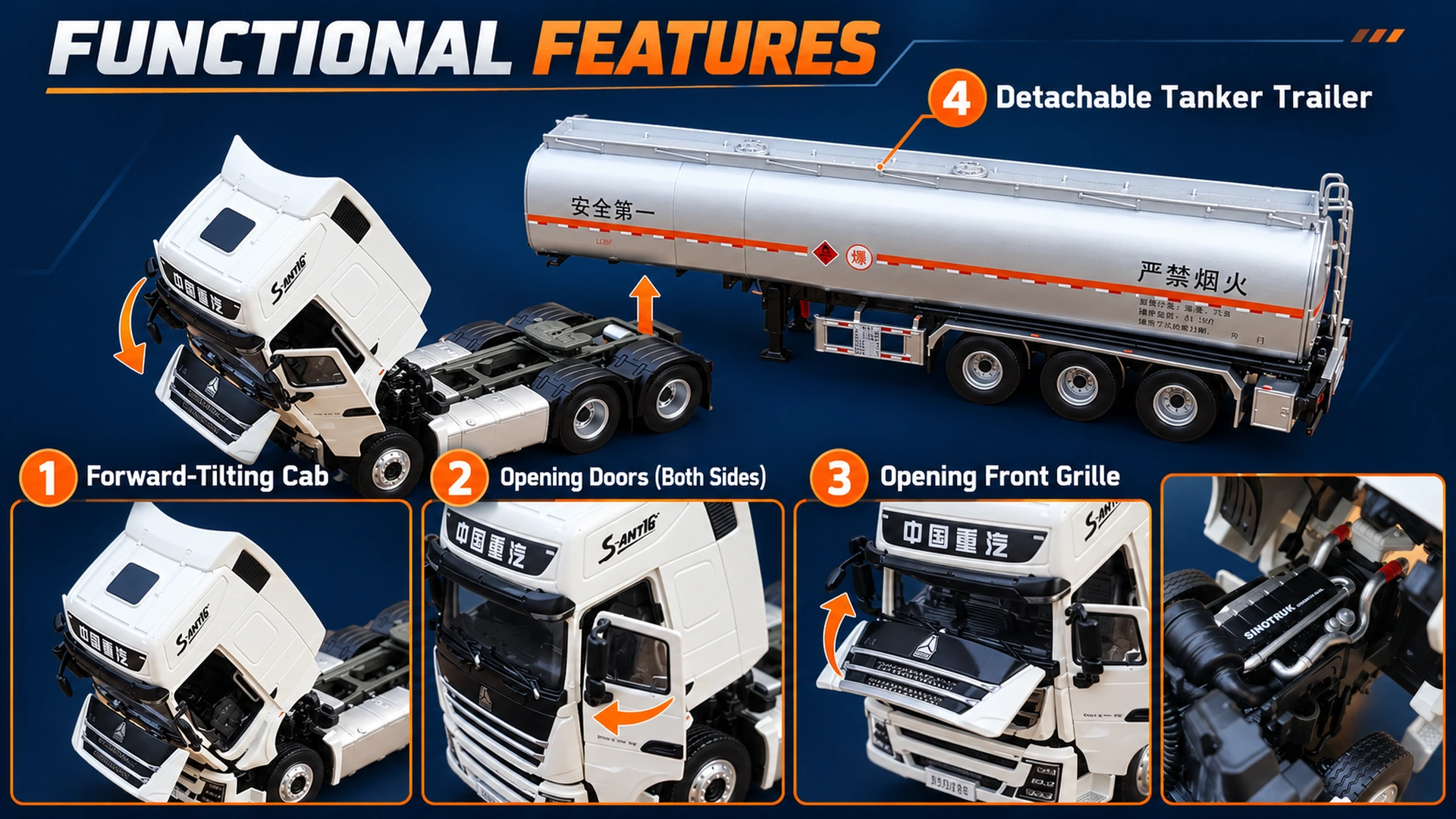
The function reference views show a white cab finish; the hero presents the red cab version.
Forward-Tilting Cab
The cab tips forward to reveal the area underneath.
Opening Doors
Both cab doors open for a closer view of the interior.
Opening Front Grille
The front cover lifts to expose the area behind it.
Detachable Tanker Trailer
The tanker trailer separates from the tractor at the coupling.
Engineering & Visible Details
The underside and access equipment show how several small assemblies occupy a narrow space around the tank.
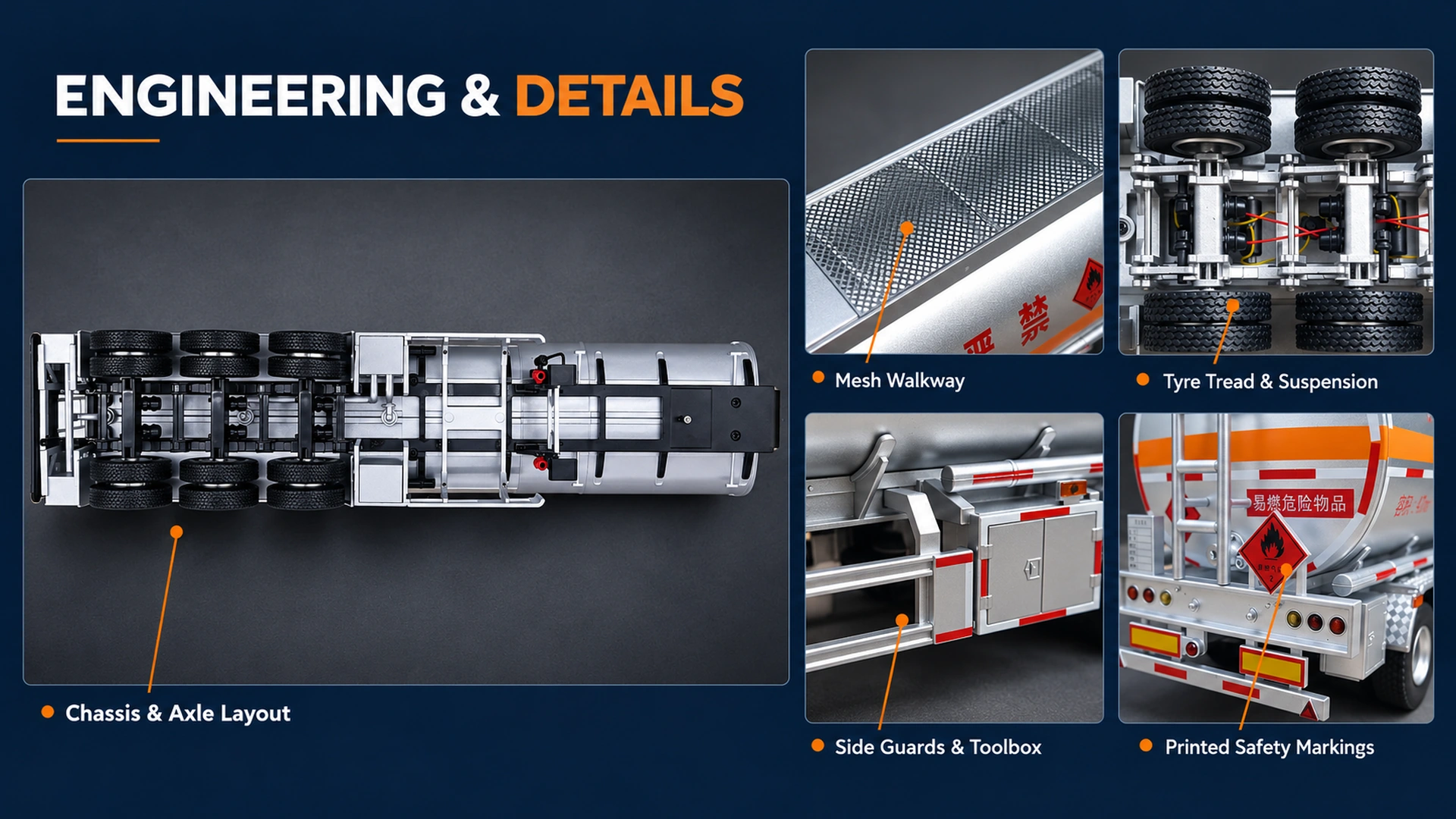
Walkway and Railings
Fine rails surround a textured walkway. Their spacing and alignment matter because these parts are prominent in elevated views.
Tyres and Axle Layout
Tread texture and the visible axle arrangement give the underside a readable structure without inventing hidden mechanisms.
Side Equipment and Graphics
The guard, equipment box and safety markings occupy different levels of the body, requiring careful positioning during assembly.
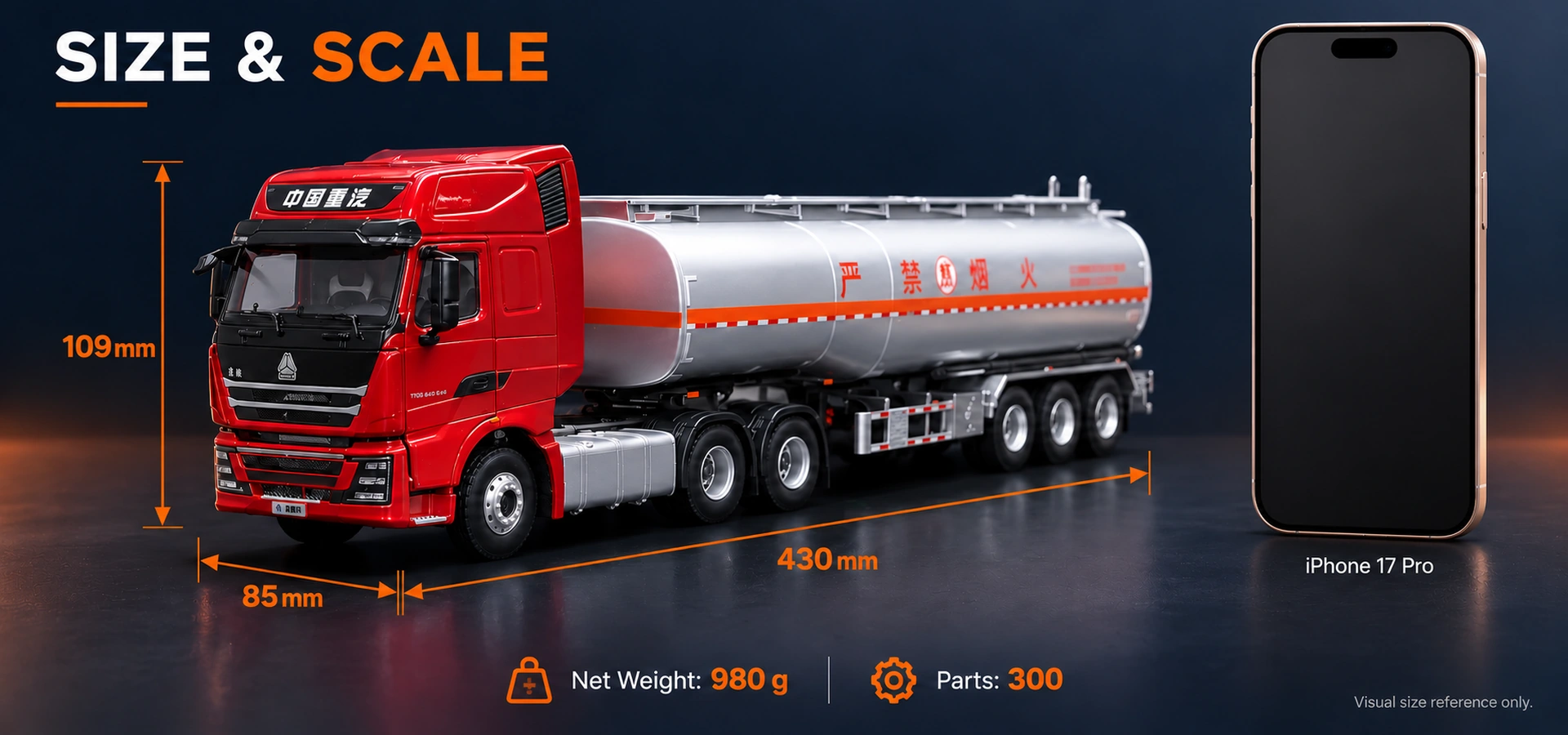
Size in Context
A familiar phone reference helps viewers judge the model's display presence. The comparison is visual rather than a precision measurement.
OEM Development Process
For a new OEM tanker truck model, the approved reference data establishes the scope before tooling begins.
3D Data and Prototype
Convert editable vehicle data into model production geometry, considering wall thickness, assembly clearances and moving parts. A prototype allows the customer to review the shape and agreed functions before production tooling.
Tooling and Metal Sample
Develop the production moulds through CNC machining and tooling work. Review a metal sample for the agreed structure, finish and graphics, with corrections resolved before the production specification is released.
Production, QC and Delivery
Coordinate die casting, injection moulding, painting, printing and assembly according to the approved parts plan. Check appearance and agreed functions, then complete the selected packaging and shipment arrangements.
Production & Quality Control
For a custom tanker truck model, inspection should cover both the long body assembly and the smaller moving cab components.
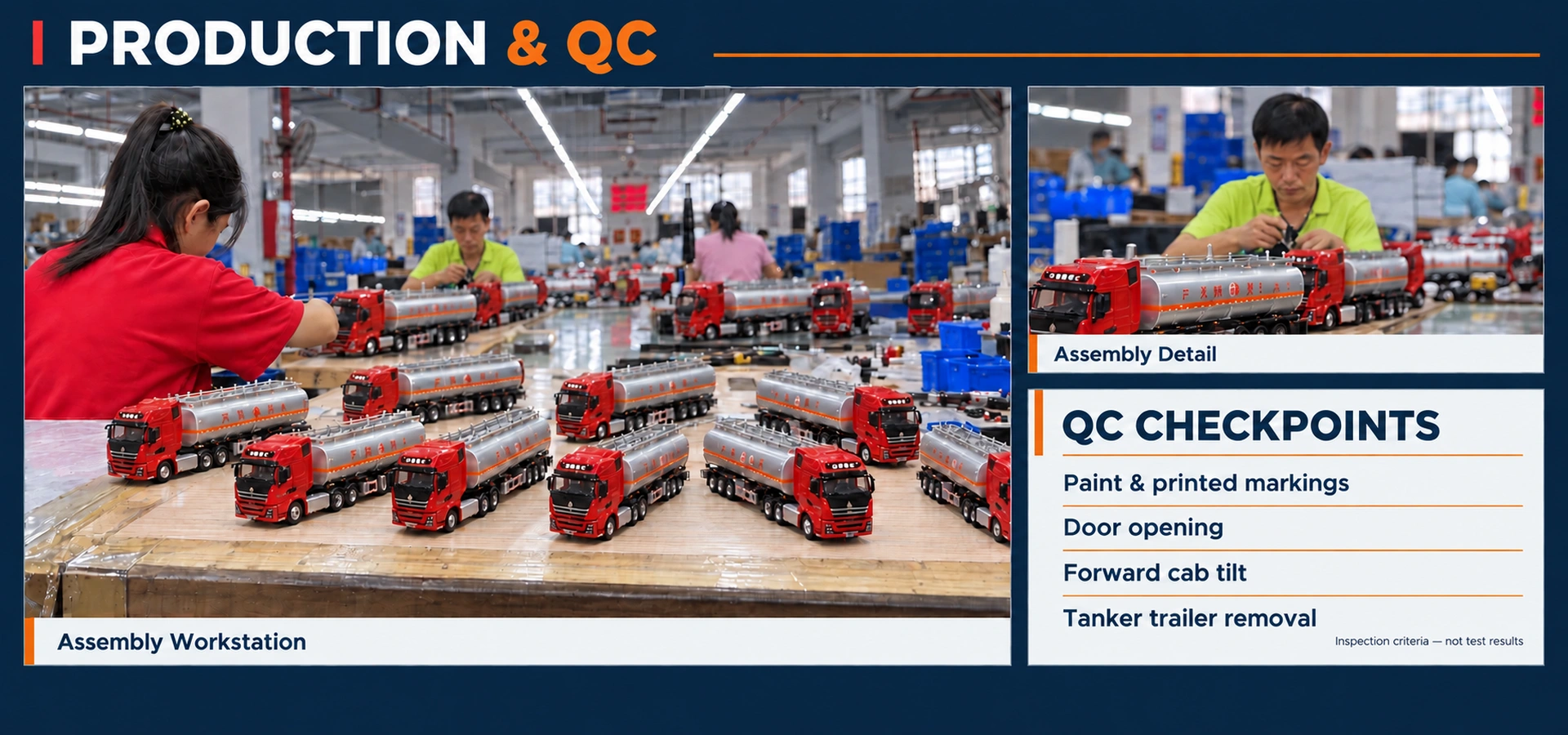
The workshop image uses a supplied factory photograph with the tanker models substituted. It illustrates the assembly setting; the adjoining QC list describes inspection criteria rather than recorded test results.
Body and Component Fit
Check that the long tank body and chassis retain their intended shape. Connection points, guards and small rails should align with the approved sample, with no missing parts, obvious deformation or glue residue affecting the appearance.
Paint and Printed Markings
Inspect paint coverage and colour consistency across the visible surfaces. Check that safety graphics sit in the agreed positions, without obvious smearing or misalignment, and that handling during assembly has not left noticeable scratches.
Glazing and Small Details
Keep transparent cab glazing clean and free of visible haze or assembly marks. Examine the lights, mirrors and other small visible parts for damage or poor seating, especially where painted surfaces and separate plastic components meet.
Function and Packing Checks
Check the agreed opening features and trailer connection for suitable resistance and secure fit. Packaging should restrain the model while protecting the mirrors, upper railings and other exposed details during normal handling and shipment.
Business Applications
The tractor and trailer format supports several ways to explain or display a commercial vehicle.
Dealer Showrooms
An OEM model for dealer showrooms can bring the cab layout and tanker configuration into a conversation without requiring a full-size vehicle indoors.
Trade Show Displays
A custom scale model for trade shows lets visitors examine access details and the connected vehicle form beside product information or a sales demonstration.
Corporate Display and Gifts
A corporate promotional scale model can use approved colours and graphics to represent a fleet or product range, with packaging selected for its intended audience.
Frequently Asked Questions
Key information for planning a related OEM project.
What is needed to quote a custom tanker model?
Provide reference photographs, the full-size vehicle dimensions, preferred scale, required functions, packaging requirements and order quantity. These define the quotation scope. Editable 3D/CAD data is required when development begins.
Can cab functions and trailer connections be customised?
Yes, the proposed functions can be reviewed during development. Their feasibility depends on the chosen scale, available space and the vehicle structure. The opening features and connection design should be agreed before tooling.
Can you develop a different tanker or truck configuration?
Scale Artisan can assess related truck projects from the customer's references and editable vehicle data. A different cab, tank shape or chassis layout needs its own engineering review rather than assuming the existing model structure can be reused.
Can colours, graphics and packaging match our brand?
Custom colours, printed graphics and packaging can be planned using approved artwork and finish references. The HOWO tanker truck scale model shown here is a reference for discussing a project; a new design and its presentation should be confirmed against the customer's requirements.
Planning a Custom Truck Model?
Share the vehicle configuration and the details your audience needs to see. We can review the engineering scope and packaging for your OEM project.
