

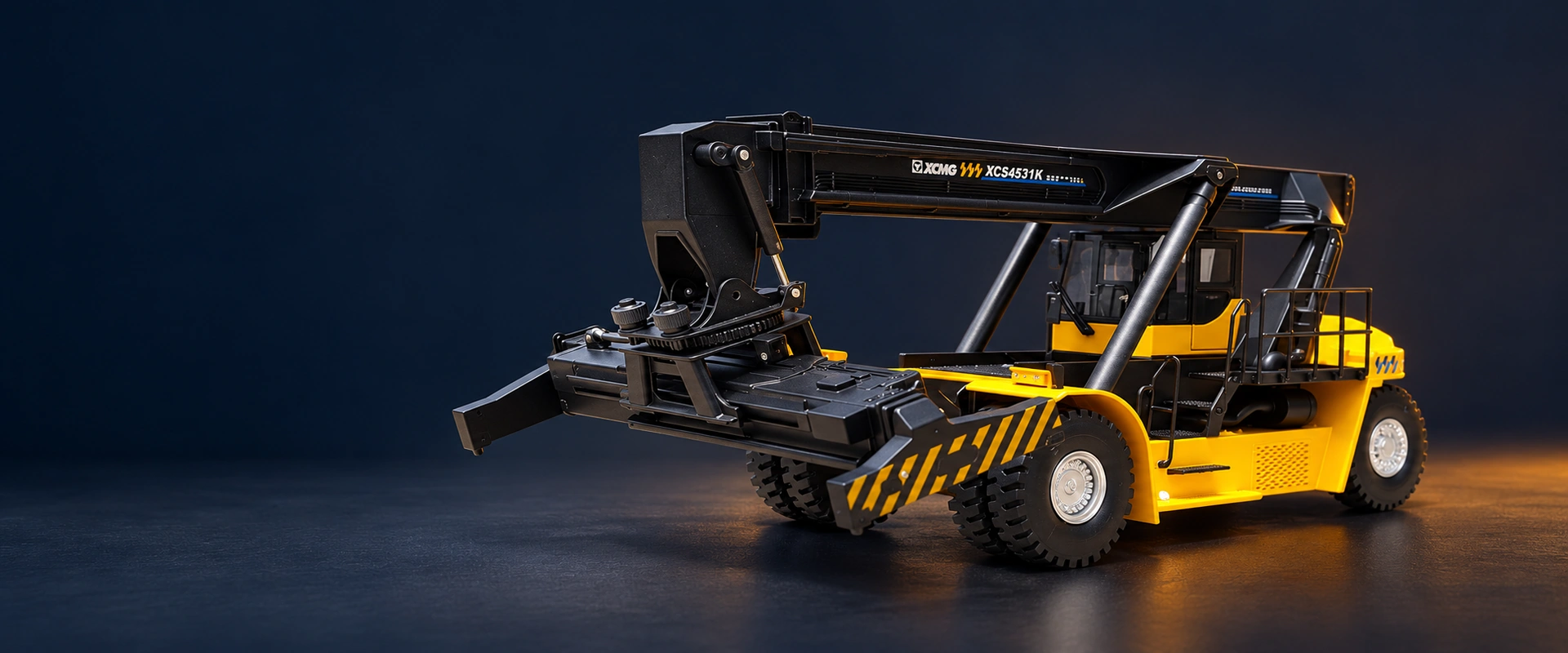
1:35 XCMG XCS4531K Reach Stacker Scale Model
A reach stacker model with a telescopic boom, built to demonstrate equipment movement in a compact physical format.
Discuss Your Model ProjectXCS4531K from Every Side
Explore the XCMG XCS4531K reach stacker scale model through views of its cab, rear counterweight, wheel layout and container-handling attachment.
Five Functions to Demonstrate
This functional container handling model uses manual movement to show travel, boom positioning, cab access and spreader adjustment.
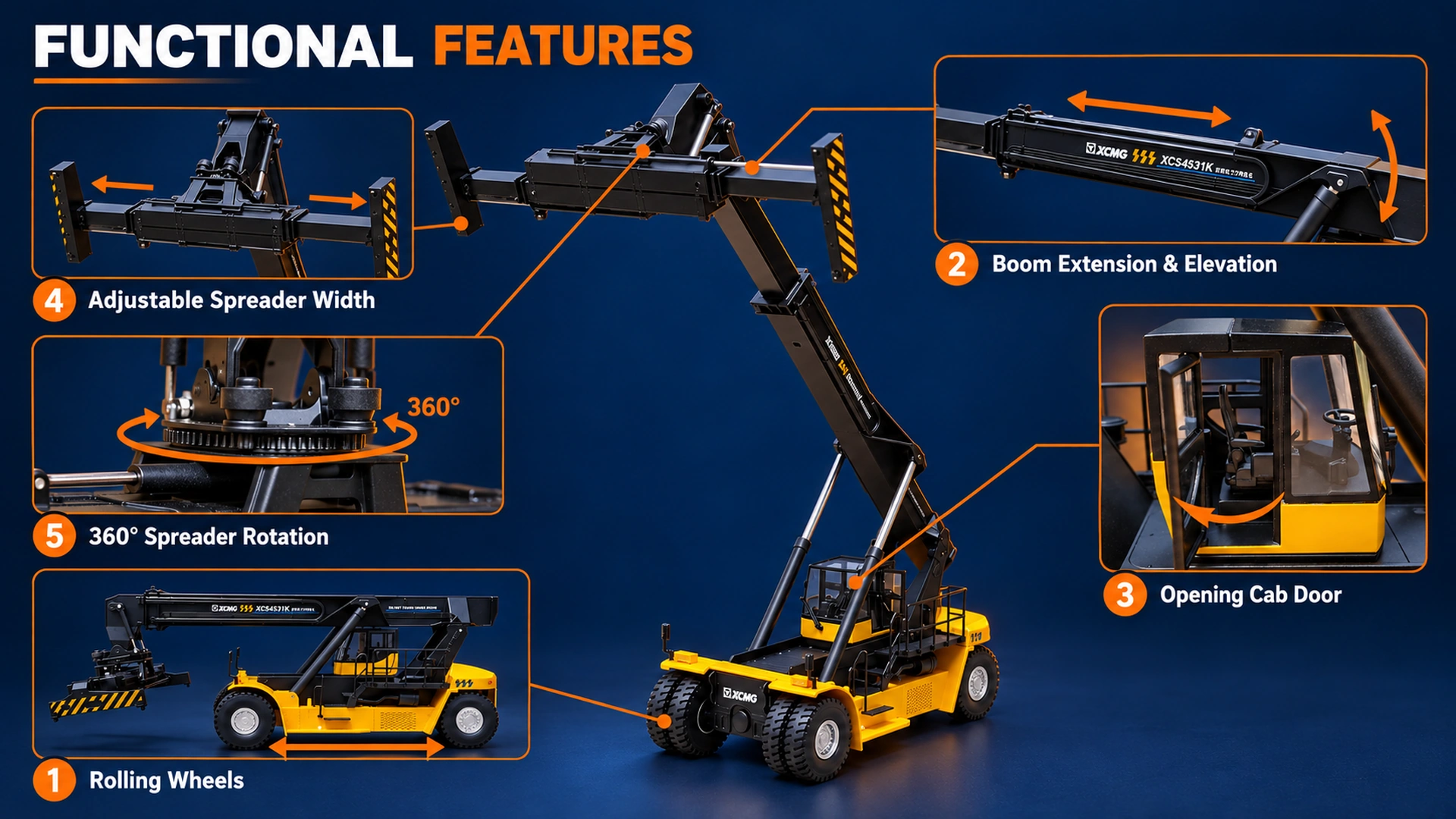
Rolling Wheels
The wheels roll forwards and backwards, allowing the model to be repositioned by hand.
Boom Extension and Elevation
The boom extends, retracts, raises and lowers to demonstrate different reach and lifting positions.
Opening Cab Door
This scale model with an opening cab door provides direct access to the visible operator’s seat and controls.
Adjustable Spreader Width
The spreader’s sliding sections extend and retract laterally to demonstrate width adjustment.
360° Spreader Rotation
The container spreader with 360° rotation can be turned by hand to demonstrate attachment orientation.
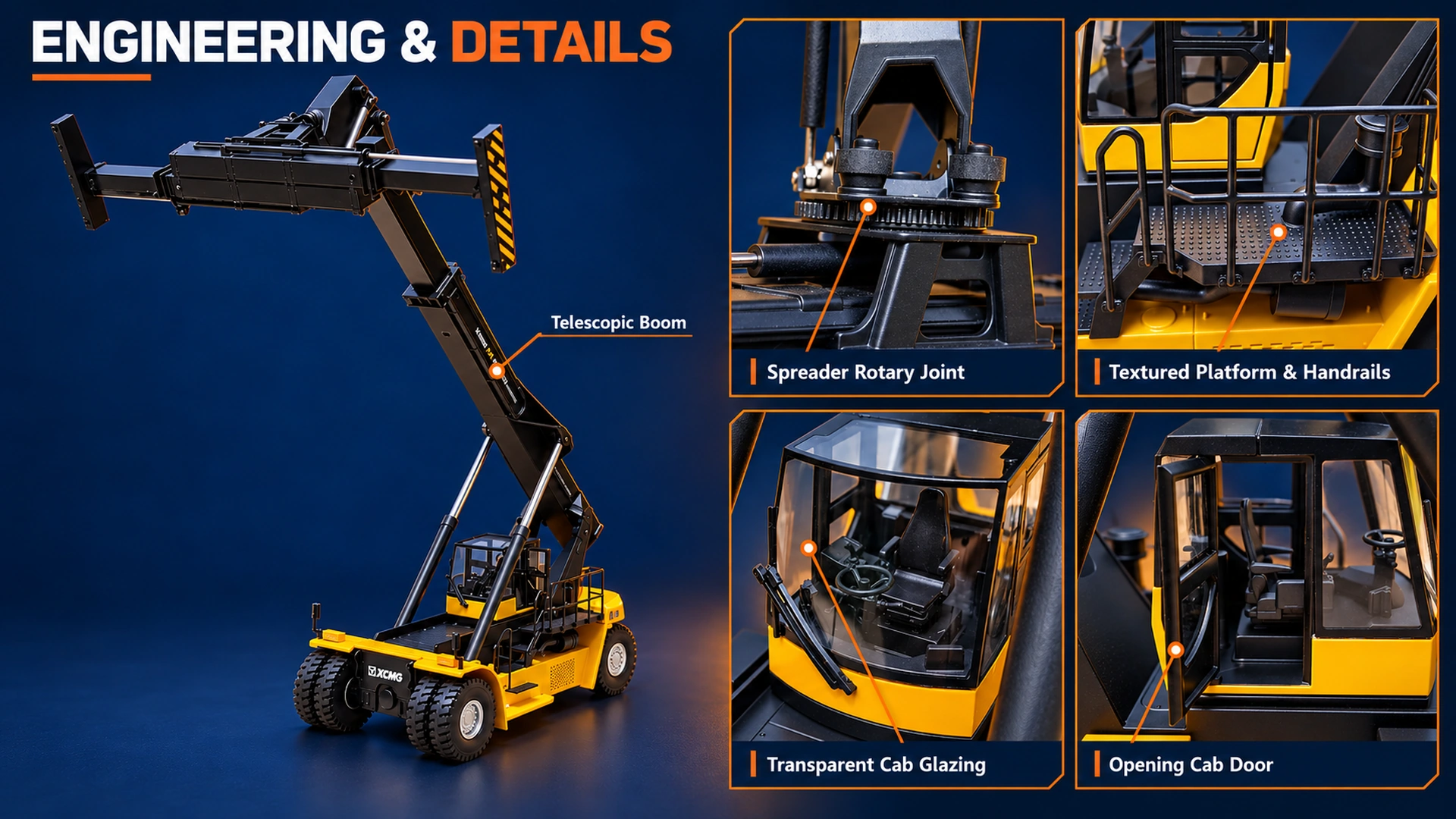
Visible Structure, Inside and Out
The enlarged views bring together the spreader connection, textured access platform, fine handrails and transparent cab panels in one technical presentation.
From Equipment Data to an Approved Model
OEM scale model development from editable 3D data follows clear review stages, with structural decisions resolved before tooling begins.
Prototype Approval
Convert editable equipment data into production-ready model geometry and build a prototype. Review proportions, appearance, structure and functions, then resolve structural changes before prototype approval and tooling.
Approve the Sample
Develop tooling for the agreed materials and manufacturing route, then produce a sample. Review component fit, appearance, decoration and movement, and establish an approved reference for subsequent production checks.
Control the Finished Result
Follow the agreed manufacturing, finishing and assembly sequence using the approved sample as reference. Complete appearance and function checks, confirm packaging protection, and prepare the finished models for shipment.
Check Fit, Finish and Movement
For a custom OEM equipment model, quality planning should connect the approved sample with specific checks on assembly, appearance, operation and protection.
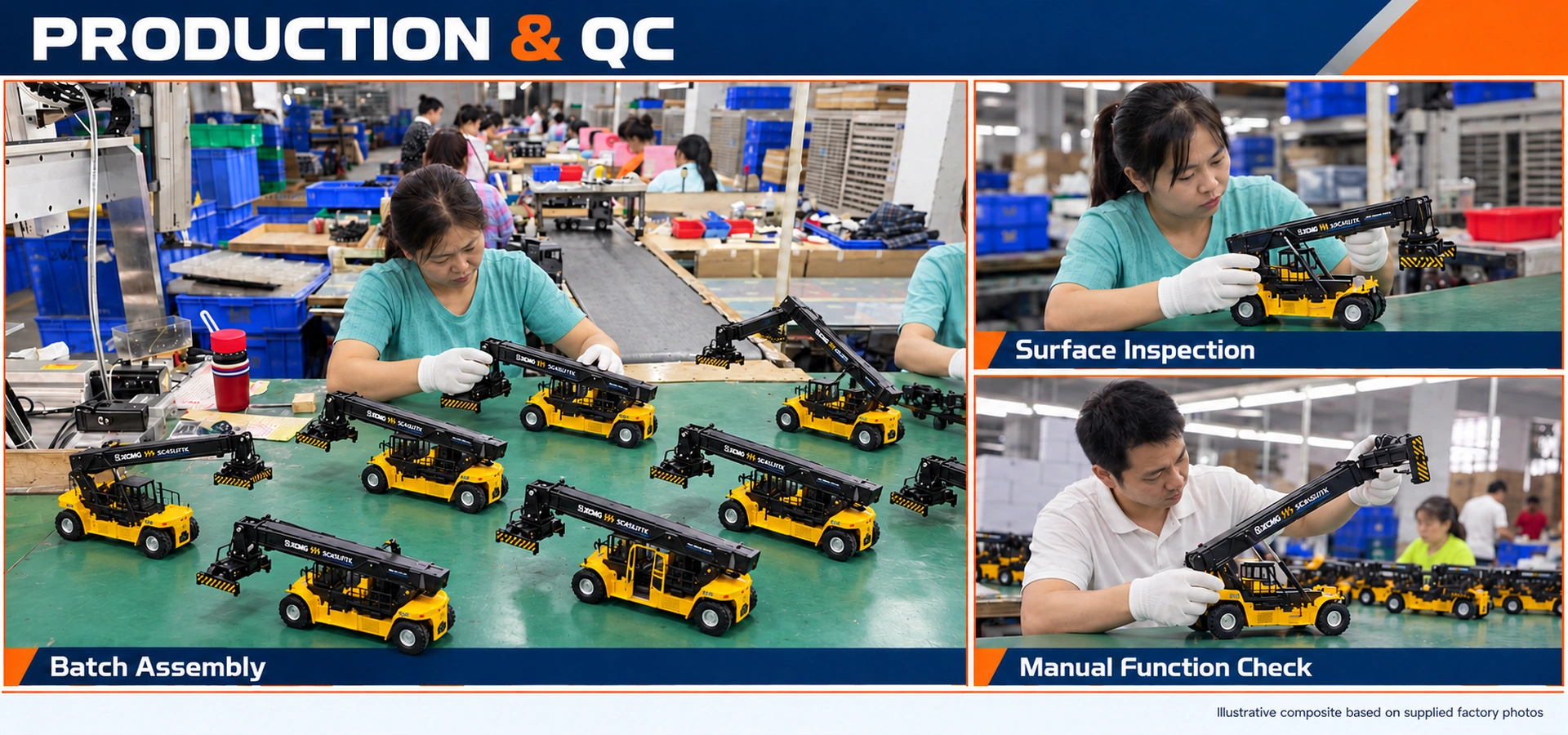
Illustrative composite adapted from supplied factory photographs; not an original production or inspection record for this model.
Component Fit
Check for visible damage or distortion at boom connections, spreader mounts, cab door hinges and handrail attachment points.
Finish and Graphics
Compare colours and graphic placement with the approved sample. Inspect transparent cab panels for cleanliness and interior visibility.
Function and Assembly
Check wheel rolling, boom travel, door operation, spreader adjustment and rotation, alongside joint tightness, missing parts and visible adhesive residue.
Packaging Protection
Review model restraint and clearance around the spreader, mirrors and handrails, then check consistency against the agreed packaging specification.
A Physical Reference for Equipment Presentations
A port equipment scale model can support commercial settings where transporting the full-size machine is impractical.
Equipment Showrooms
Custom scale models for equipment showrooms give visitors a physical reference for discussing machine layout alongside brochures and technical drawings.
Trade Show Displays
A 1:35 reach stacker model can sit beside product literature, giving a booth team a compact visual reference when the full-size equipment cannot attend.
Corporate Collections
A recognisable machine miniature can represent an equipment range in an office or brand collection, with presentation and packaging defined for the intended recipient.
Need a Model of Your Own Equipment?
Use this XCMG XCS4531K reach stacker scale model as a reference for your requirements. Share equipment dimensions and the project information below for an initial review. Editable 3D data is required when development begins; it is not a prerequisite for an initial quotation.
