


1:35 SANY SPR300C Tyre Roller Scale Model
An alloy scale model that brings the roller’s distinctive multi-wheel layout to tabletop equipment presentations.
Discuss Your Model ProjectSPR300C Body and Cab Profile
View the SANY SPR300C tyre roller scale model from both sides and above to inspect its cab proportions, body panels and exterior graphics.
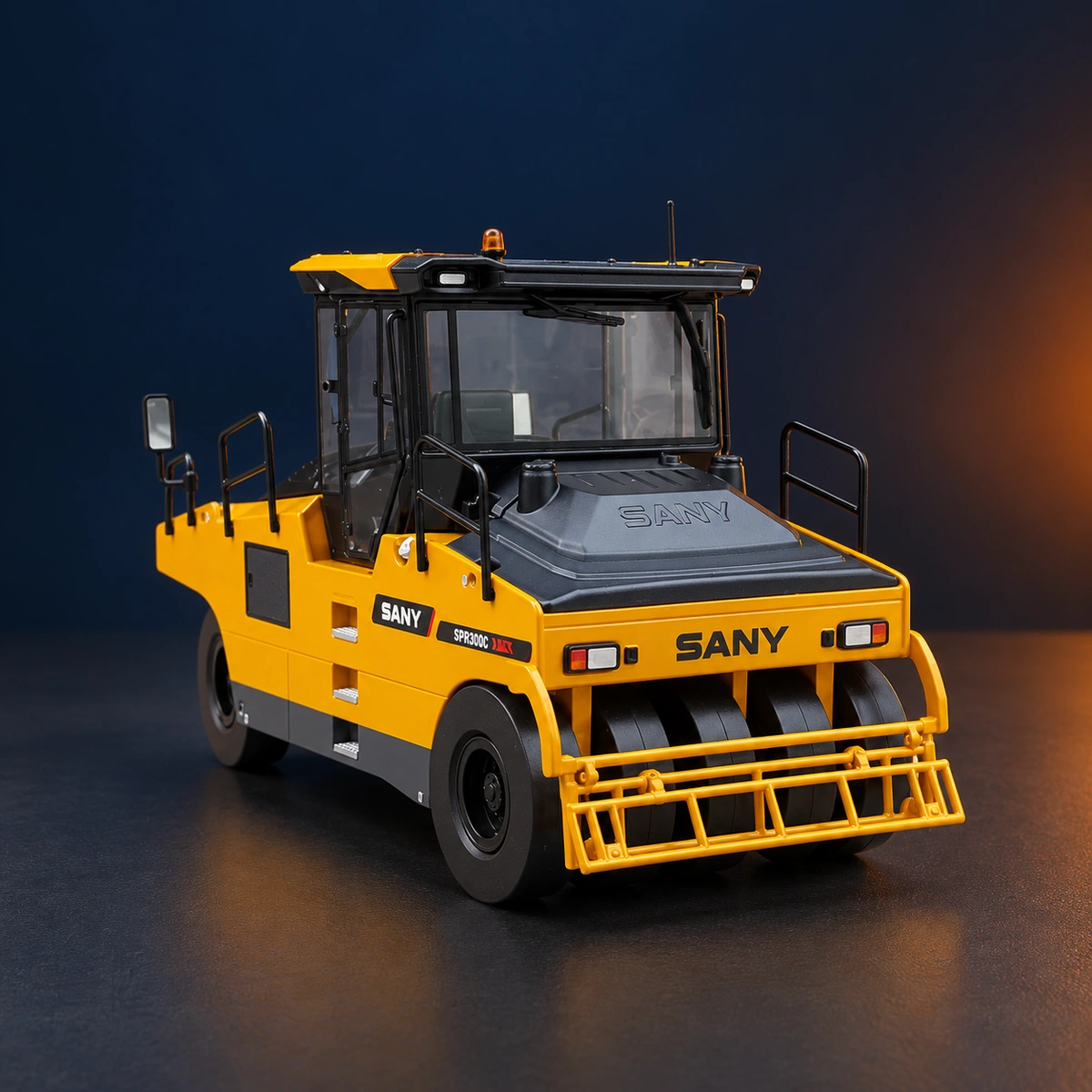
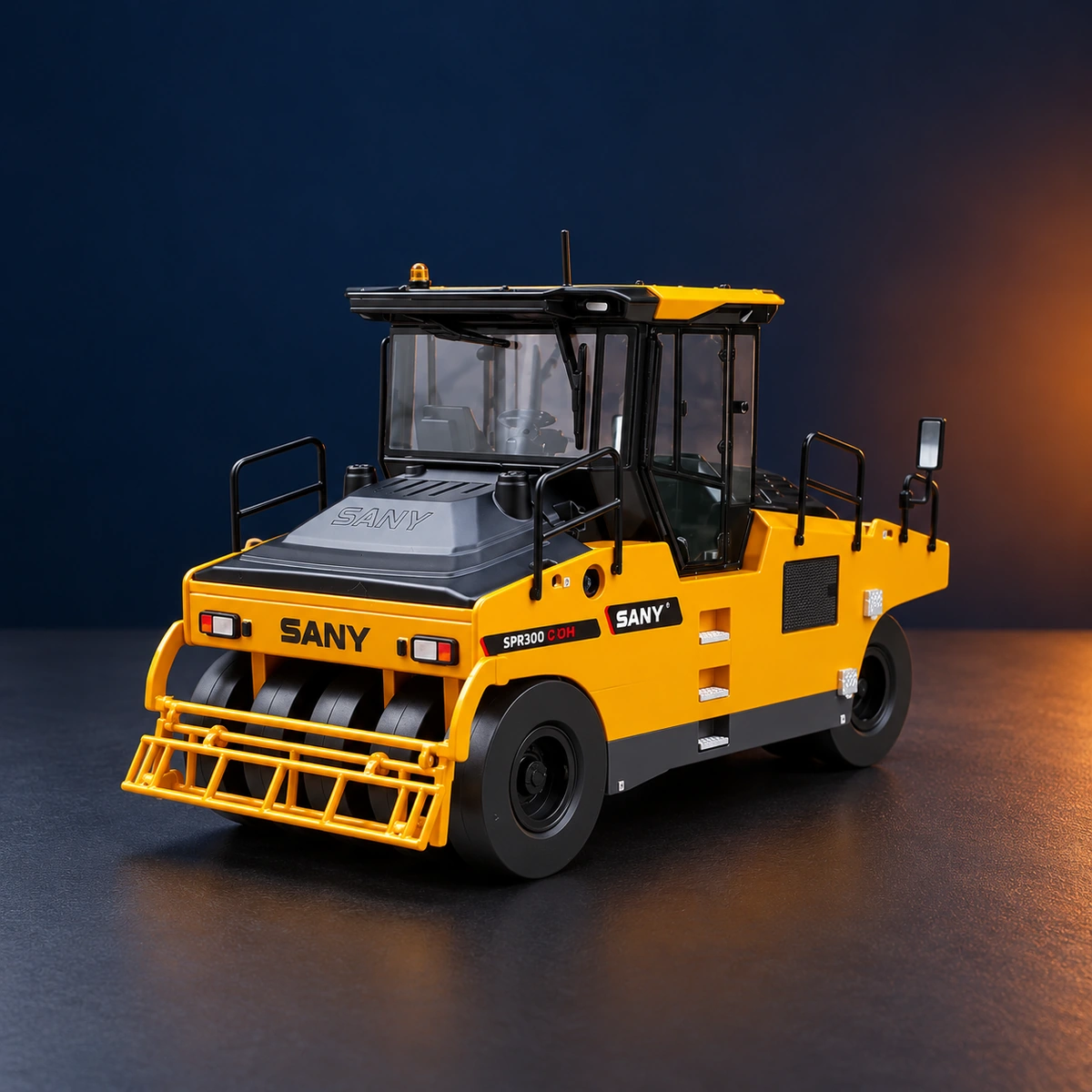
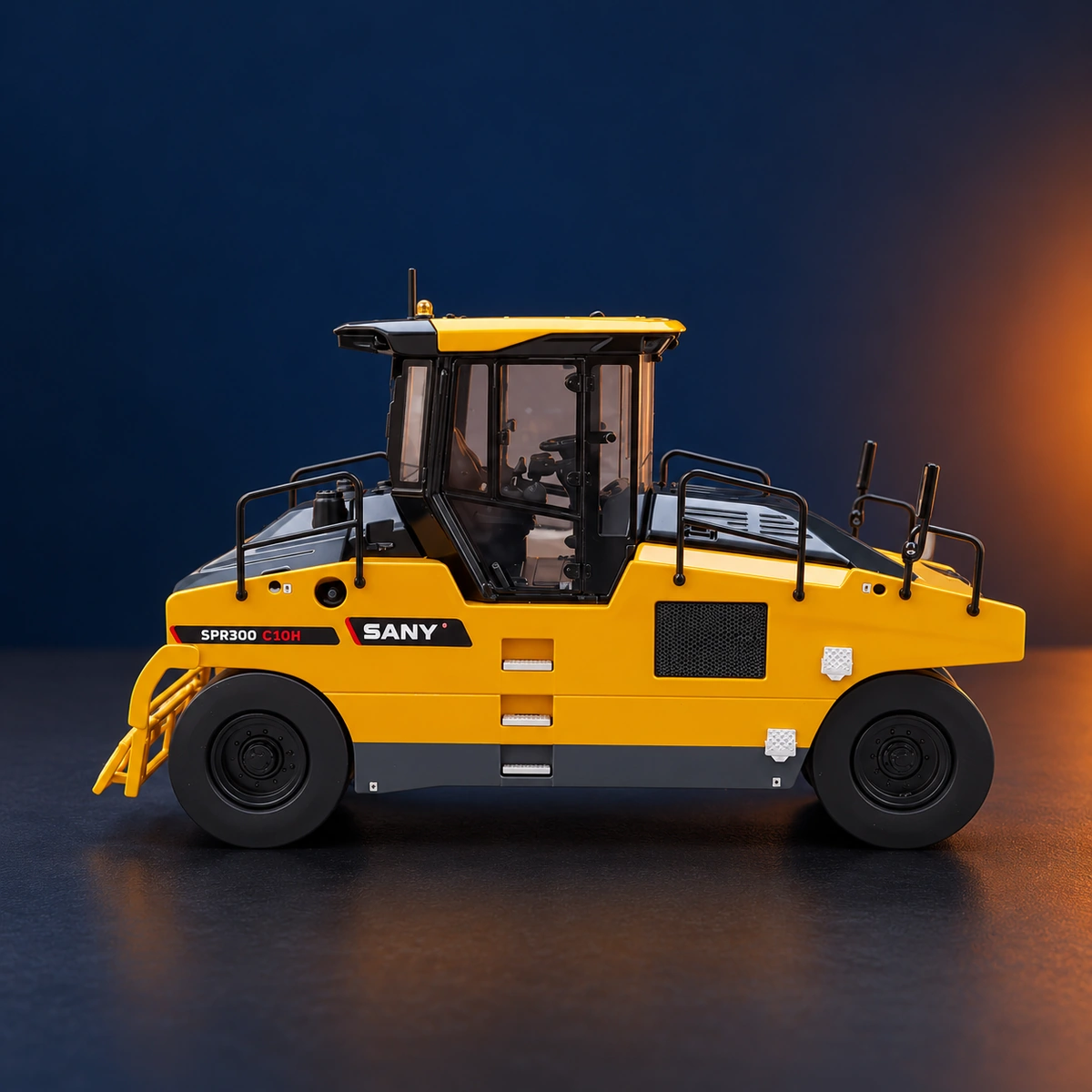
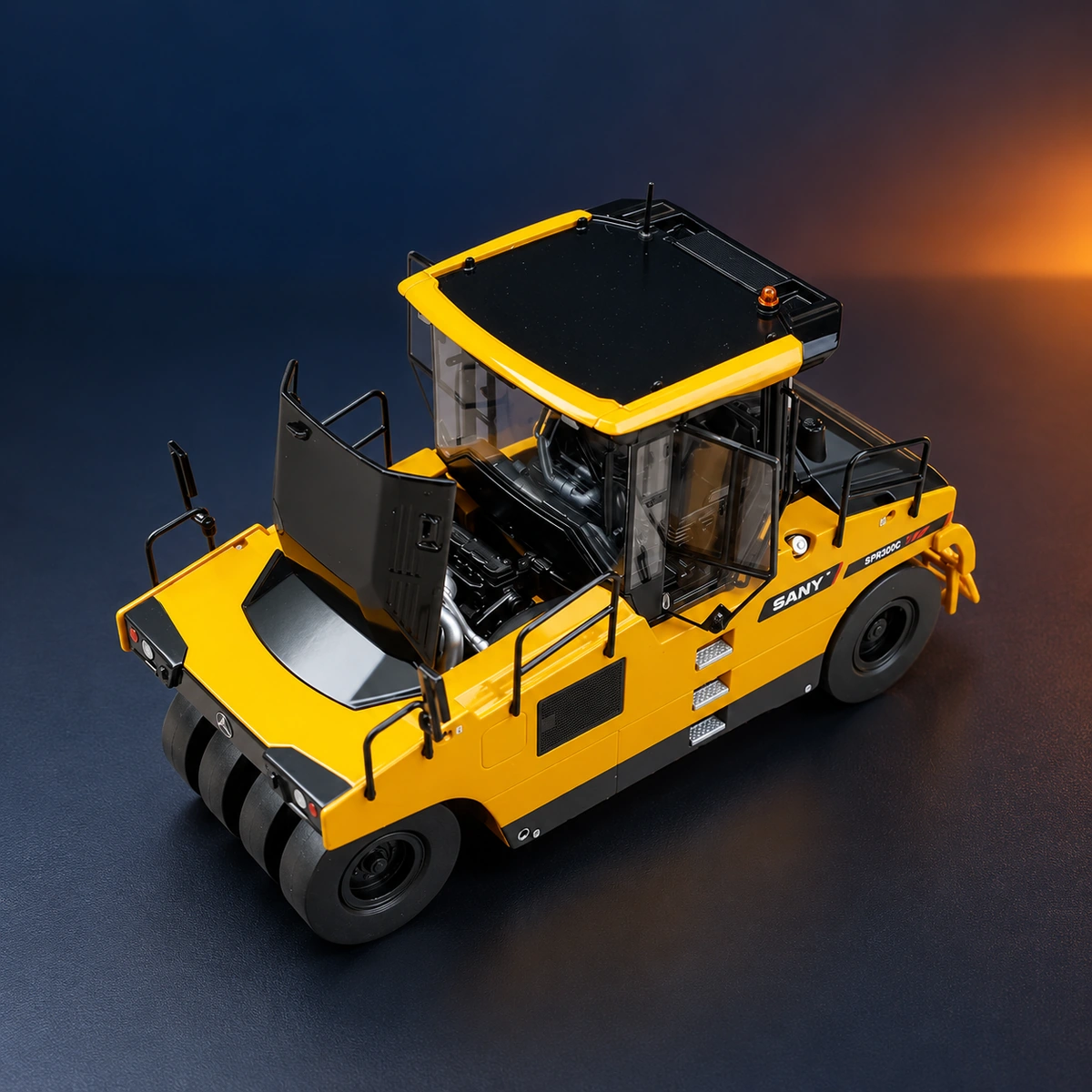
Functional Features
Opening cab doors, rolling wheels, front-wheel steering and an opening engine hood make this tyre roller model suitable for hands-on demonstrations.
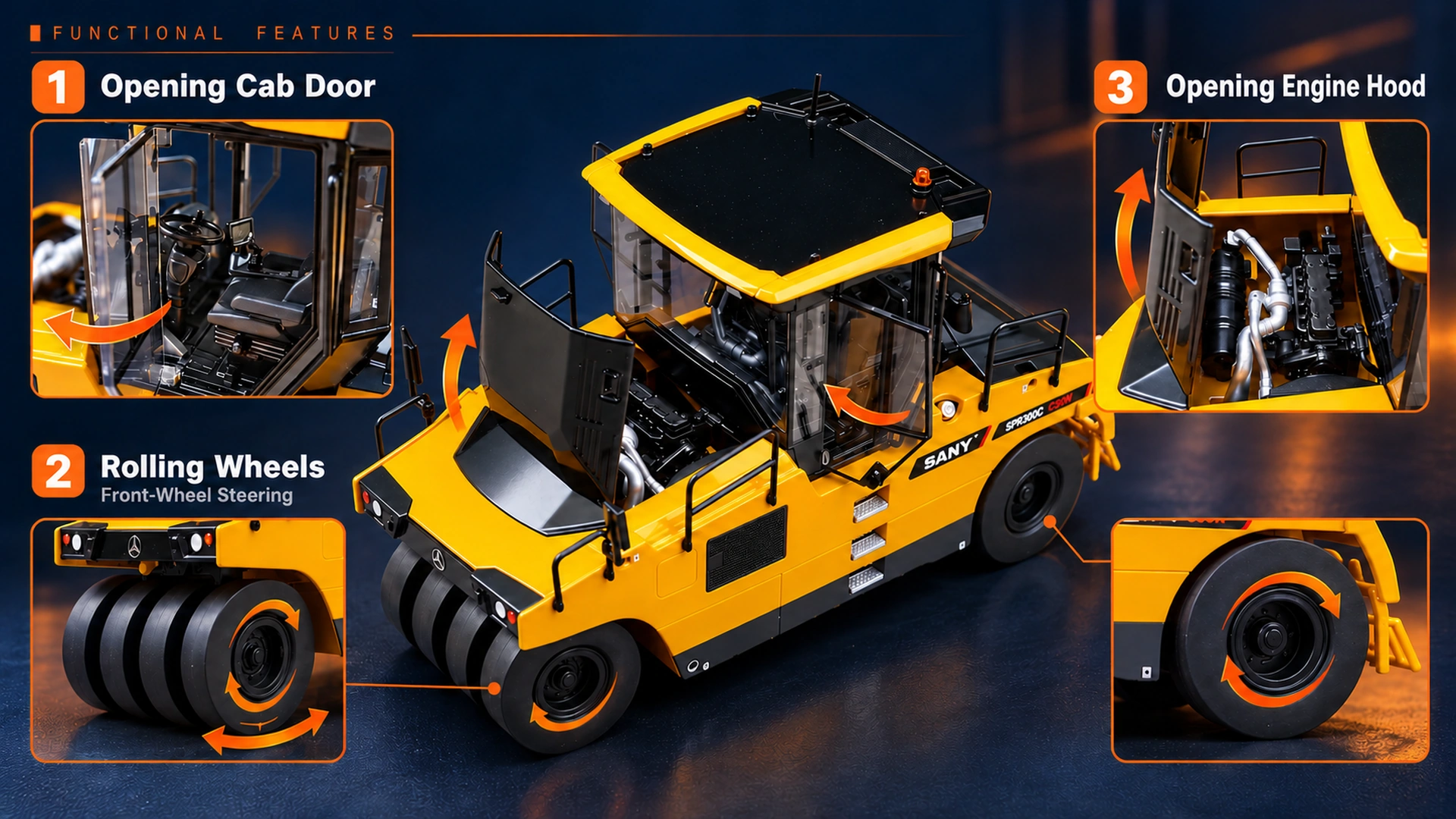
Opening Cab Doors
The cab doors swing open to provide access to the interior.
Rolling Wheels and Front Steering
Front and rear wheels roll. Front-wheel steering allows the front tyres to turn left and right.
Opening Engine Hood
The front hood flips towards the nose, revealing the engine compartment between the hood and cab.
Visible Structure and Surface Detail
The construction equipment scale model includes visible cab controls, transparent glazing, fine handrails and textured equipment panels.


Cab Seat and Controls
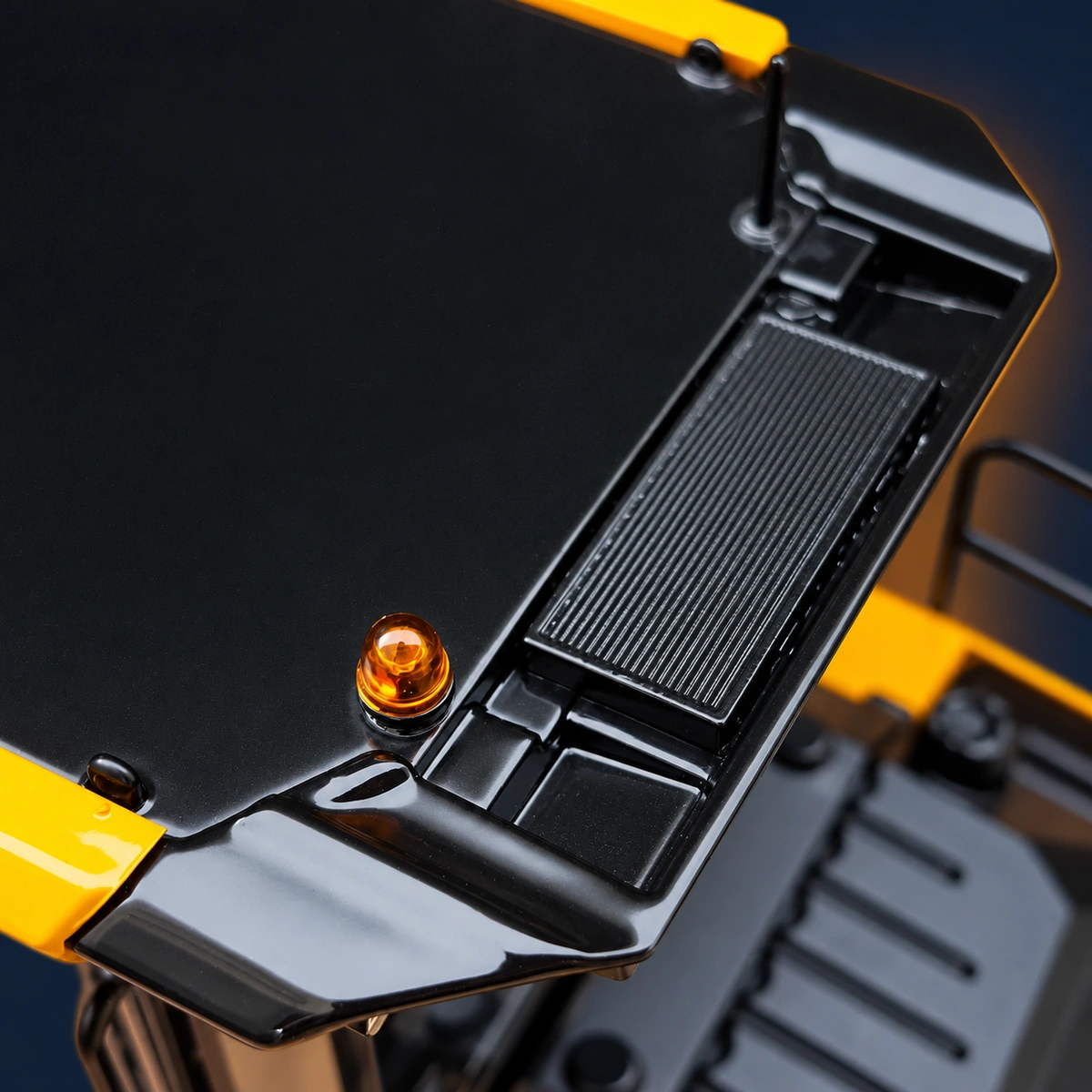
Roof Grille and Beacon Detail
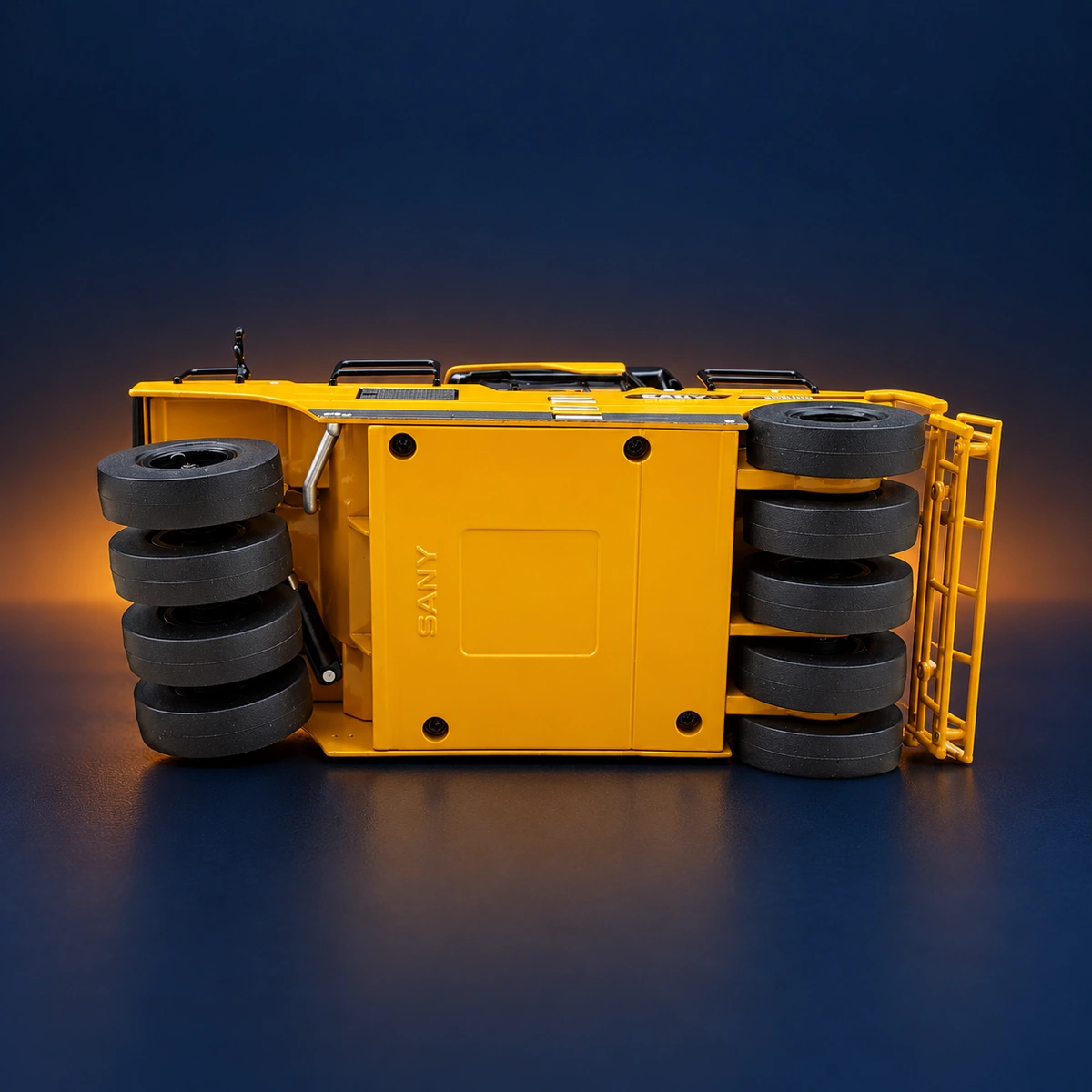
Undercarriage and Tyre Layout
OEM Development Process
Custom road roller model development starts with the equipment reference and progresses through prototype and sample approval.
Prototype Approval
OEM scale model development from editable 3D data begins with a model-ready design and physical prototype. Confirm proportions, appearance, structure and functions. Complete structural changes before tooling starts.
Approve the Sample
Develop tooling for the agreed materials and manufacturing route. Review the sample’s component fit, surface appearance, graphics and functions. Establish the approved sample as the reference for production.
Control the Finished Result
Follow the agreed manufacturing, finishing and assembly sequence. Check the finished models against the approved reference. Review appearance, functions and packing protection before preparing the order for shipment.
Consistency Across Finished Models
For an OEM equipment model, inspection should cover how the parts fit, how the surfaces look and how the confirmed functions operate.
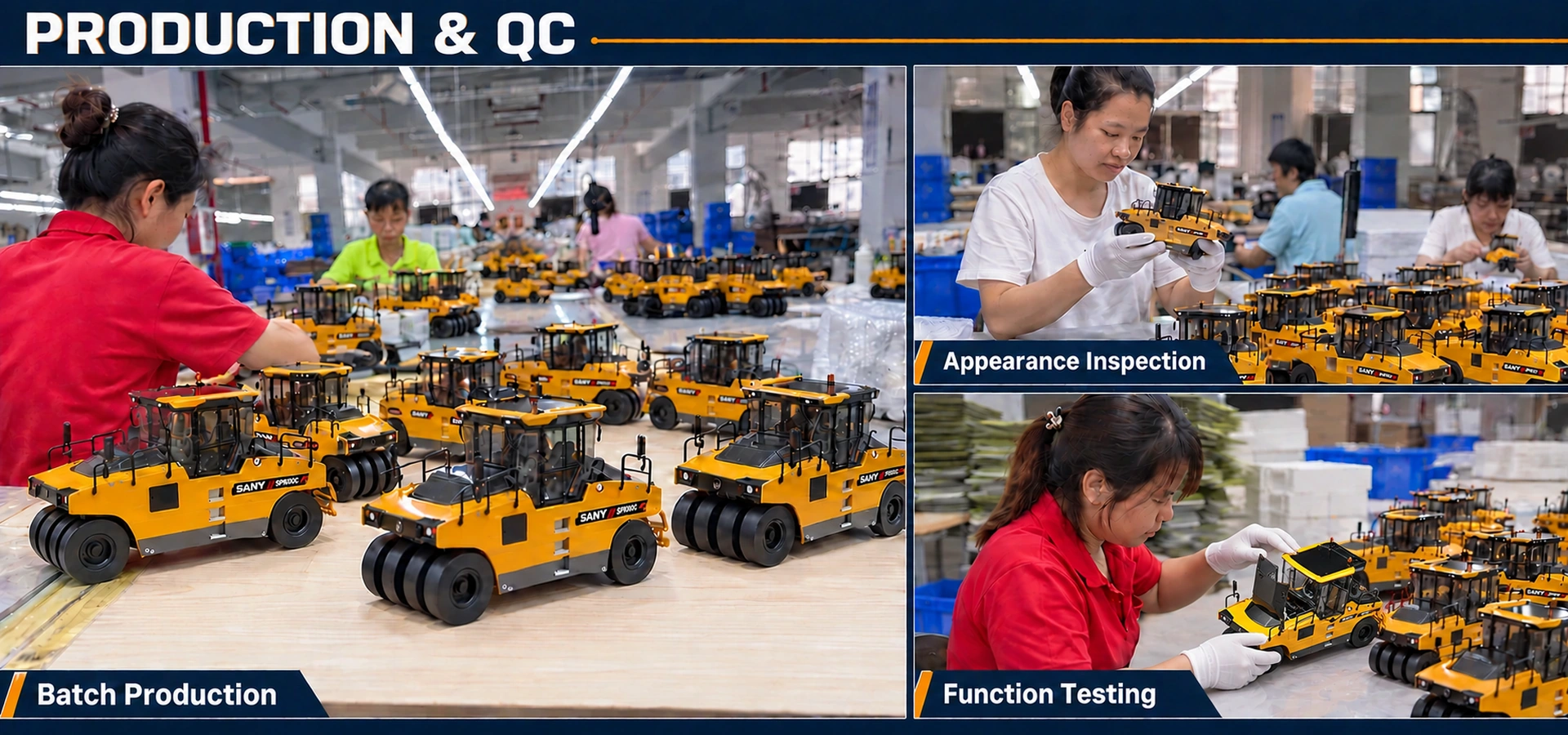
Component Fit
Check cab glazing, body panels, handrails and wheel mounting points for visible damage, deformation and poor fit.
Finish and Graphics
Compare colour, surface finish and graphic placement with the approved sample. Check transparent parts for cleanliness and visibility.
Function and Assembly
Check door and hood opening, wheel rolling and front steering. Look for loose parts, missing components and visible glue residue.
Packaging Protection
Review model restraint and protection around mirrors, handrails and the roof beacon. Check packing consistency across the finished units.
Business Applications
A 1:35 tyre roller model provides a compact equipment reference for sales discussions, showroom displays and corporate collections.
Dealer Presentations
A custom road roller model for dealer presentations gives sales teams a physical reference to use alongside equipment specifications and product literature.
Equipment Showrooms
An equipment scale model for showroom displays represents a machine where full-size equipment cannot be accommodated, keeping the product range visible to visitors.
Corporate Collections
Custom construction equipment models can form a coordinated company collection, with agreed scales, colours and graphics used to represent different machines.
Need a Model of Your Own Equipment?
Planning a custom tyre roller scale model or another equipment replica? Send reference photos, the real machine’s overall dimensions and your requirements for an initial review. Editable 3D data is needed when development starts, rather than for the initial quotation.
