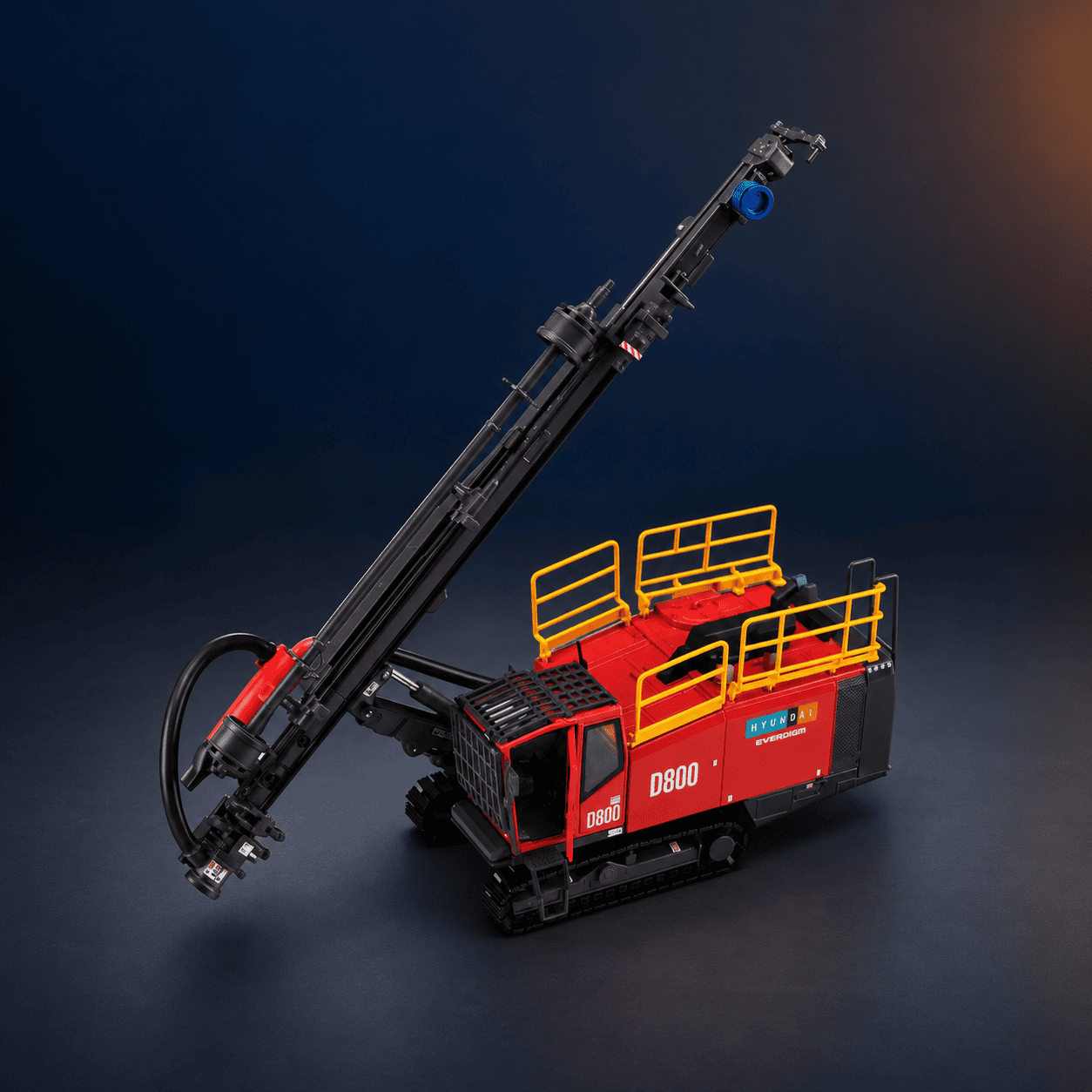
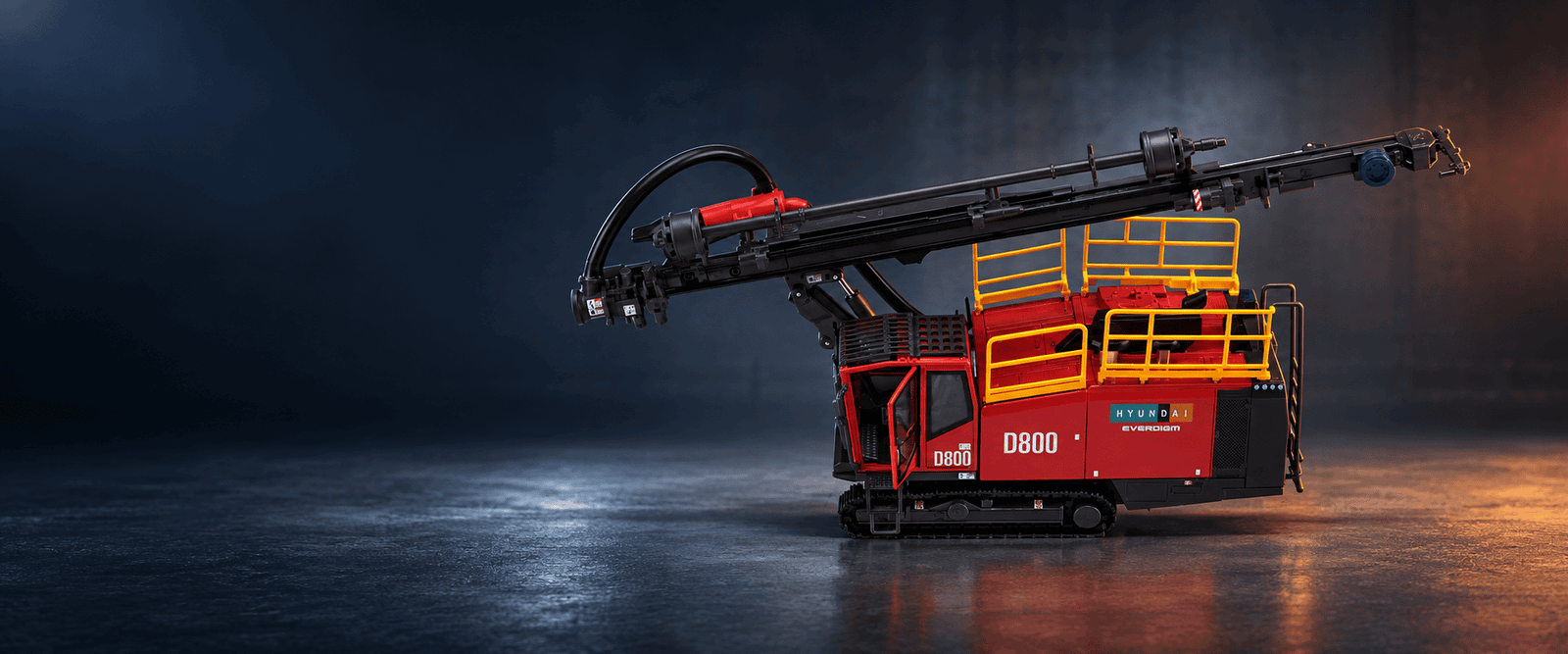
Hyundai Everdigm D800 Blasting Drill Rig Model
A functional diecast blasting drill rig scale model developed to present the machine's long drilling system, articulated structure and recognisable brand details in a compact physical format.
Project Specifications
The core specification set gives OEM teams a clear reference for display planning and project review.
Turning a Complex Rig into a Brand Display
This project focuses on the visual identity and working character of a specialist blasting drill rig.
The D800 combines a compact tracked base with a drilling assembly that extends far beyond the vehicle body. Converting that silhouette into a custom construction equipment scale model required the boom, cab, platform and crawler system to read as one coherent machine rather than a collection of oversized parts.
The model was developed as an industrial equipment display model that can communicate more than exterior styling. Its articulated boom base, rotating shaft, moving drill chuck and removable guardrails give product teams a practical way to explain the real equipment's layout during dealer presentations, trade shows and brand displays.
With 280 individual parts, the project places particular emphasis on connection points, controlled movement and consistent alignment. The result is a functional drilling rig model designed for close viewing while retaining the recognisable Hyundai Everdigm graphics, access structures and equipment-panel character visible on the full machine.
The drilling structure remains visually balanced with the tracked body.
Multiple joints move without losing the model's display alignment.
Guardrails, platforms and the cab area stay distinct at close range.
Printed graphics and colour separation keep the equipment identifiable.
A Closer Look at the Finished Model
Four views show the drilling system, tracked base, folded transport arrangement and presentation packaging.
Nine Functions Built Around the Rig
The moving elements follow the visible operating areas of the drilling machine and support hands-on product explanation.
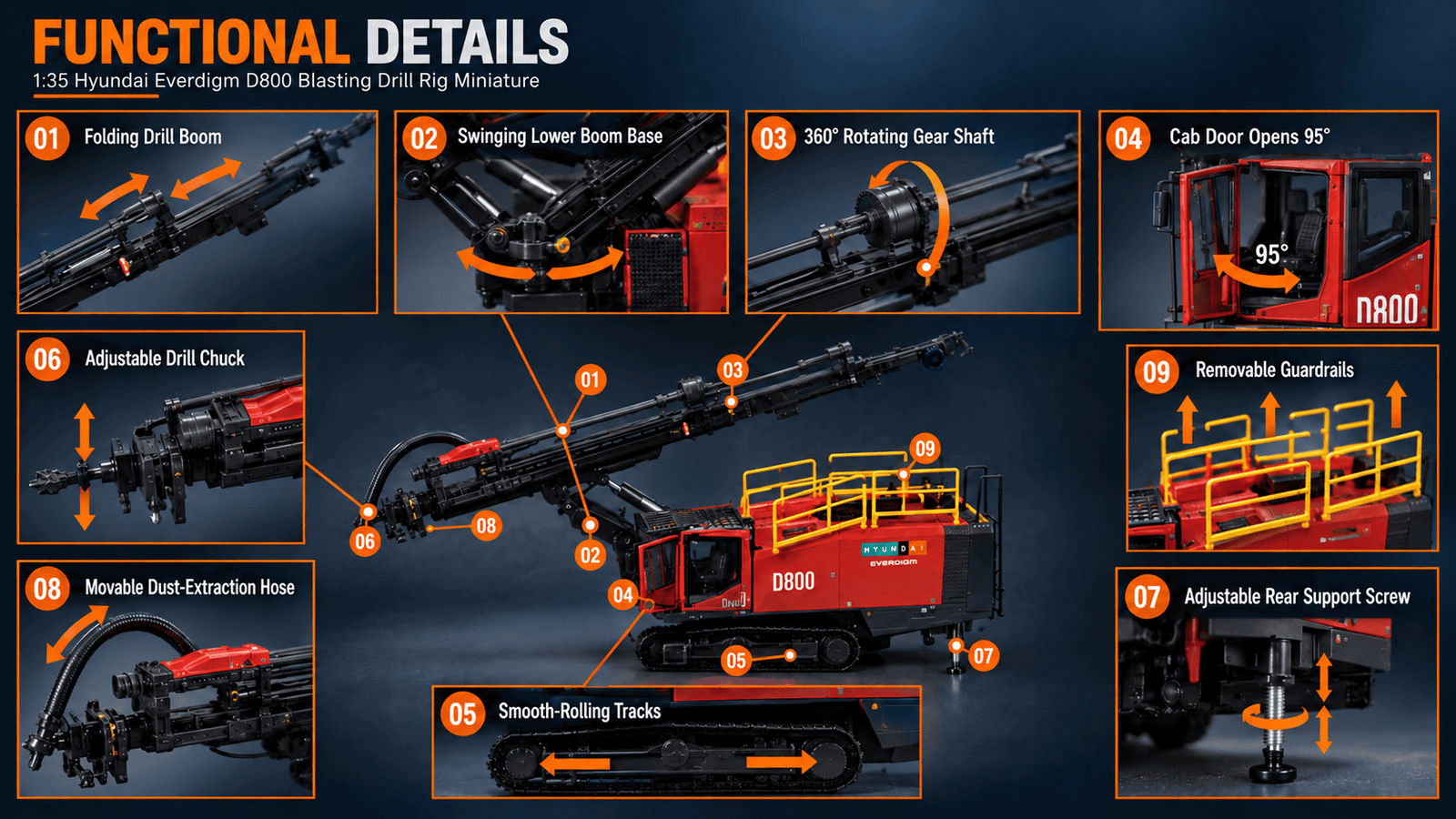
Folding Drill Boom
The drill boom folds through its articulated structure for alternate display positions.
Swinging Lower Boom Base
The lower articulated boom base moves from side to side.
360° Rotating Gear Shaft
The boom gear shaft rotates fully around its axis.
Opening Cab Door
The cab door opens to roughly 95 degrees for a clearer interior view.
Moving Crawler Tracks
The crawler tracks move forward and backward smoothly.
Adjustable Drill Chuck
The drill rod chuck travels up and down along its working position.
Rear Support Screw
The rear underside support-pad screw can be turned upward or downward.
Movable Silicone Hose
The black dust-extraction hose at the boom head moves forward and backward.
Removable Guardrails
The front, rear, left and right guardrails can be removed and refitted.
Structure, Fit and Finish in One View
The engineering presentation focuses on visible joints, layered drilling components, access structures and exterior finishing rather than imaginary internal mechanisms.
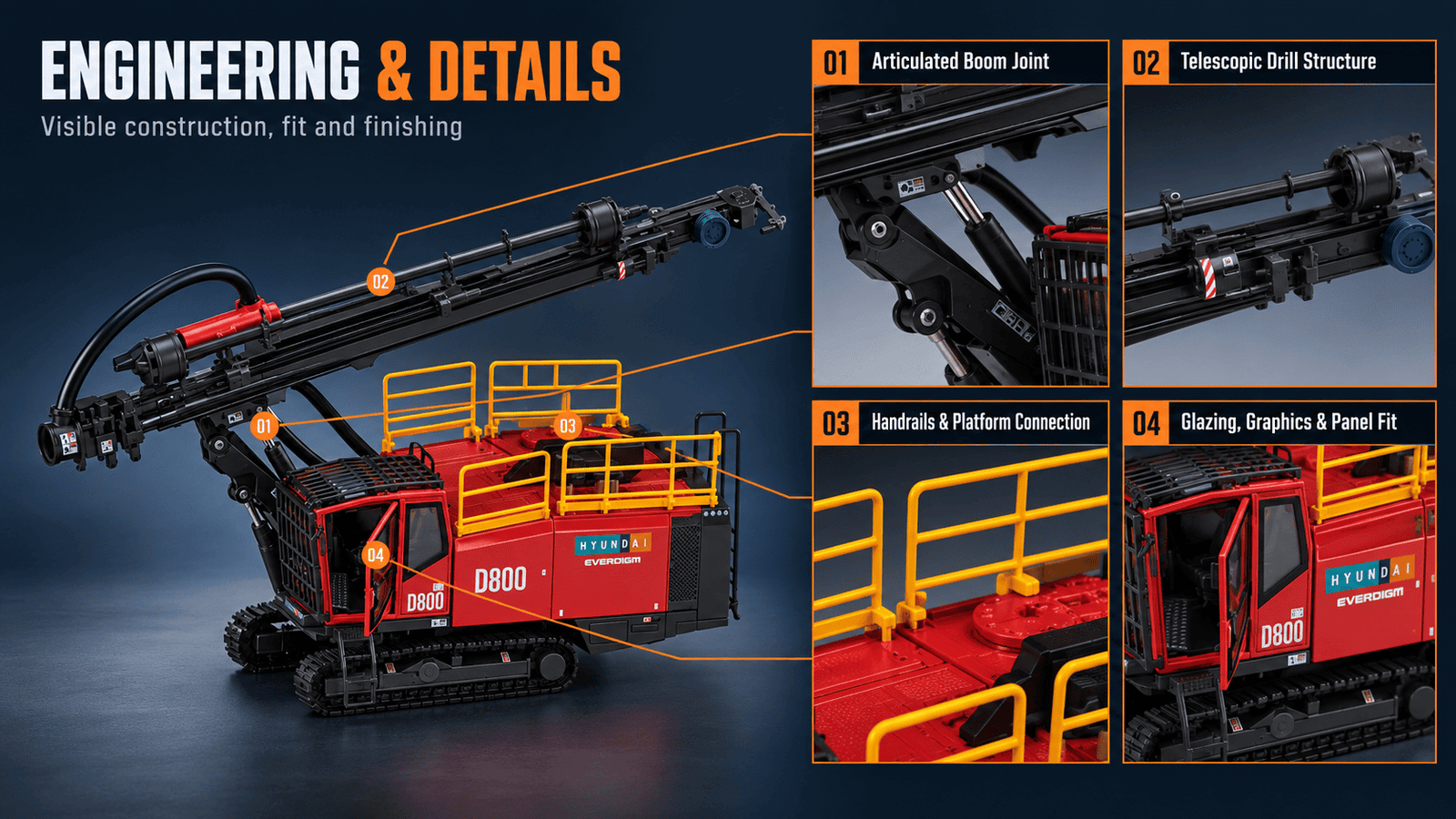
Articulated Connections
Visible pivots and linkages connect the long drilling system to the compact tracked body.
Layered Drill Structure
Parallel rails, shafts and external guide parts preserve the machine's technical character.
Fine Handrails
Yellow rails and platform connections define the access areas without overpowering the body.
Glazing and Panel Fit
Transparent cab glazing, printed graphics and textured panels support close-range inspection.
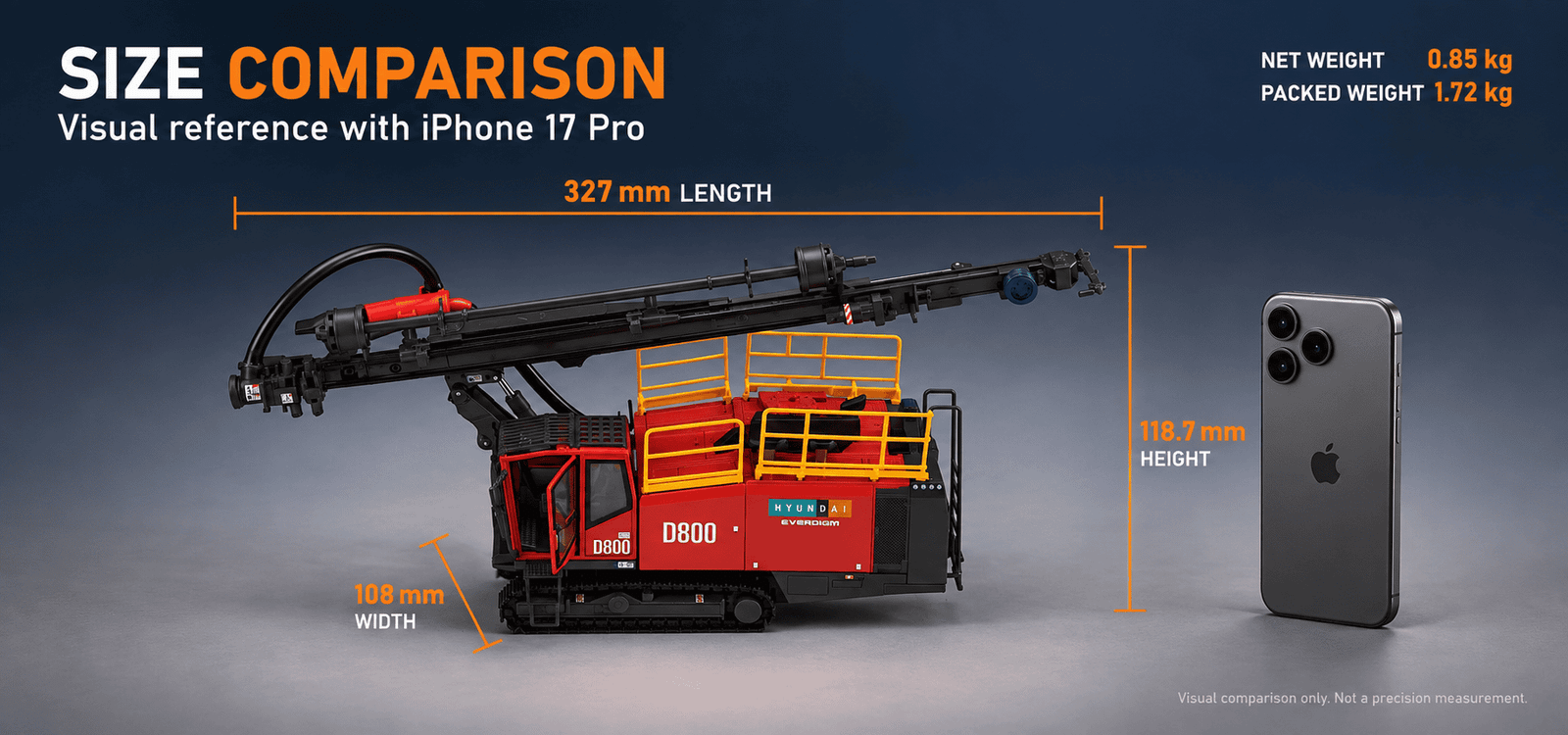
A Practical Footprint for Close Display
The comparison shows how the long drilling profile remains suitable for a desktop, display cabinet, dealer showroom or trade-show presentation while retaining enough visual presence for close viewing.
From Equipment Data to Repeatable Production
Each stage converts the customer's real machine information into a model that can be reviewed, tooled, assembled and supplied consistently.
3D Data and Prototype
Editable equipment data is converted into model-production geometry. Scale, wall thickness, assembly gaps, moving parts and visible details are reviewed before a physical prototype is prepared for approval.
Tooling and Metal Sample
CNC machining, precision engraving and mould manufacture establish the production tooling. A metal sample then provides a near-production reference for structure, appearance, fit and confirmed functions.
Production, QC and Delivery
Die casting, injection moulding, painting, pad printing and assembly are followed by functional checks, appearance inspection, packaging verification and shipment preparation.
Checks Matched to a Complex Equipment Model
The representative workflow shows how assembly, surface inspection, function testing and final review can be organised around the same product.
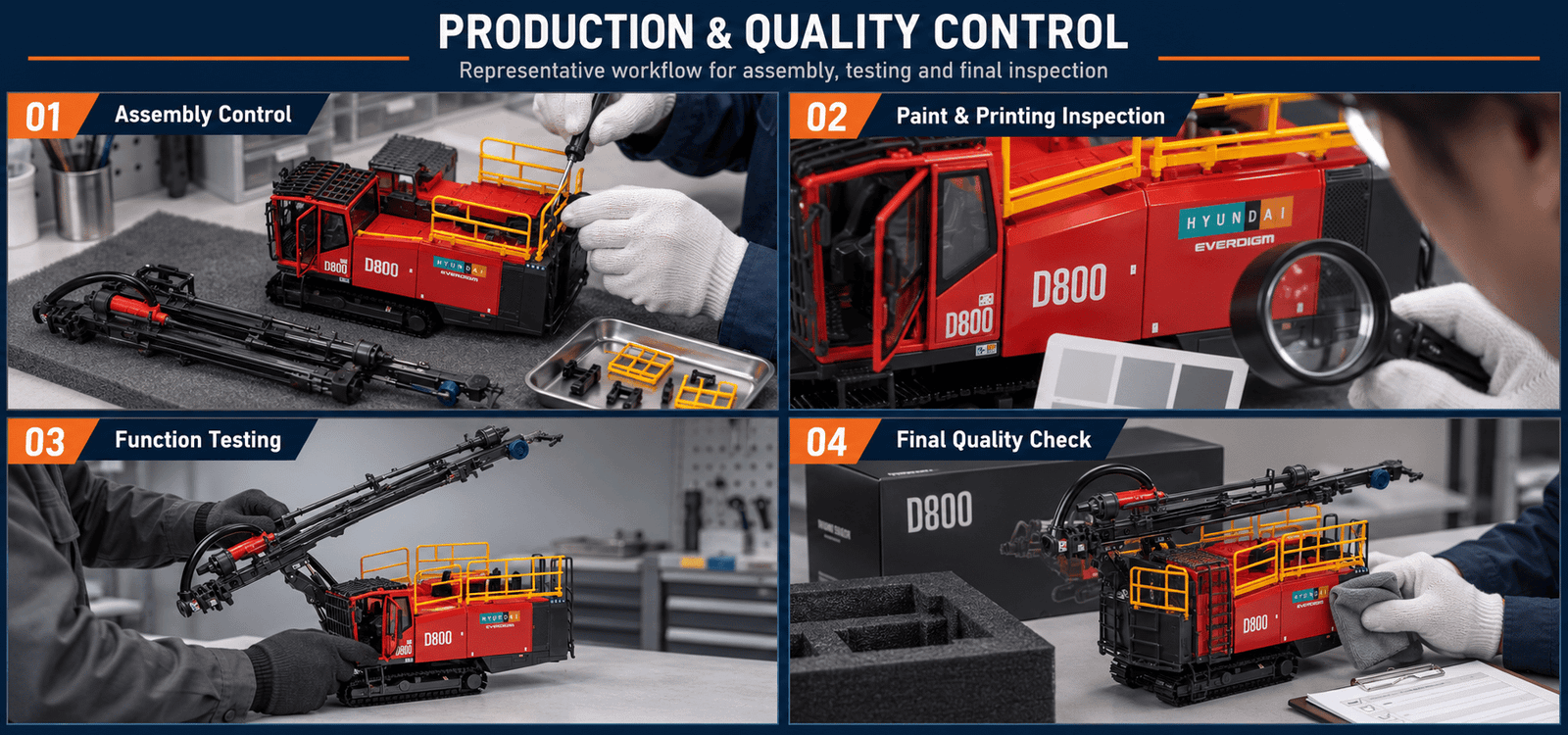
For a model with a long boom, removable rails and multiple moving points, quality control must consider straightness, surface consistency, printed alignment, assembly fit and reliable movement together.
Component Inspection
Cast and moulded parts are reviewed for clean edges, stable shapes and accurate locating points before painting and assembly, with particular attention to the cab body and long drilling components.
Paint and Printing Control
Red body panels, black equipment sections and printed D800 graphics are checked for consistent colour, clean coverage, dust contamination and visible misalignment.
Assembly and Function
Connections should be secure without making the confirmed movements excessively loose or tight. Doors, tracks, boom joints, chuck, support screw, hose and guardrails are reviewed in their intended positions.
Final Packaging Review
The finished model receives a final appearance and completeness check before it is placed into protective packaging, helping guard delicate rails and projecting drilling parts during handling.
Where This Functional Model Adds Value
Its recognisable silhouette and demonstrable movement make the model useful wherever a real drilling rig is difficult to transport or explain.
Dealer Showrooms
Sales teams can use the moving boom and visible access structures to discuss equipment layout beside brochures or digital presentations.
Trade Shows
A compact functional heavy equipment model brings the machine onto counters and meeting tables where full equipment cannot be displayed.
Product Presentations
The model supports guided explanations of the drilling system, tracked base and service-access areas during launches and customer meetings.
Corporate Gifts
A branded miniature can mark project milestones or support selected partner and distributor programs with a product-specific keepsake.
OEM Promotions
Authentic graphics and machine-specific construction make the model suitable for focused campaigns rather than generic merchandise.
Collector Programs
The combination of specialised equipment, visible engineering and working features gives the model relevance to construction-equipment collectors.
Planning a Similar OEM Model
These points help define scope before engineering and quotation begin.
What information is needed to develop a custom drilling rig model?
Can opening and moving functions be customised?
Can you develop other drilling or construction equipment models?
Can colours, logos and packaging be customised?
Need an OEM Equipment Model for Your Brand?
Share the machine information and intended application. We can review the structure, suitable scale, functional scope and packaging direction for your next custom diecast model project.