


1:24 Mercedes-Benz MB100 Van Scale Model
A miniature passenger van with an accessible cabin, allowing the seating layout to become part of the display.
Discuss Your Model ProjectThe MB100 from Different Perspectives
Explore the Mercedes-Benz MB100 van scale model through its two-tone bodywork, window layout and front and rear profiles.
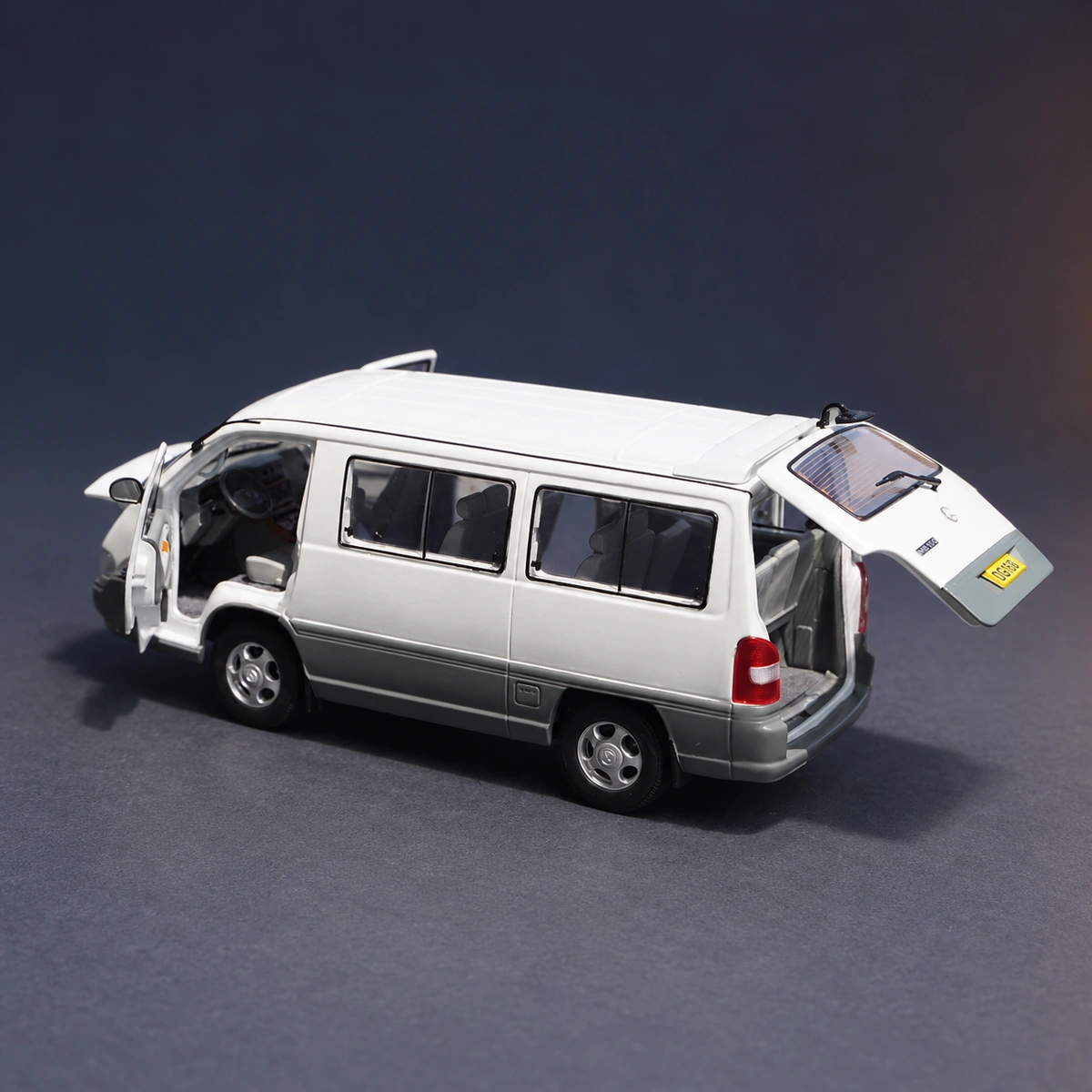
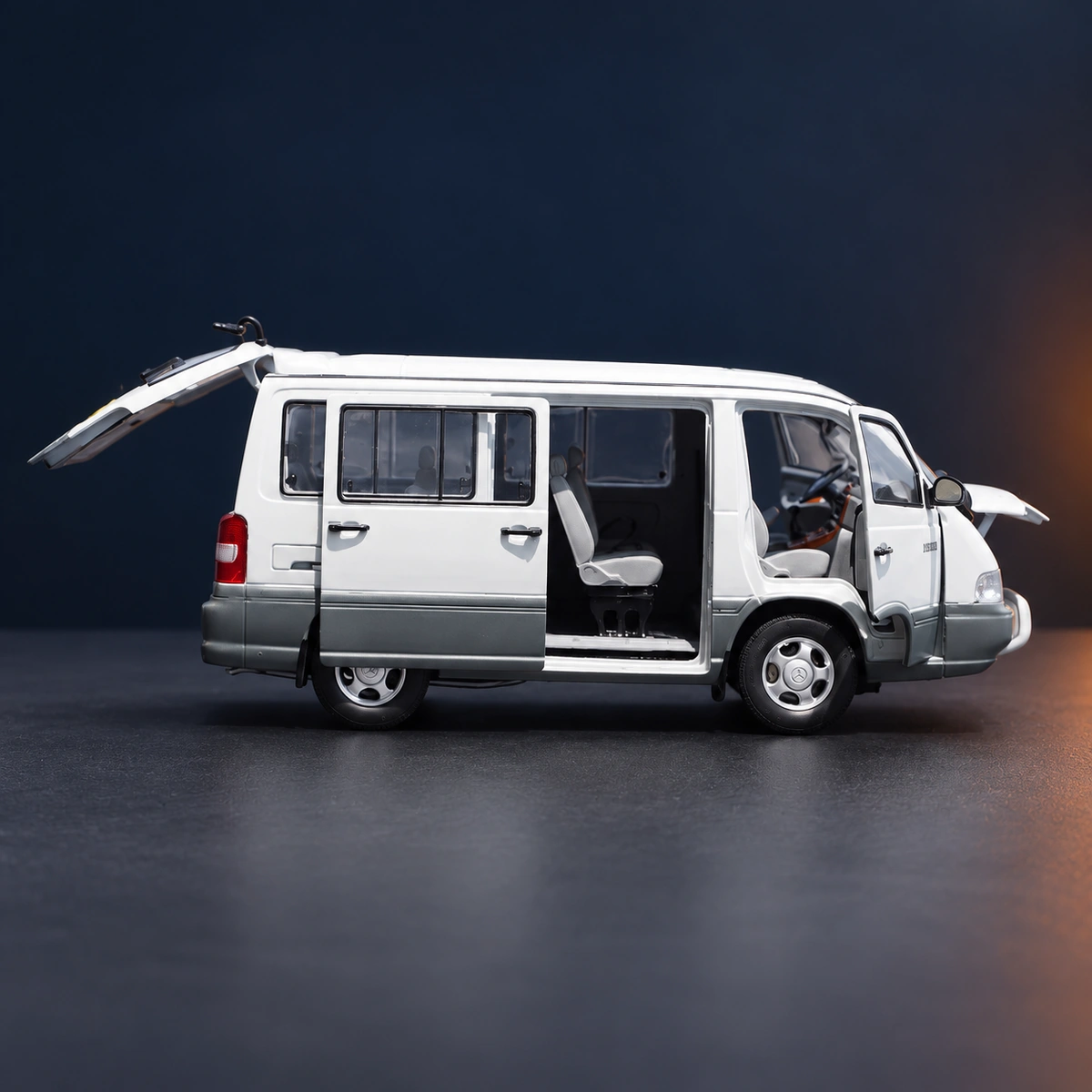
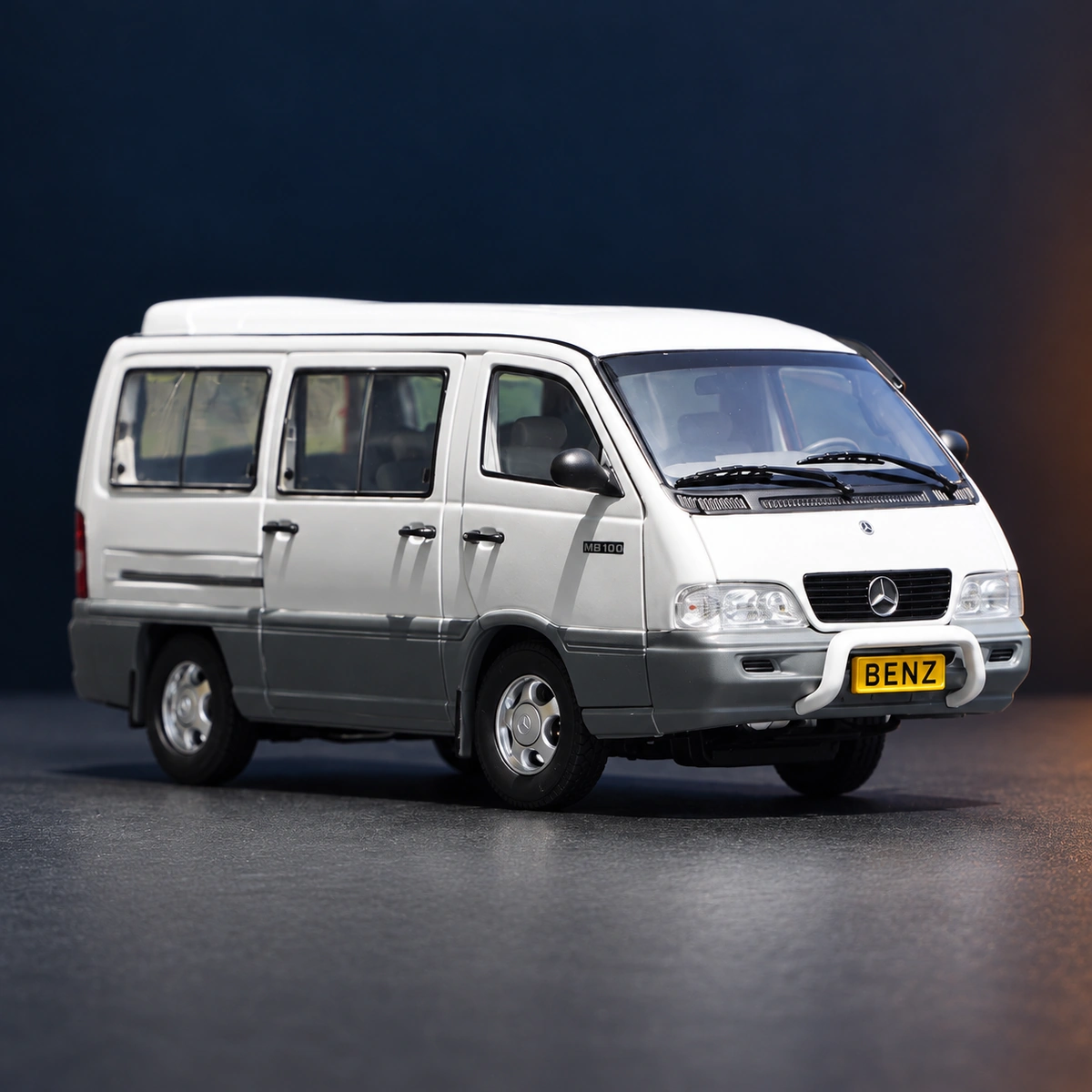

Five Functions to Explore
This functional vehicle scale model combines rolling movement, opening body panels and linked steering.
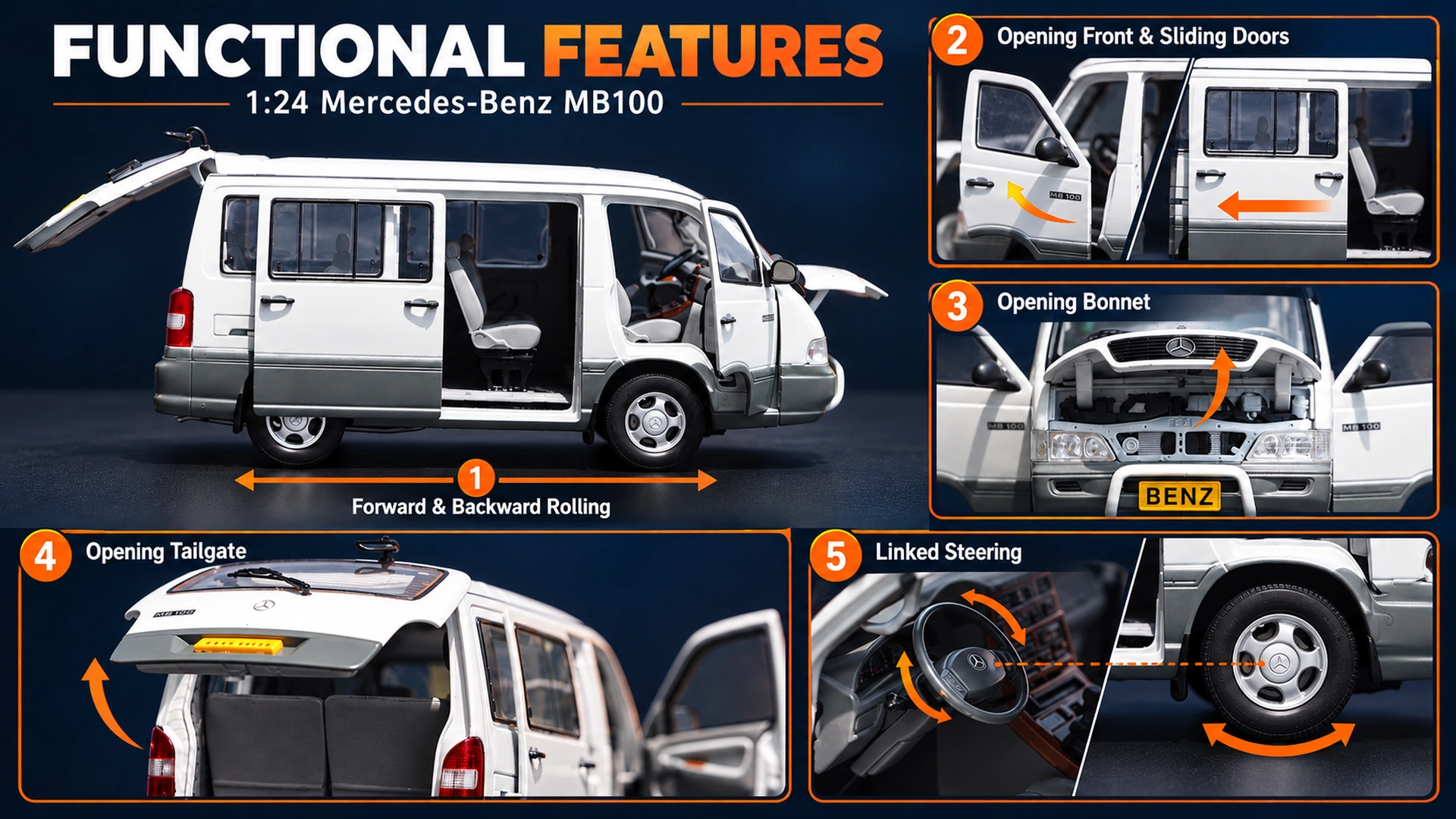
Forward and Backward Rolling
The wheels roll to move the model forwards and backwards across a suitable surface.
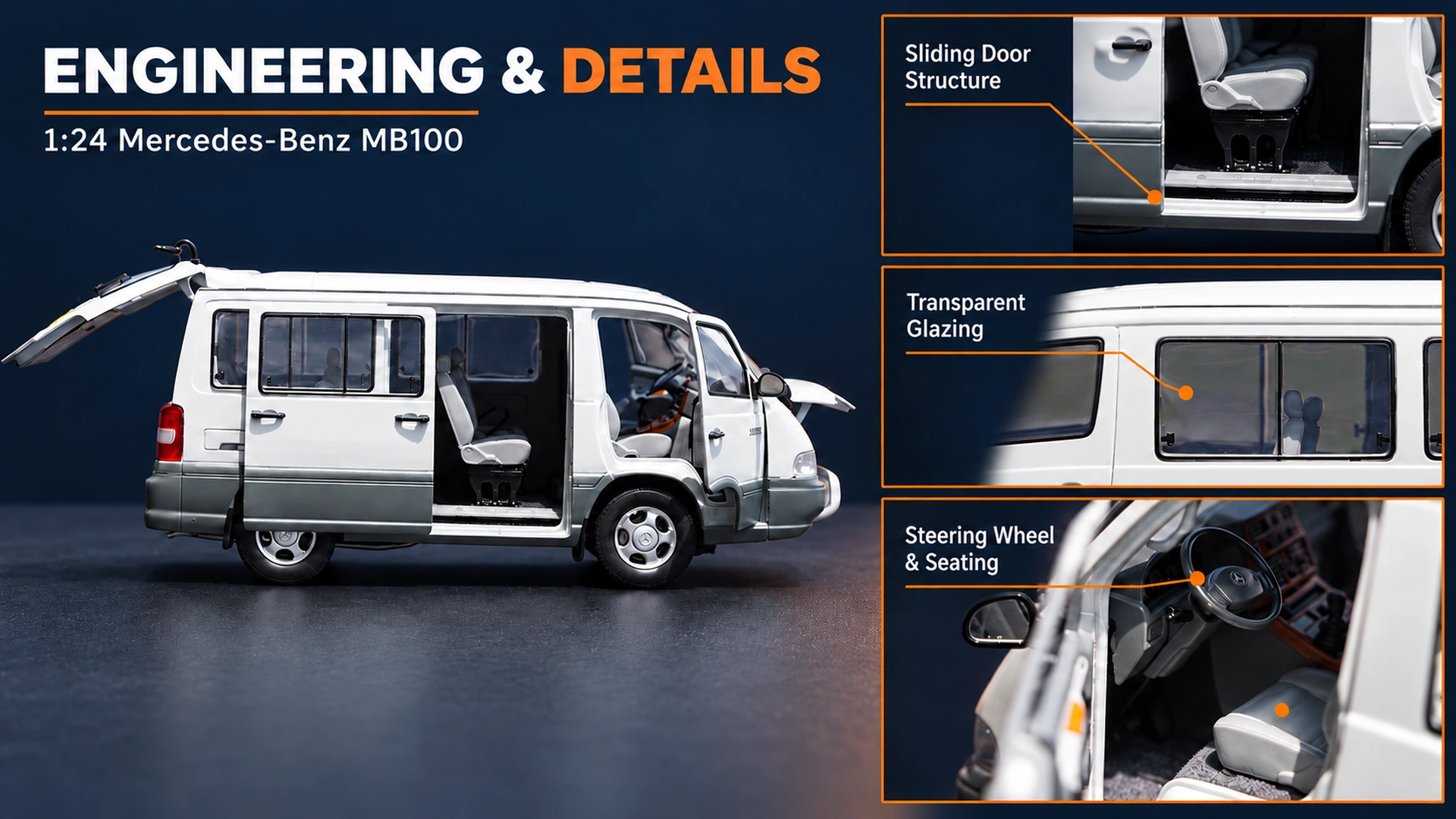
Opening Front and Sliding Doors
A van scale model with opening front and sliding doors provides access to both cabin areas.
Opening Bonnet
The front bonnet panel lifts to reveal the visible compartment beneath it.
Opening Tailgate
The rear tailgate lifts upwards to expose the rear opening and seat backs.
Linked Steering
On this model van with linked steering, the steering wheel and front wheels move together.
Reading the Cabin and Bodywork
Transparent glazing, distinct window frames and a visible dashboard give this 1:24 van model more to examine at close range.
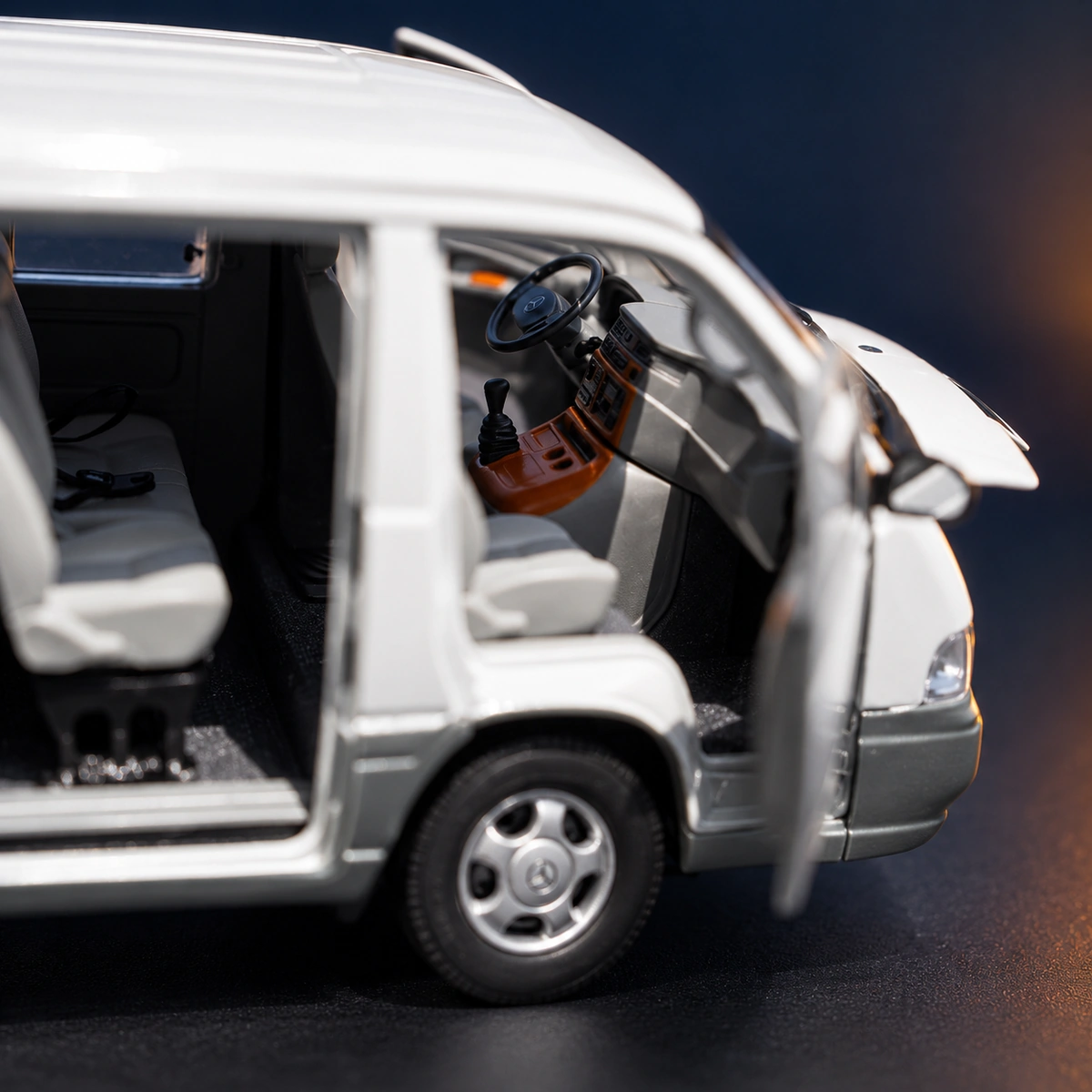
Dashboard and Gear Lever

Driver Seat and Interior Trim
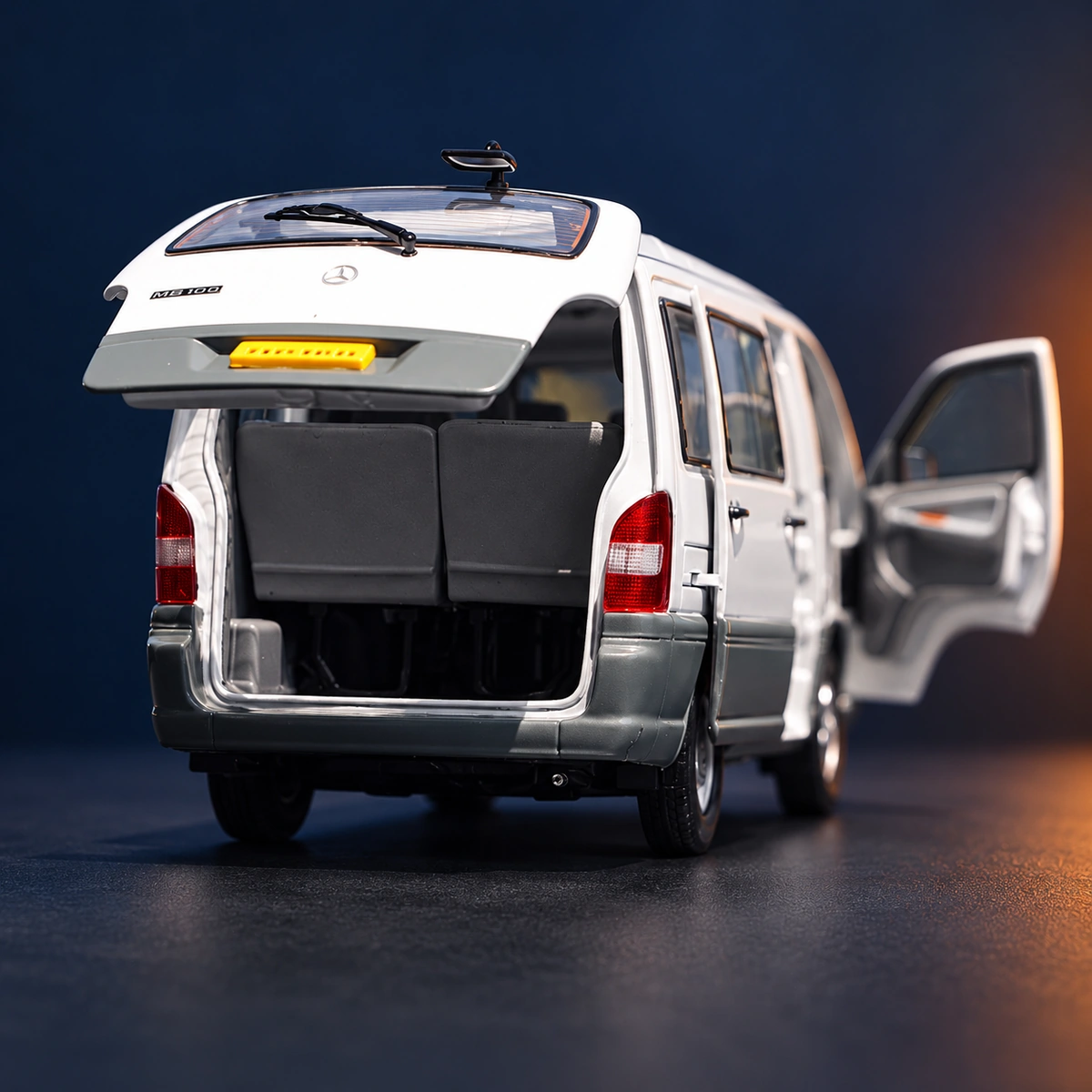
Rear Seating and Lamp Detail
From Vehicle References to an Approved Model
For a custom OEM van model, each approval stage establishes what the next stage should reproduce.
Prototype Approval
Adapt editable vehicle 3D data for model production, then build a prototype to review proportions, appearance, structure and functions. Resolve structural changes before prototype approval and tooling.
Approve the Sample
Develop tooling for the agreed materials and manufacturing route. Review the sample for component fit, appearance, decoration and functions, then establish an approved reference for the production batch.
Control the Finished Result
Follow the agreed manufacturing, surface finishing and assembly sequence. Check completed models for appearance and operation against the approved reference, then confirm protective packing before shipment.
Keeping the Finished Batch Consistent
An approved reference helps define what to check across component fit, appearance, movement and protection.

Component Fit
Check body panels, mirrors and door edges for visible damage, deformation or interference at adjoining parts.
Finish and Graphics
Compare colours, markings and trim with the approved sample. Check glazing for cleanliness and interior visibility.
Function and Assembly
Check rolling, panel movement and steering linkage, together with loose parts, missing components and visible adhesive residue.
Packaging Protection
Review model restraint, protection around mirrors and other projecting parts, and consistency of the agreed packing arrangement.
A Vehicle Model with Several Display Roles
The MB100 format offers a reference for commercial model projects where a recognisable vehicle needs to fit a tabletop setting.
Dealer Presentations
Custom vehicle models for dealer presentations provide a compact point of reference alongside brochures, photographs and vehicle histories.
Corporate Vehicle Collections
Scale models for corporate vehicle collections can organise significant vehicles into a consistent display format for offices and reception areas.
Museum Displays
A tabletop miniature can accompany photographs and interpretive material when exhibition space cannot accommodate the full-size vehicle.
Need a Model of Your Own Vehicle?
Use this Mercedes-Benz MB100 van scale model as a starting reference for your brief. Send initial photos, your preferred scale and the features you need. Editable vehicle 3D data is required when development begins.
