
Project Specifications
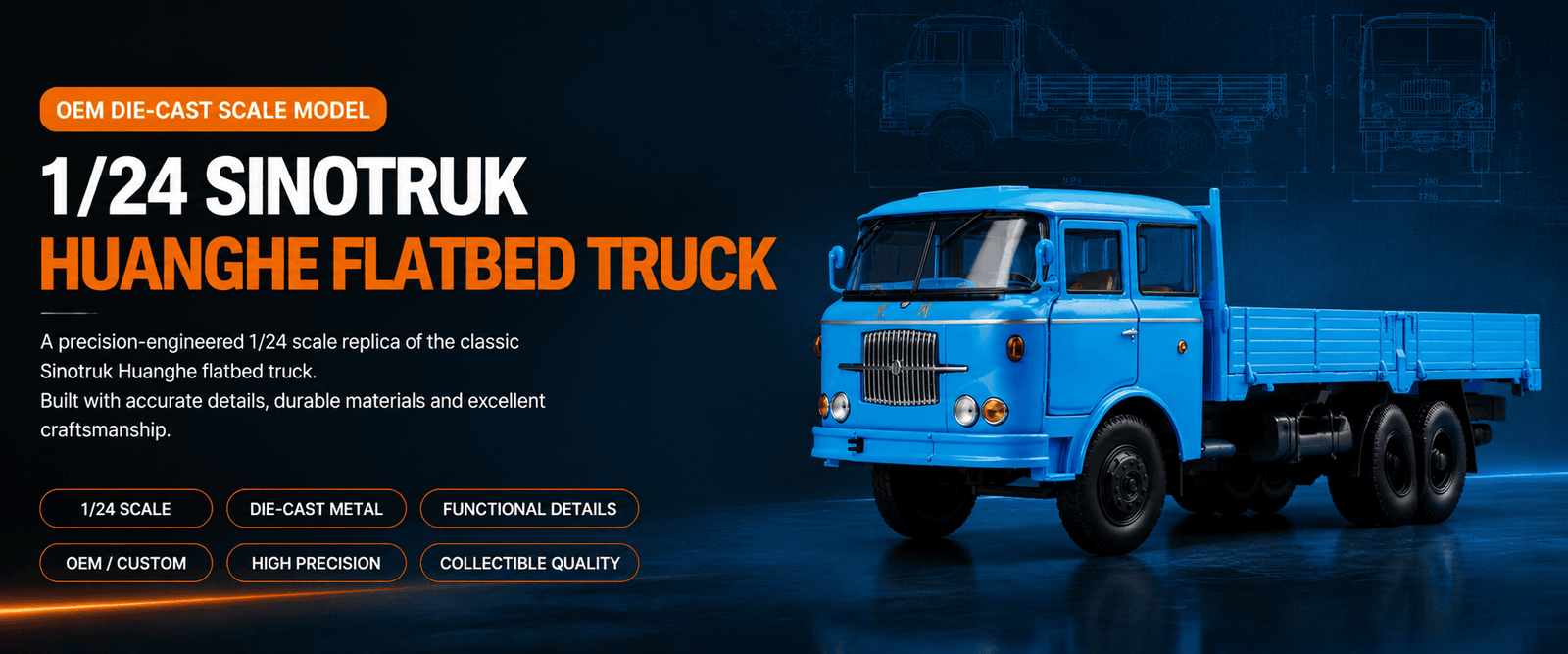
This custom commercial vehicle project combines a substantial die-cast construction, practical moving features and carefully reproduced period styling in a display-ready 1:24 truck scale model.
A Classic Truck Recreated for Modern Display
The project focused on retaining the recognisable shape and character of the original Huanghe platform truck while delivering the strength, finish and functionality expected from a premium OEM scale model.
The 1:24 Sinotruk Huanghe Cargo Truck Model was developed as a detailed representation of a classic Chinese commercial vehicle. Its rounded cab, vertical front grille, long cargo platform and period-specific proportions give the model a distinctive appearance that remains immediately recognisable from every angle.
Development required more than reproducing the external shape. The cab doors, cargo side panels and rear tailgate were engineered as working parts, while the steering linkage and rear suspension add meaningful mechanical interaction. These features make the model suitable for brand displays, commercial vehicle exhibitions, corporate collections and museum-style presentations.
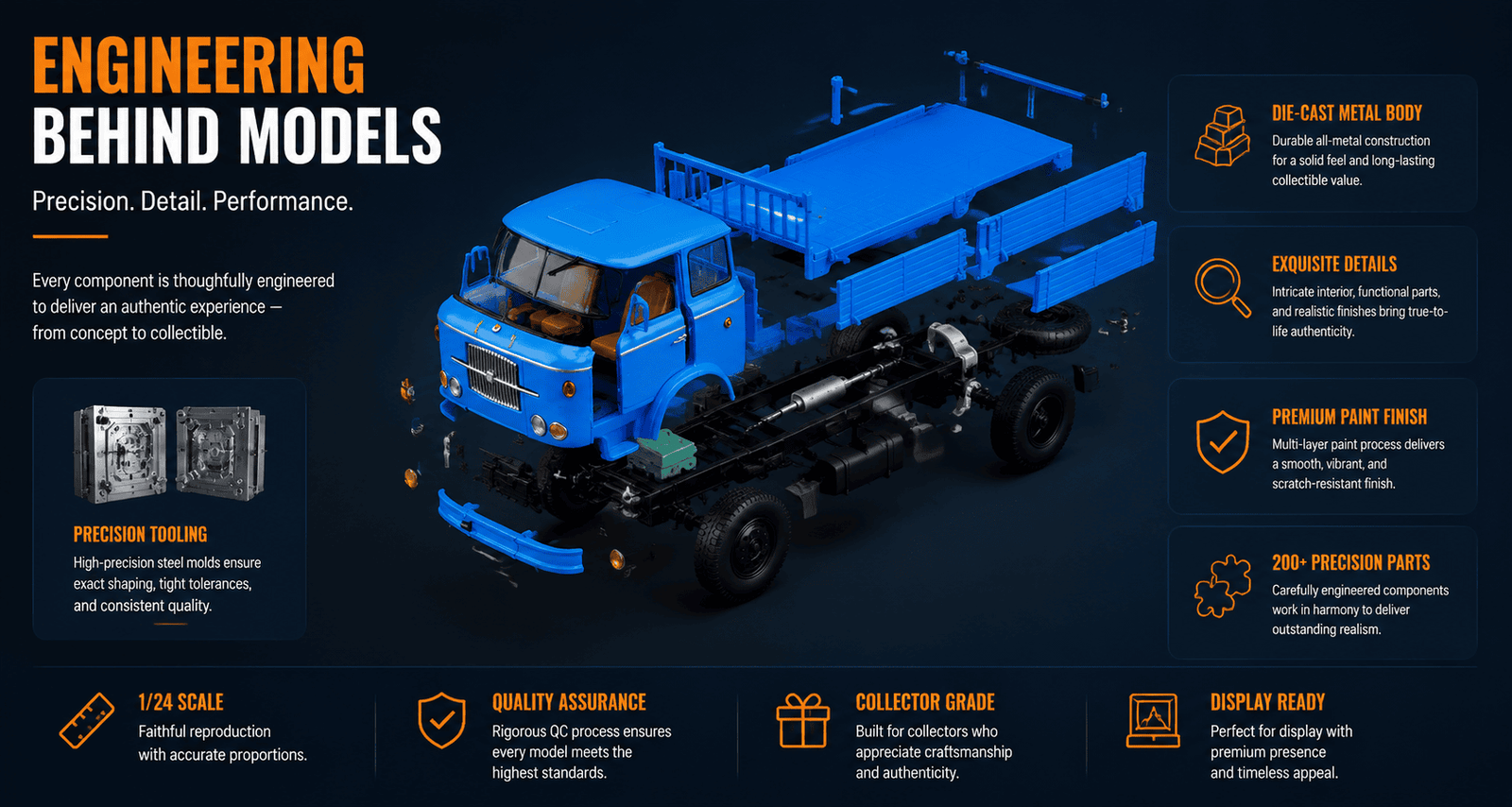
With a full metal chassis, a finished weight of 1.36 kg and approximately 200 components, this custom 1:24 cargo truck scale model demonstrates the tooling, die-casting, painting, pad printing, assembly and quality-control work required for dependable OEM production.
What Makes This Project Valuable
Explore the Model from Every Angle
Each view highlights a different aspect of the model, from the period front design and full-length cargo body to the detailed chassis and carefully controlled overall proportions.
Functional Demonstration
The working elements were selected to add genuine display value without compromising the characteristic shape of the original vehicle.
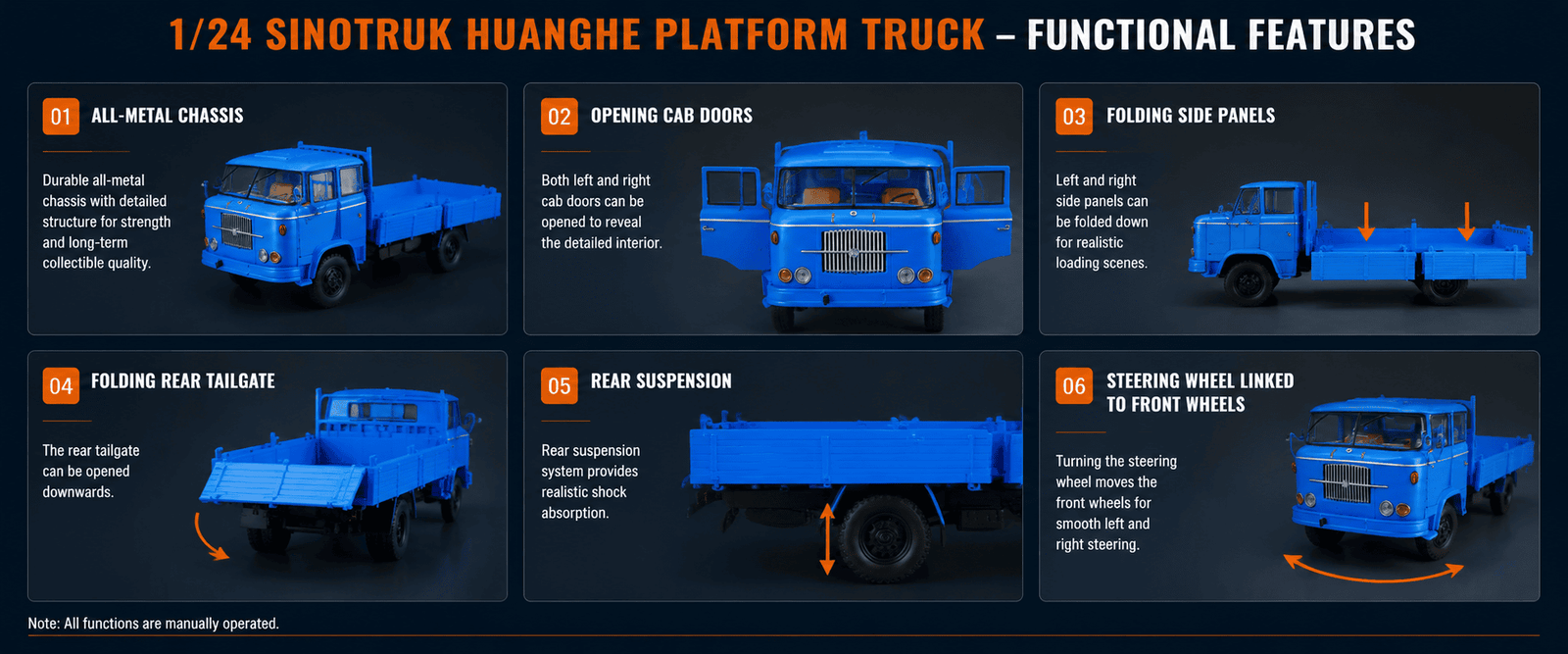
All-Metal Chassis
The metal frame supports the large body and gives the completed model a solid, substantial feel.
Opening Cab Doors
Both cab doors open to reveal the interior while retaining controlled panel gaps and secure closing positions.
Folding Side Panels
The left and right cargo side panels can be lowered to recreate practical loading and display scenarios.
Opening Rear Tailgate
The rear cargo panel opens downward, adding another realistic operating feature to the platform body.
Rear Suspension
The rear axle incorporates suspension movement for a more realistic mechanical response.
Linked Steering
Turning the steering wheel controls the front wheels through a connected steering mechanism.
Engineering Behind the Model
A functional cargo truck model requires the body, cargo panels, chassis, interior, fasteners and working mechanisms to operate as one coordinated assembly.
Tooling accuracy, material selection and controlled assembly were especially important because this model combines large die-cast sections with several moving components.
Premium Model Details
Small visual and mechanical details help transform a custom die-cast commercial vehicle model from a simple replica into a convincing brand and display asset.
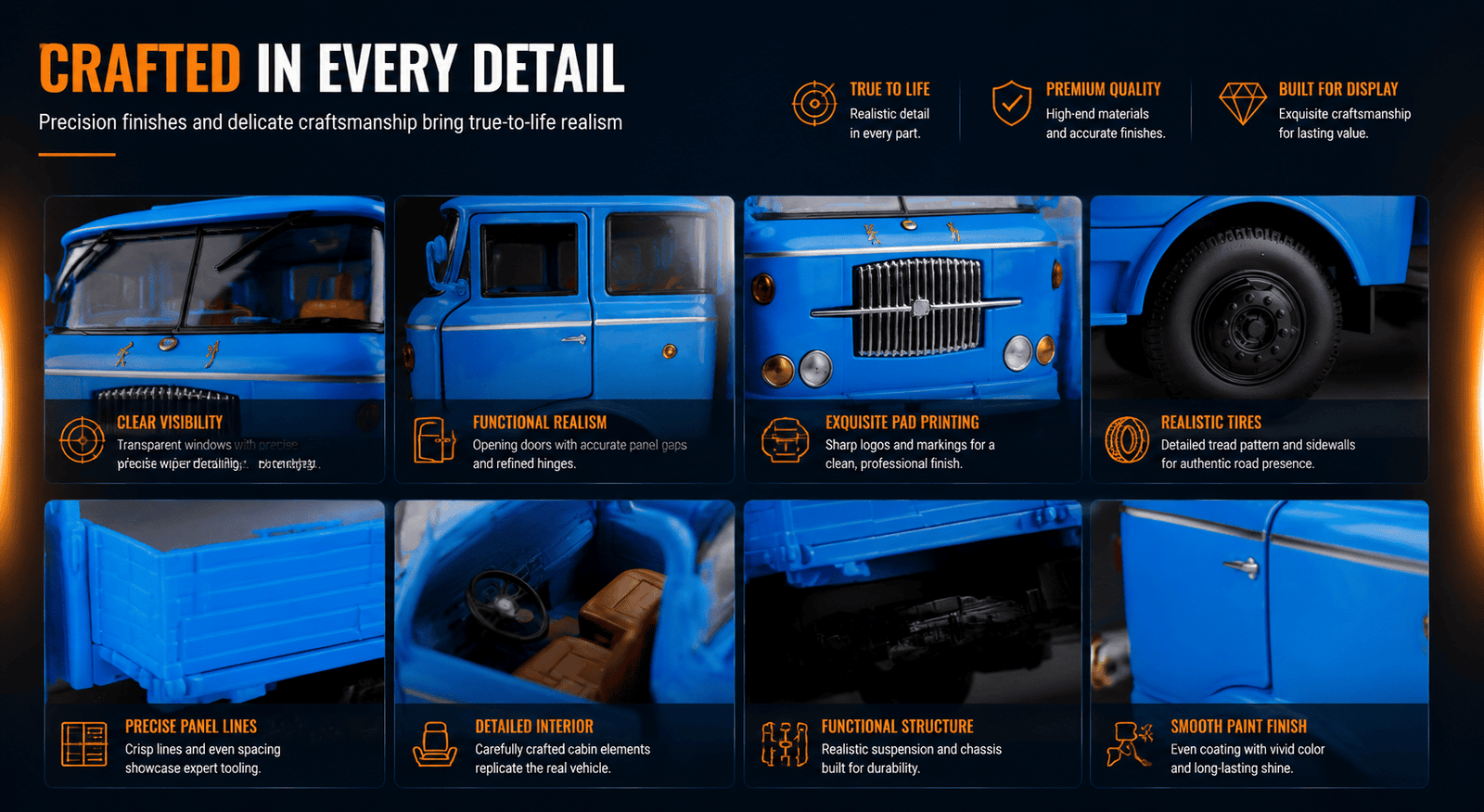
Pad-Printed Markings
Small front markings and decorative details are applied with controlled positioning and clean edges.
Cab, Windows and Doors
Transparent glazing, windscreen wipers, door handles and refined panel gaps make the cab more convincing at close range.
Tyres and Wheel Details
Tread patterns, sidewalls, rims and wheel hubs are reproduced to support an authentic commercial-vehicle stance.
Interior Components
Seats, dashboard elements, steering wheel and visible cabin trim add depth behind the large front glazing.
Fine Panel Textures
Cargo-floor ribs, side-panel lines and moulded surface textures reproduce the practical construction of the real truck.
Controlled Paint Finish
Consistent blue colour, smooth gloss and clean transitions help maintain a professional appearance across mass-produced units.
Model Size Comparison
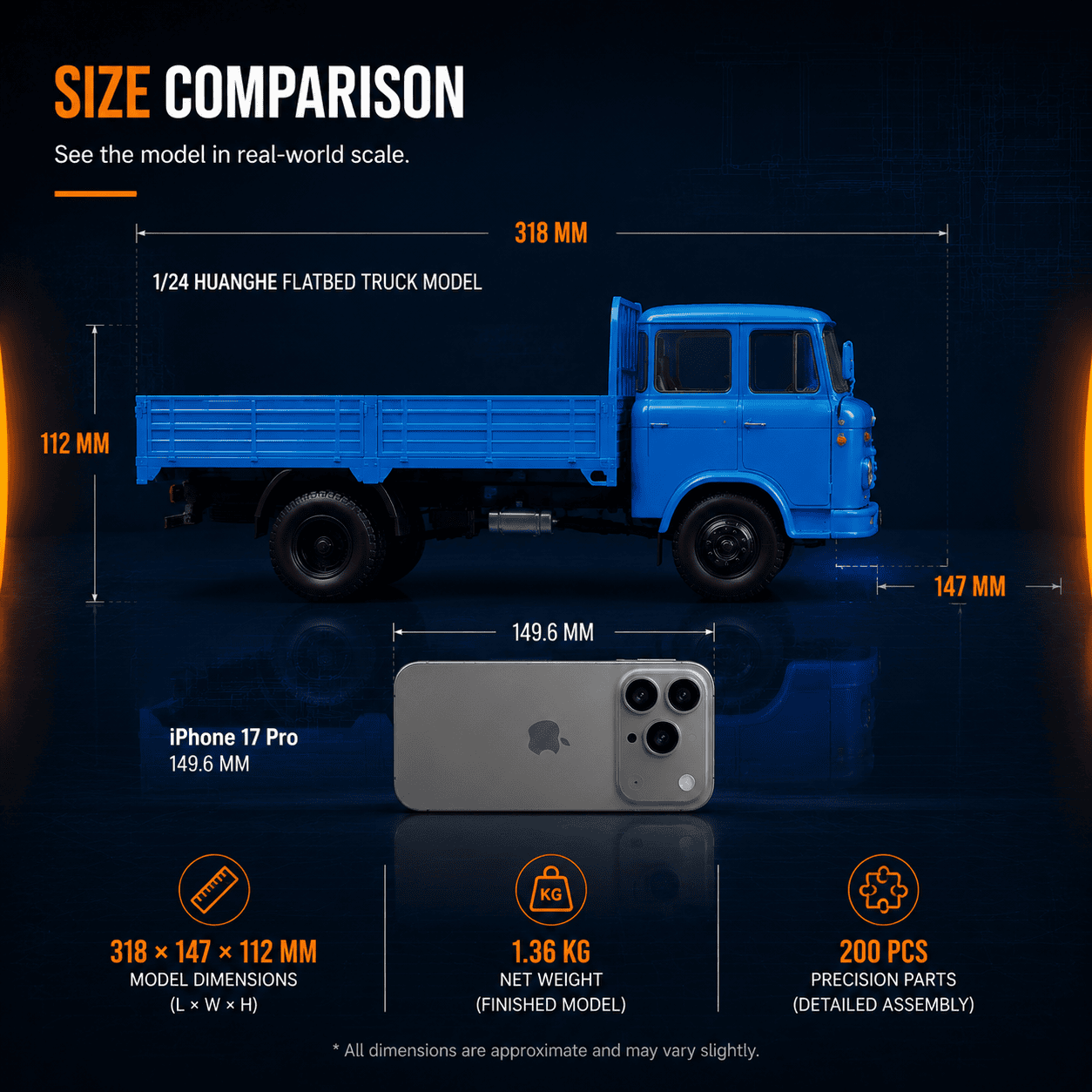
Its large 1:24 format gives the finished model enough visual presence for professional displays while keeping it practical for cabinets, counters and exhibition installations.
Measuring 318 × 147 × 112 mm and weighing 1.36 kg, the finished model is well suited to dealer showrooms, trade shows, corporate exhibitions, museums and branded presentation areas.
OEM Development Process
A structured development process helps convert the real vehicle into a production-ready custom scale model while keeping approvals, tooling and mass-production quality under control.
3D Data and Prototype
The real vehicle's 3D data is scaled and adjusted for model production. Wall thickness, assembly clearances, moving parts and visible details are refined before a physical prototype is prepared for customer review and approval.
Tooling and Metal Sample
Production moulds are manufactured using CNC machining, precision engraving and related tooling equipment. A metal sample is then assembled and finished so the customer can confirm a result close to the final mass-produced model.
Production, QC and Delivery
Die-casting, injection moulding, painting, pad printing, assembly, functional testing, appearance inspection, packaging and shipment are completed through controlled production stages to maintain consistent order quality.
Mass Production Capability
Successful OEM model manufacturing depends on repeating the approved sample across the full order, not simply producing one attractive prototype.
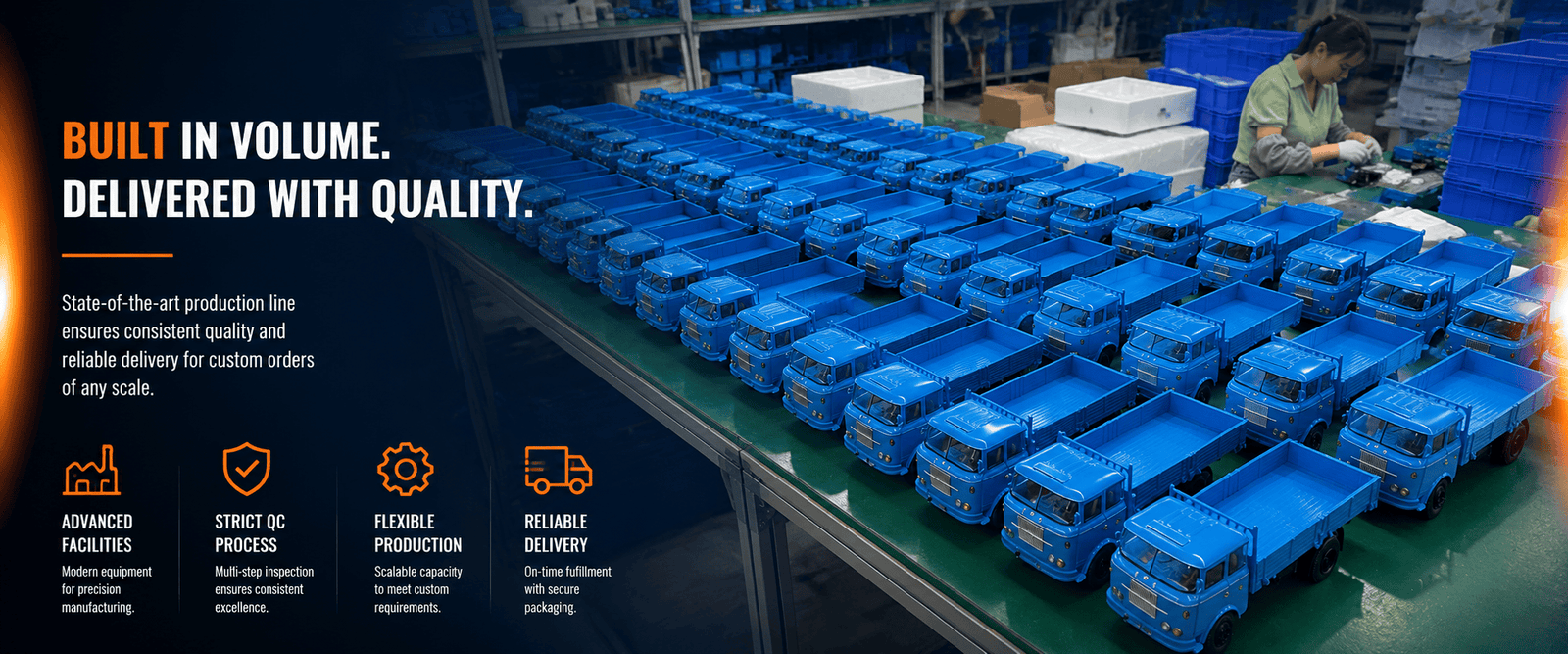
Consistent Quality Across the Full Production Run
Inspection is integrated into component preparation, painting, printing, assembly and final packing. This staged approach helps control colour consistency, panel fit, moving functions, surface condition and presentation quality before the models leave the factory.
Component Inspection
Die-cast and plastic parts are checked for flash, deformation, scratches, incomplete filling and other visible defects before finishing.
Paint and Printing Control
Colour, gloss, cleanliness and printed-marking position are compared with the approved reference sample.
Function and Appearance Testing
Doors, cargo panels, tailgate, steering and suspension are tested together with panel alignment and visible finish.
Final Packaging
Completed models are cleaned, secured in the selected packaging and checked again before carton packing and delivery.
Business Applications
A custom truck replica can preserve product history, support brand communication and give customers a physical object that remains visible long after an event or campaign ends.
Dealer Showrooms
A premium OEM truck model can support heritage displays, customer areas and branded showcases where the real vehicle is unavailable or impractical to exhibit.
Trade Shows and Product Events
The large-format model can help visitors understand vehicle design and brand history on exhibition stands, launch displays and distributor events.
Corporate Gifts
Custom packaging can turn the model into a memorable gift for distributors, employees, partners, major customers or anniversary programmes.
Museum and Heritage Displays
A detailed commercial vehicle replica can document historically important truck designs while requiring far less display space than a full-size vehicle.
Licensing and Collector Programmes
A collectible flatbed truck model can support licensed merchandise, limited editions and brand-focused collector releases.
Marketing and OEM Promotions
The model provides a tangible asset for campaigns, photography, corporate communication and long-term promotional use by truck manufacturers and distributors.
Frequently Asked Questions
The answers below cover the information normally needed to evaluate a custom die-cast truck model project.
What information is needed to develop a custom truck scale model?
The most useful starting materials are real-vehicle 3D data, overall dimensions, multi-angle photographs, close-up detail images, logo files, colour references, required functions, packaging preferences and expected order quantity.
Can doors, cargo panels and steering functions be customised?
Yes. Opening doors, folding side panels, tailgates, steering, suspension and other working features can be evaluated during the engineering stage. The final selection depends on scale, structure, durability, target cost and production feasibility.
Can logos, colours and printed markings match the real vehicle?
Logos and decorative graphics can be reproduced from approved artwork, while body colours can be developed from Pantone references, physical samples or other agreed colour standards. Printed positions and colour appearance are confirmed during sampling.
Is custom packaging available for dealer, museum or gift programmes?
Yes. Packaging can be developed for different applications, including protective foam and colour boxes, display bases with acrylic covers, premium gift boxes and project-specific branded packaging.
Need an OEM Truck Scale Model for Your Brand?
Share your vehicle information and project goals with us. We can review the model scale, functions, material approach, packaging direction and production requirements before preparing a proposal.
- Reference Photos or 3D Data
- Target Scale
- Required Functions
- Packaging Requirements
- Expected Order Quantity
