


Functional construction equipment model
XCMG XVB100-QL9-G Forklift Scale Model
A functional OEM display model that preserves the electric forklift’s recognizable structure while integrating controllable mast, steering and battery-access features.
Project specifications
Confirmed Model Data
The core specifications used to plan the model’s structure, presentation and functional layout.
Project purpose
A Display Model Built Around Real Functions
This electric counterbalance forklift model was developed as a credible physical representation for brand presentation, dealer display, corporate gifting and collector use. The goal was not simply to reproduce the green-and-black appearance, but to keep the mast, cab, wheels and service-access areas visually connected as one accurate miniature product.
The project concentrates on features that make a forklift immediately understandable when viewed at close range. The lifting assembly can move and hold position, the rear wheels can steer, and several access points show how the model has been engineered without inventing hidden mechanisms.
Its distinctive value comes from combining a visually dominant mast with removable battery components and opening service panels. This gives the finished model stronger demonstration value while preserving the proportions, graphics and color scheme of the XCMG XVB100-QL9-G series.
Product gallery
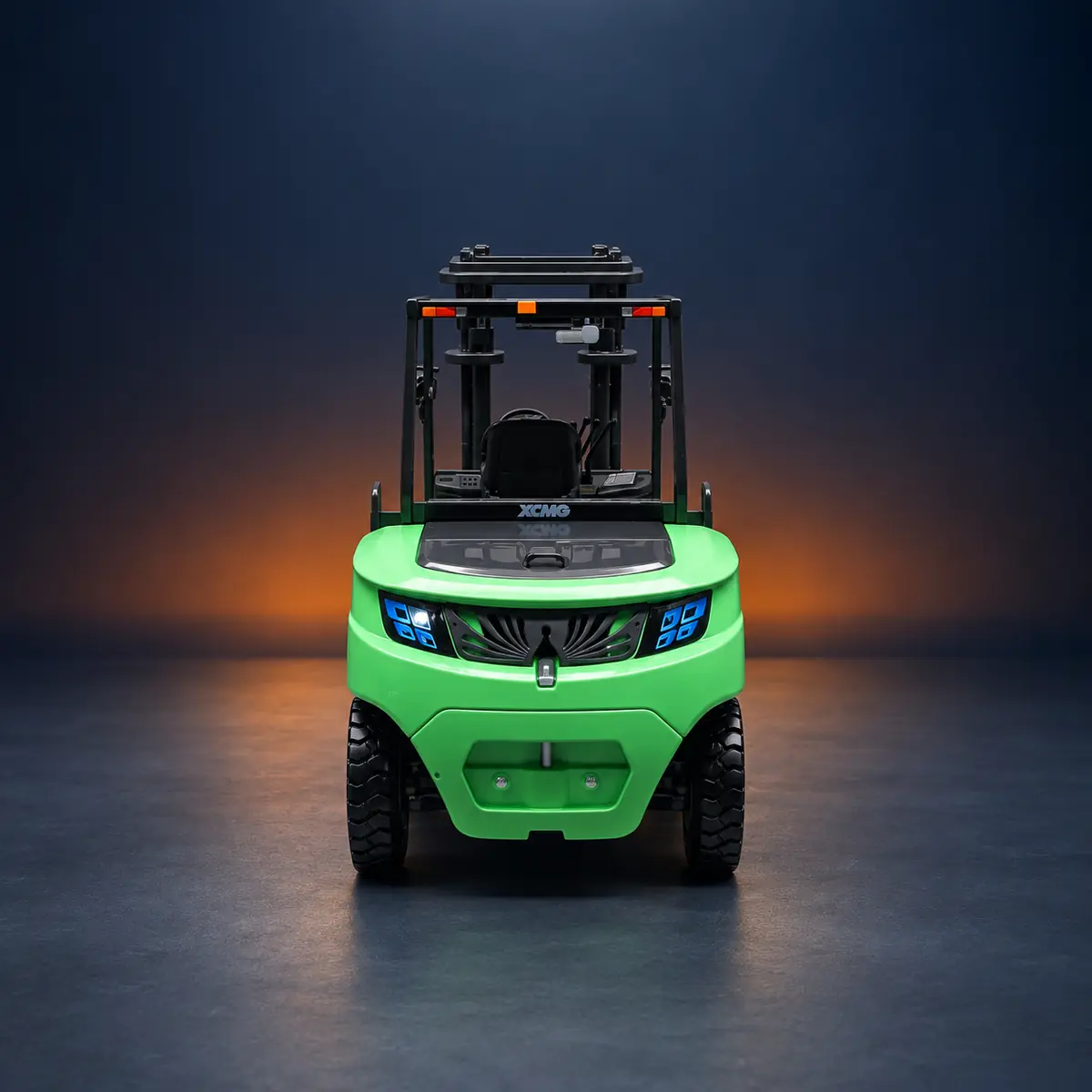
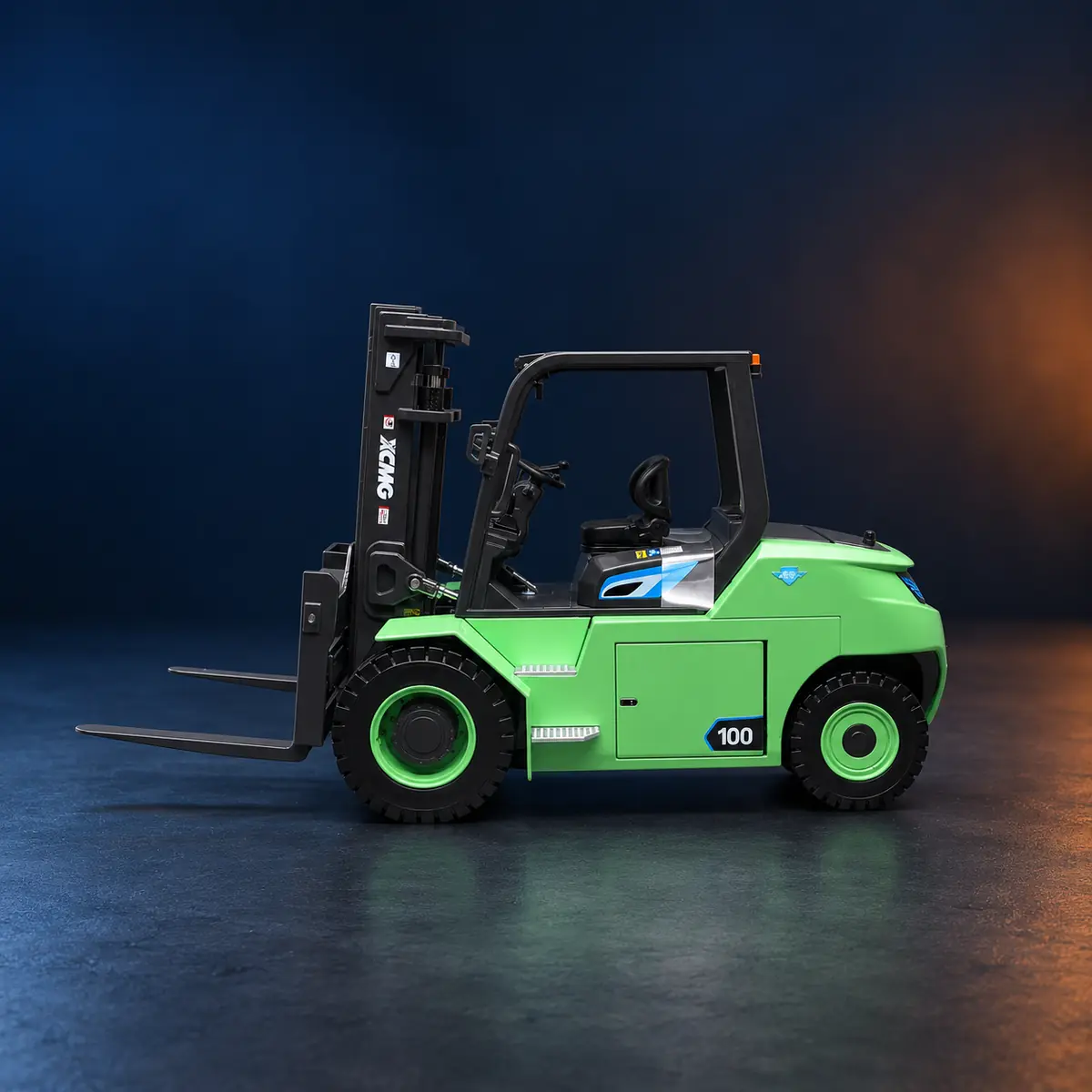
The Model From Multiple Working Angles
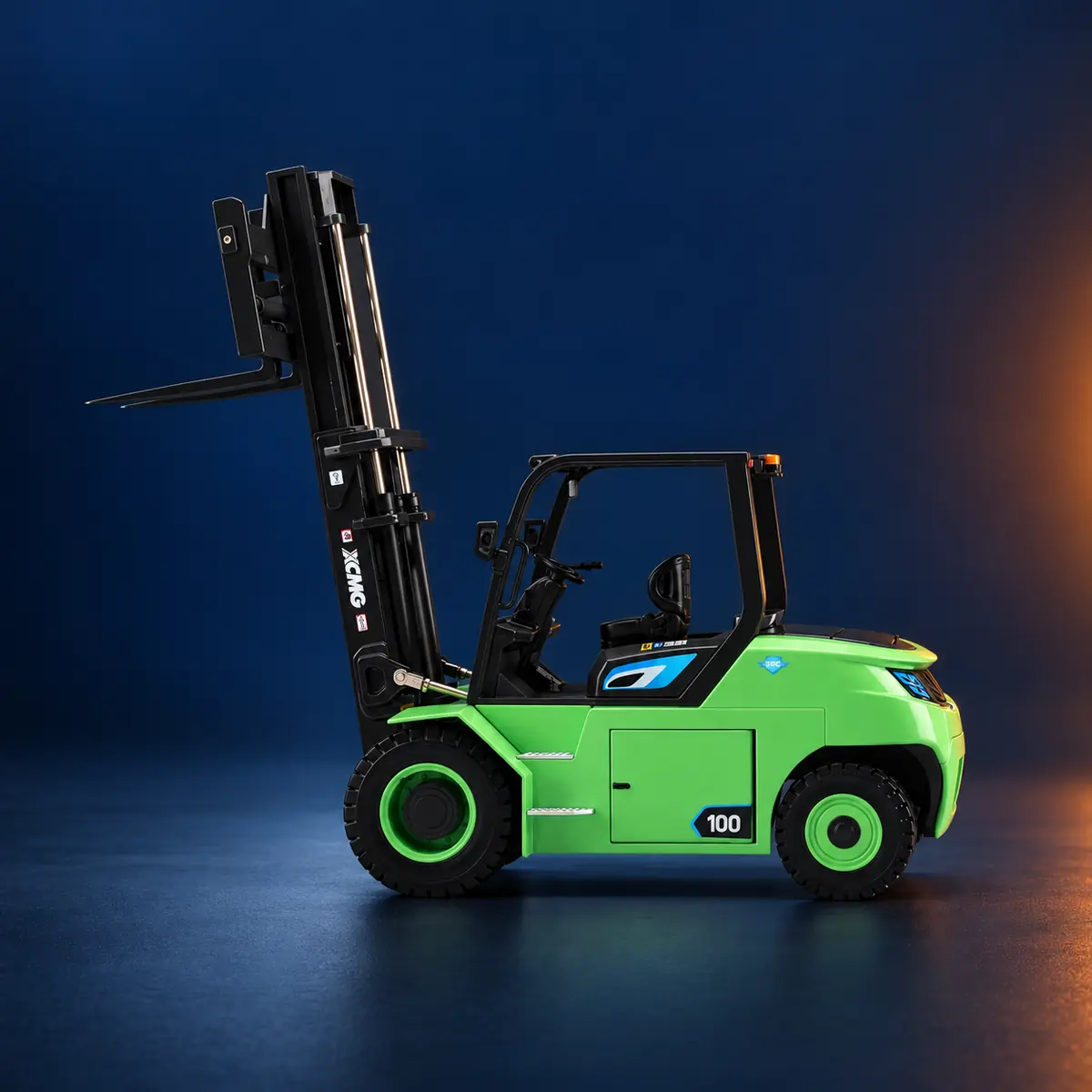
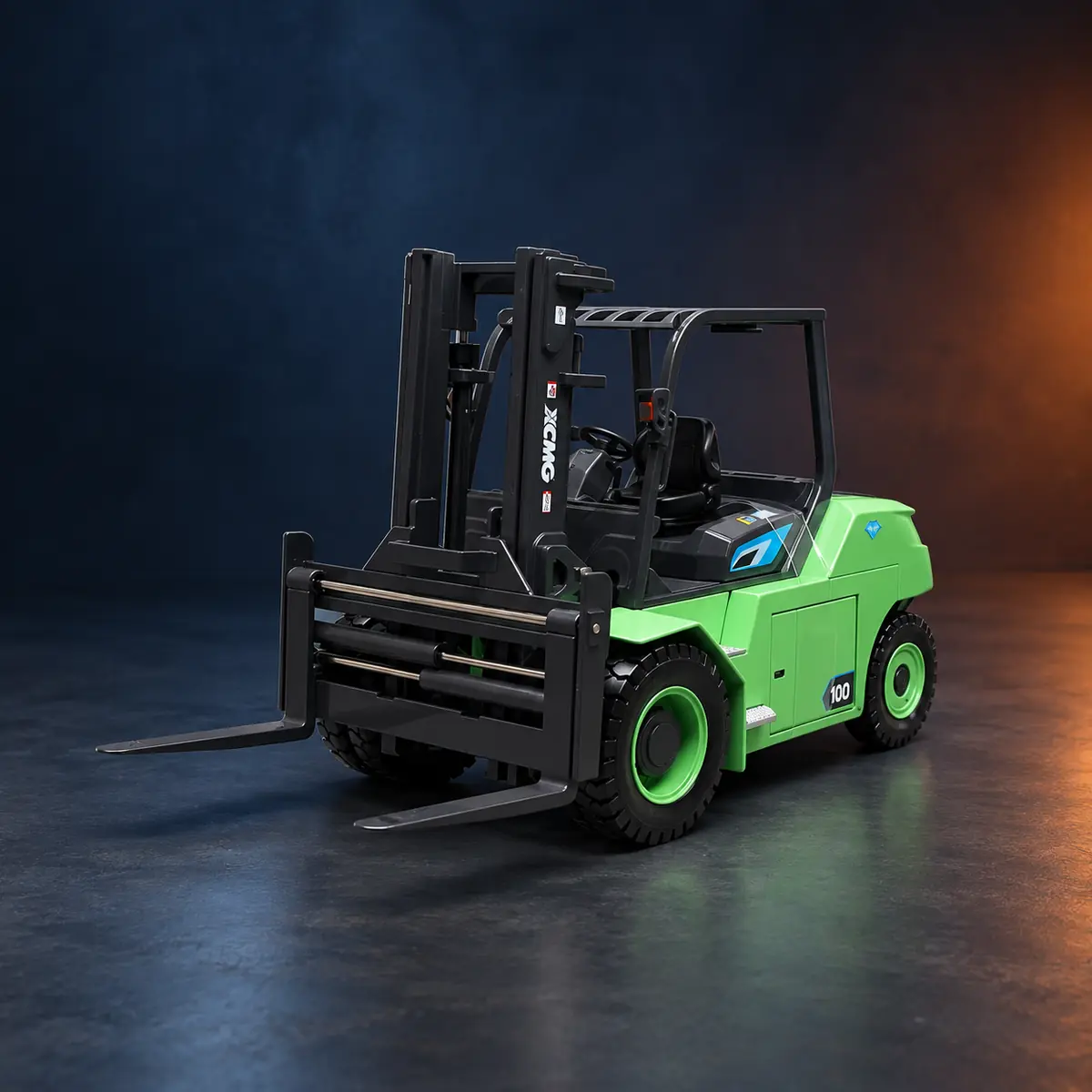
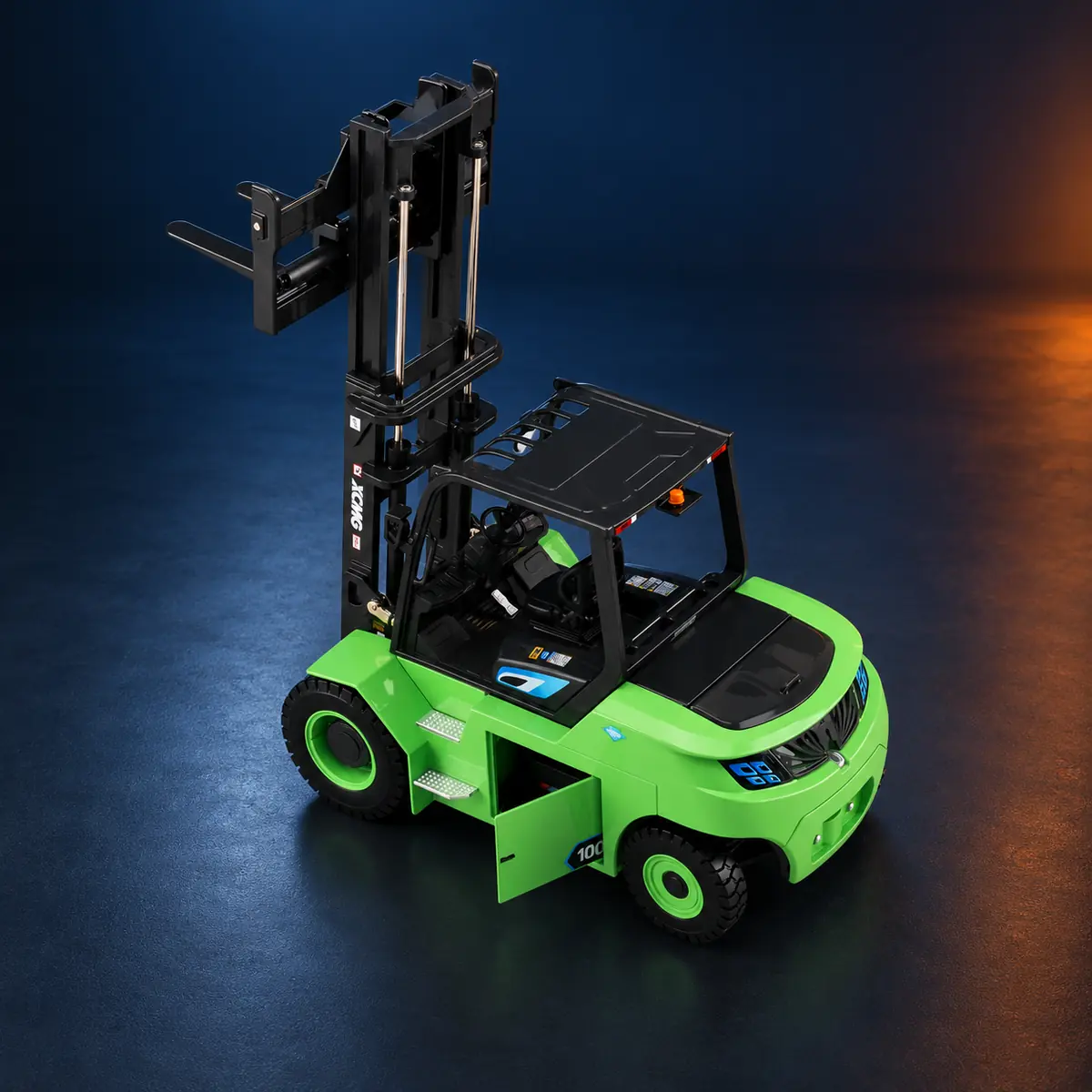
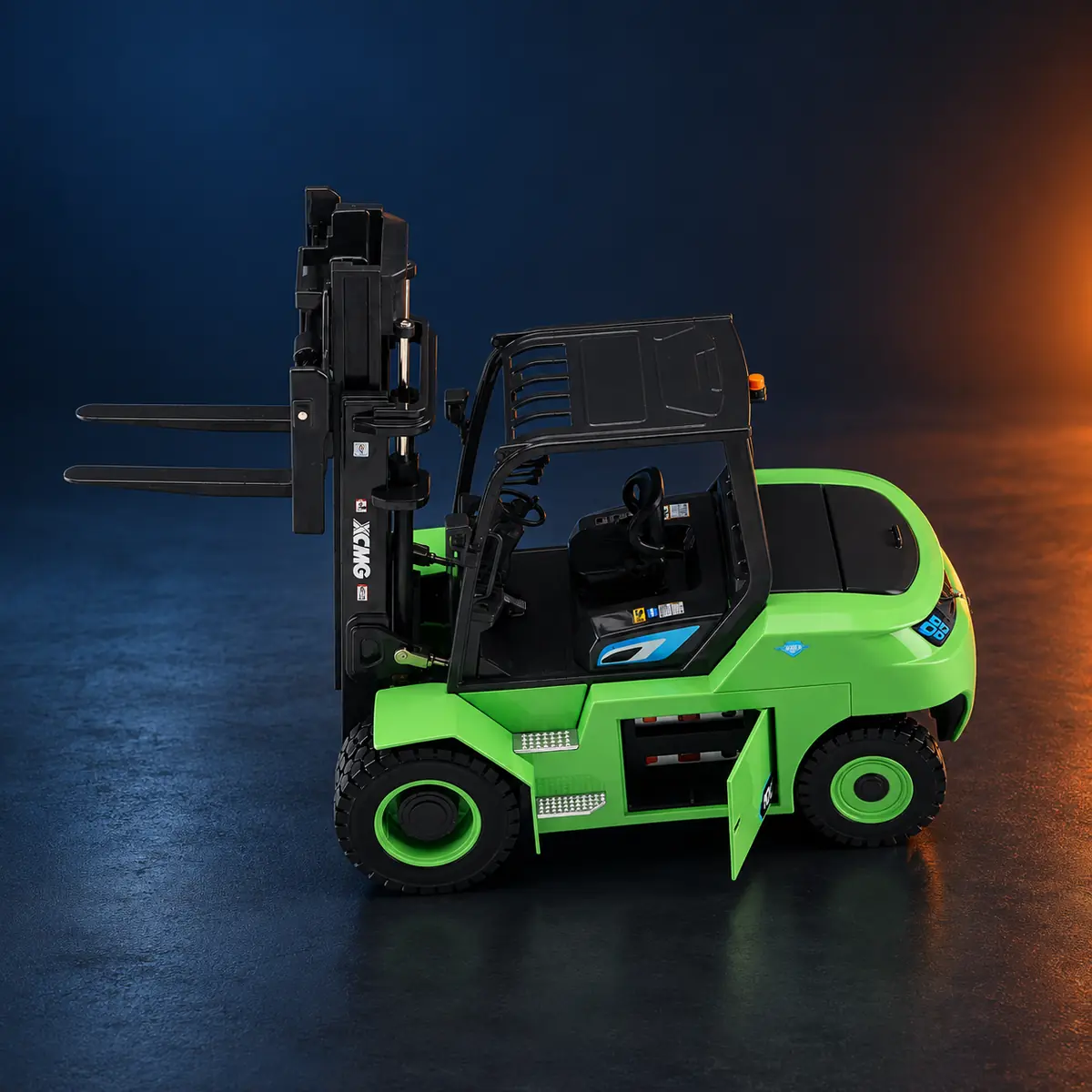
Real model photography shows the mast, body, cab and access features without changing the product’s structure.
Functional demonstration
Seven Confirmed Interactive Features
Each movement is tied to a real, confirmed component of the finished model.

Rolling Wheels
The wheels roll forward and backward for natural positioning.
Rear-Wheel Steering
The rear wheels pivot left and right to demonstrate forklift steering.
Movable Cylinders
The visible cylinder components move with the lifting structure.
Positionable Lift Mast
The carriage travels vertically and holds at a selected height.
Opening Seat Base
The cover beneath the seat lifts upward for closer viewing.
Side Battery Access
The side door opens and the internal battery rack slides outward.
Removable Battery Layers
Two battery layers can be removed and returned with magnetic retention.
Engineering and visible details
Structure That Remains Convincing Up Close
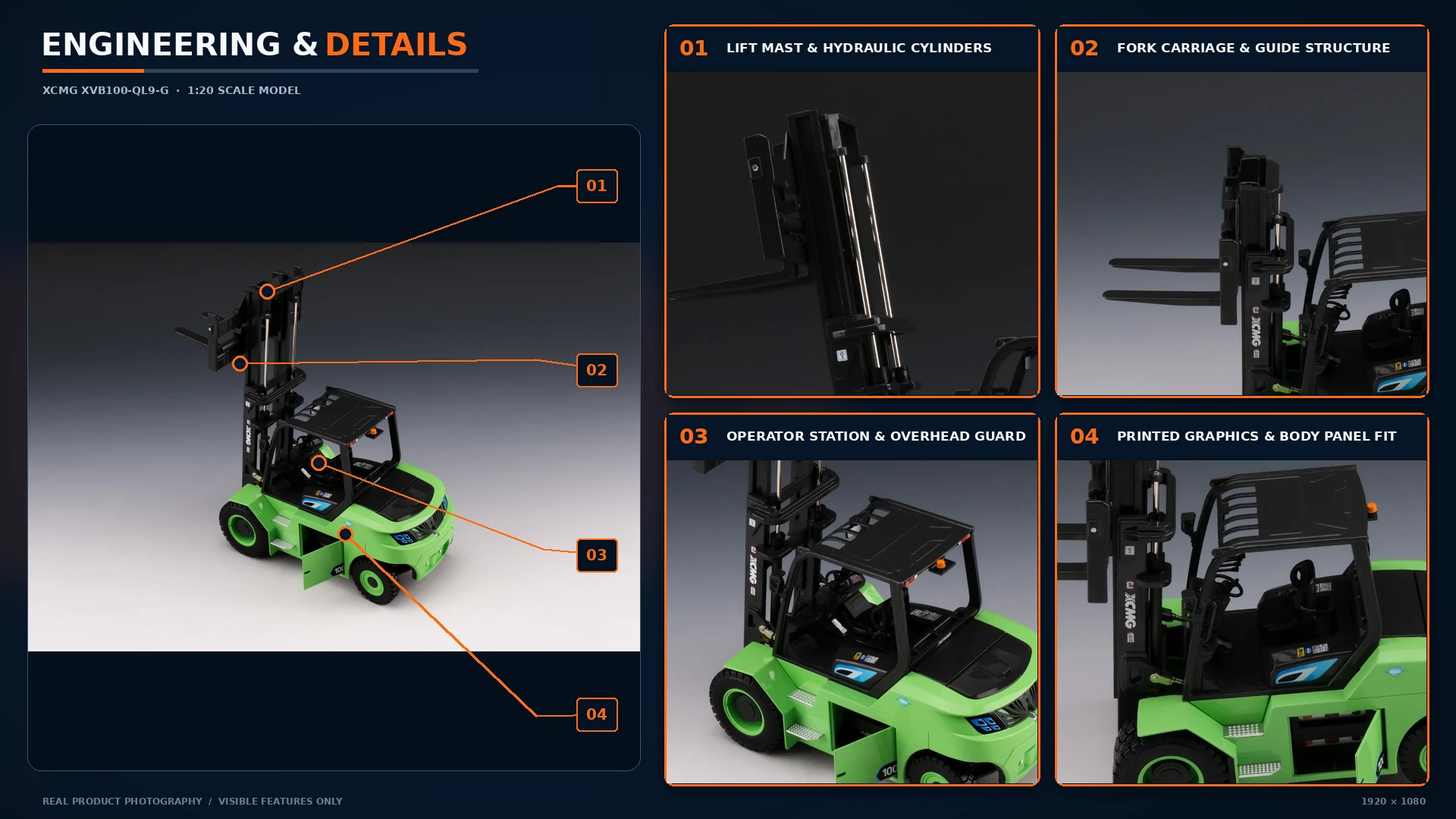
The engineering focus is visible in the mast connections, cab framing, printed graphics and controlled panel relationships.
Mast Rail Integration
Vertical rails, fork supports and cylinder parts are aligned as one working assembly.
Cab Frame and Roof
The open cab keeps the steering wheel, seat, operator area and roof panel clearly visible.
Tyre Tread and Hubs
Directional tyre texture and separate wheel-hub forms add depth to the running gear.
Printed Brand Graphics
XCMG logos, the “100” marking and small equipment graphics remain visible at close range.
Textured Access Steps
Silver step surfaces and adjacent panel edges create a clear transition into the cab.
Controlled Panel Fit
Opening covers are integrated into the body with consistent visible gaps and surrounding surfaces.
Size comparison
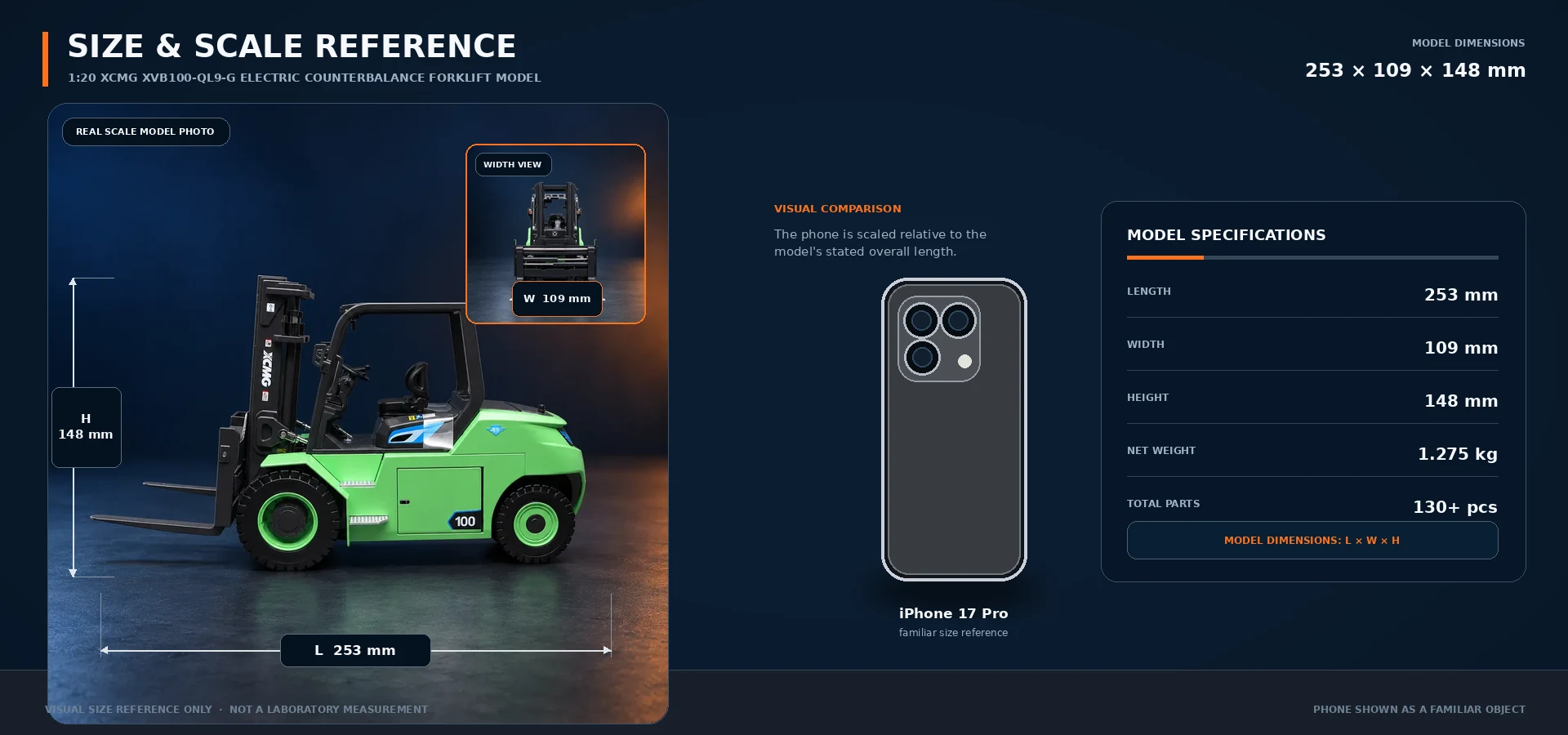
A Substantial Desktop Display Presence
The familiar phone reference shows how the model reads in a showroom, display cabinet, office or trade-show setting.
OEM development process
From Equipment Data to Repeatable Production
A controlled three-stage workflow converts the real forklift into a manufacturable and functional model.
3D Data and Prototype
Customer equipment data is converted into model-production data. Scale, wall thickness, assembly gaps, moving parts and visible details are reviewed before prototype confirmation.
Tooling and Metal Sample
CNC machining, precision engraving and toolmaking establish the production molds. A metal sample is then used to review structure, appearance, fit and confirmed functions.
Production, QC and Delivery
Die-casting, injection molding, painting, pad printing, assembly, functional checks and final inspection are coordinated with the selected packaging requirements.
Mass production and quality control
Checks Focused on Fit, Finish and Movement
Production inspection concentrates on the areas most likely to affect this forklift model’s appearance and functional reliability.
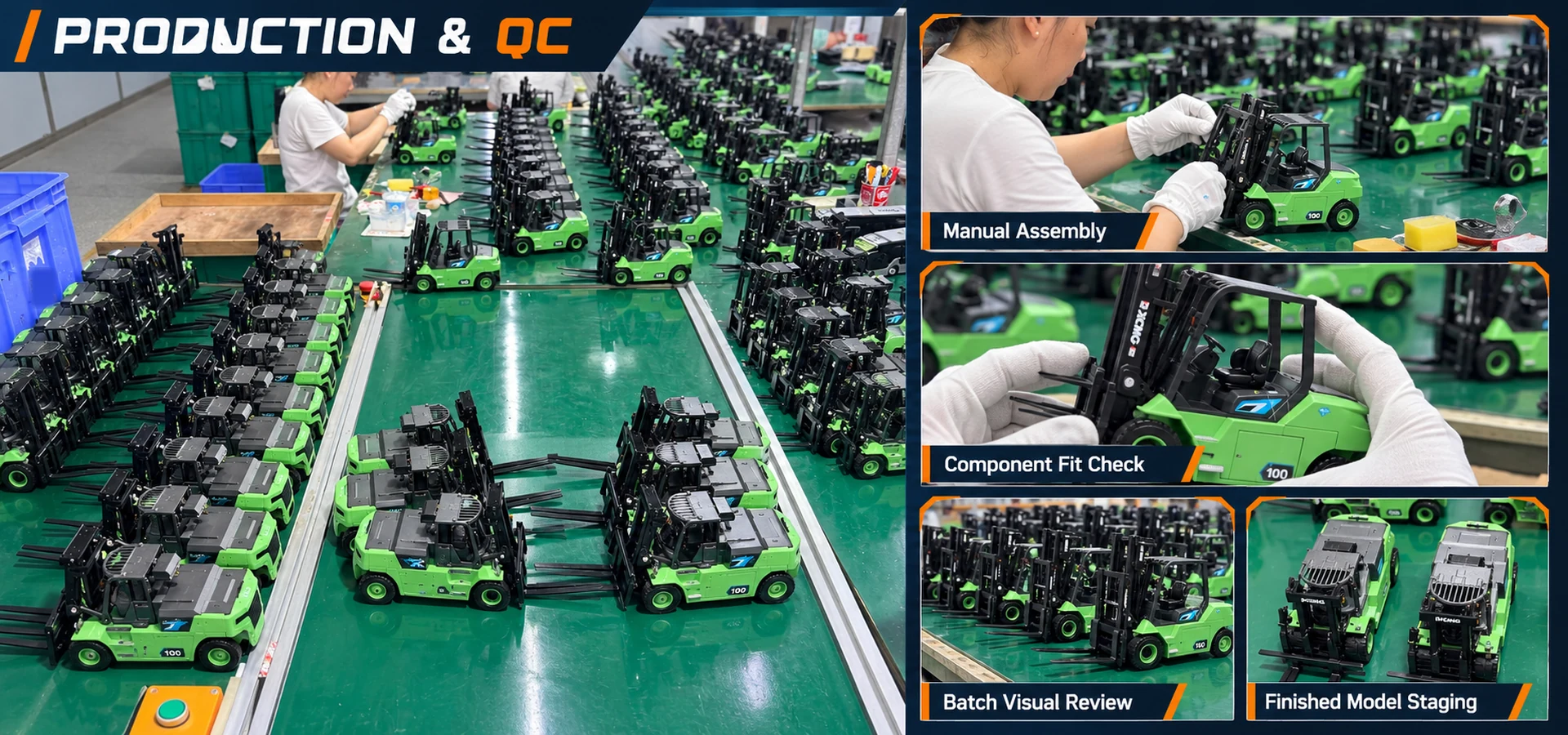
Body and Structural Parts
Visible parts are reviewed for deformation, rough edges, surface marks and hole-position errors that could affect fit.
Paint and Printing
Green, black and silver finishes are checked for consistent color. Logos and small markings are reviewed for clarity and alignment.
Assembly Control
Panel gaps, wheel orientation, cab parts and lift alignment are inspected for controlled movement without binding.
Functional Verification
Rolling, steering, lifting, panel opening, battery-rack travel and magnetic battery retention are checked during final review.
Business applications
Where This Functional Forklift Model Works
Recognizable branding and demonstration features support several practical B2B uses.
Dealer Showrooms
Demonstrate product form and key movements where full-size equipment cannot be positioned indoors.
Trade Shows
Use a compact physical reference to support product conversations and hands-on demonstrations.
Product Presentations
Help sales and product teams explain the mast, steering and battery-access areas visually.
Corporate Gifts
Provide distributors, partners or project stakeholders with a brand-specific industrial keepsake.
Marketing Displays
Support photography, launch exhibits and campaigns with a recognizable equipment miniature.
Collector Programs
Offer enthusiasts a detailed functional model connected to a specific XCMG forklift series.
Frequently asked questions
Planning a Custom Forklift Model
What information is needed to develop a custom forklift model?
Clear reference photos, real-machine dimensions, editable 3D data where available, target scale, required functions, color and logo files, packaging preference and planned order quantity provide the basis for evaluation.
Can the model’s functions be customized?
Yes. Suitable movements can be evaluated from the equipment structure and target scale. Each function is confirmed before development because available space and strength vary by project.
Can you develop other material-handling equipment?
Yes. Forklifts and other industrial equipment can be assessed as OEM scale-model projects based on the machine, required functions and intended use.
Can logos, colors and packaging be customized?
Yes. Brand graphics, colors and packaging can be developed for an authorized OEM project using the supplied artwork and presentation requirements.
Start your custom model project
Turn Your Forklift Into a Functional Scale Model
Share your available product data and intended use. We can review the suitable scale, visible details, functions, manufacturing route and packaging for your OEM project.
